 Hi readers, it seems you use Catholic Online a lot; that's great! It's a little awkward to ask, but we need your help. If you have already donated, we sincerely thank you. We're not salespeople, but we depend on donations averaging $14.76 and fewer than 1% of readers give. If you donate just $5.00, the price of your coffee, Catholic Online School could keep thriving. Thank you. Help Now >
Biblia Pauperum
FREE Catholic Classes
(BIBLE OF THE POOR).
A collection of pictures representing scenes from Our Lord's life with the corresponding prophetic types. The series commonly consists of forty or fifty pages. The page is divided into nine sections. The four corners are used for explanatory texts. The central pictures represent scenes from Our Lord's life, arranged chronologically. Above and below these are pictures of prophets and on each side are scenes from the Old Testament . It is thus a concordance of the Old and the New Testaments in which is gathered together the common tradition of the Church on the types and figures of the Old Testament, as taught by the liturgy and the Fathers. hence they were called sometimes "Figuræ typicæ Veritis Testamenti atque antitypicæ Novi Testamenti" or "Historia Christi in Figuris". An interesting reproduction and description of a page on the Blessed Sacrament is given in Vigouroux, "Dictionnaire de la Bible", s.v.
The invention of these picture-books is ascribed to St. Ansgar, Bishop of Bremen. This is stated in a note added to a copy at Hanover and in the cathedral at Bremen there are remains of pictures, corresponding to this copy. The name, however, of "Biblia Pauperum" does not seem to have been primitive. It was added by a later hand to a manuscript in the Wolffenbüttel library ; the manuscript was thus catalogued, and the name became common. It is uncertain why they were so called. Perhaps it was because the ancient saying that pictures were the Bible of the poor, that is, of the uneducated. Some think that the name came from their use by the mendicant orders as books of instruction. Others suppose that the term means inexpensive; manuscripts had been beyond the means of most people; when the art of printing from engraved blocks was introduced these picture-books were among the first printed and gained a wide circulation. We have no definite information as to the purpose for which these books were intended. Probably it was for religious instruction; perhaps also to serve as models for artists. It is certain that they exercised a great influence in spreading a knowledge of the mysteries of Faith, affording themes for preachers and artists. At Hirschau in Swabia, the entire series of pictures is reproduced in stained glass .
We ask you, humbly: don't scroll away.
Hi readers, it seems you use Catholic Online a lot; that's great! It's a little awkward to ask, but we need your help. If you have already donated, we sincerely thank you. We're not salespeople, but we depend on donations averaging $14.76 and fewer than 1% of readers give. If you donate just $5.00, the price of your coffee, Catholic Online School could keep thriving. Thank you.Help Now >
Only a few manuscript copies of the "Biblia Pauperum" are extant; they come from the school of John van Eyck 1366-1466). The blockbook, or xylographic process, appeared early in the fifteenth century, and Sotheby counts seven editions made from these wooden slabs. Only one side of the paper was printed, two sheets being pasted together to make a leaf. Five copies are in the Bibliothèque Nationale: four have forty plates; one copy is coloured by hand; the fifth has fifty plates. The first edition from moveable types was printed by Pfister at Bamberg in 1462. The earlier editions have Latin texts; later they were printed in the vernacular. A German "Armenbibel" was published in 1470, and at Paris in 1503, A. Vérard published "Les Figures du Viel Testament et du Nouveau". In some of the printed editions the original arrangement of pictures and text was modified. In the latter half of the fifteenth century these books were very popular. As improved methods made it possible to issue the whole Bible with illustrations, the "Biblia" fell into disuse and disappeared. Several facsimile reproductions have appeared with historical and bibliographical introductions notably by Berjeau (1859); Camesina and Heider (Vienna, 1863); Unwin (London, 1884), with introduction by Dean Stanley; Einsle (Vienna, 1890); Laib and Schwarz (1892) and P. Heitz (1902). SOTHEBY, The Block-Books or Xylographic Delineations of Scripture History issued in Holland, France, and Germany (London, 1858). See also the introductions to the facsimile editions, VIGOUROUX, Dict. de la Bible , a.v.; STREBER in Kirchenlex. , s.v.; CHEVALIER, Rép. des sources hist. du moyen âge: Topo-bibl.


Join the Movement
When you sign up below, you don't just join an email list - you're joining an entire movement for Free world class Catholic education.


-

-
Mysteries of the Rosary
-
St. Faustina Kowalska
-
Litany of the Blessed Virgin Mary
-
Saint of the Day for Wednesday, Oct 4th, 2023
-
Popular Saints
-
St. Francis of Assisi
-
Bible
-
Female / Women Saints
-
7 Morning Prayers you need to get your day started with God
-
Litany of the Blessed Virgin Mary


Sacrifices of Faith: The Pro-Life Legacies of St. Gianna and Jessica Hanna
-
How to love God by caring for our bodies
-
Pope Francis calls for negotiations to End Russia-Ukraine War
-
Pope Francis Contemplates Return to U.S. for United Nations Assembly Address
-
Pope Francis Calls on Faithful to Embrace Faith, Hope, and Charity in New Teaching Series


Daily Catholic
- Daily Readings for Sunday, April 28, 2024
- St. Peter Chanel: Saint of the Day for Sunday, April 28, 2024
- Prayer before a Crucifix: Prayer of the Day for Sunday, April 28, 2024
- Daily Readings for Saturday, April 27, 2024
- St. Zita: Saint of the Day for Saturday, April 27, 2024
- Prayer for the Dead # 2: Prayer of the Day for Saturday, April 27, 2024
 Daily Readings for Sunday, April 28, 2024
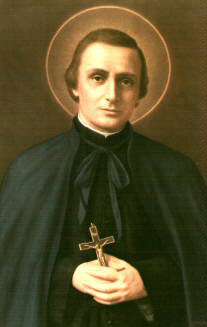 St. Peter Chanel: Saint of the Day for Sunday, April 28, 2024
 Prayer before a Crucifix: Prayer of the Day for Sunday, April 28, 2024


Copyright 2024 Catholic Online. All materials contained on this site, whether written, audible or visual are the exclusive property of Catholic Online and are protected under U.S. and International copyright laws, © Copyright 2024 Catholic Online. Any unauthorized use, without prior written consent of Catholic Online is strictly forbidden and prohibited.
Catholic Online is a Project of Your Catholic Voice Foundation, a Not-for-Profit Corporation. Your Catholic Voice Foundation has been granted a recognition of tax exemption under Section 501(c)(3) of the Internal Revenue Code. Federal Tax Identification Number: 81-0596847. Your gift is tax-deductible as allowed by law.