We ask you, humbly: don't scroll away.
Hi readers, it seems you use Catholic Online a lot; that's great! It's a little awkward to ask, but we need your help. If you have already donated, we sincerely thank you. We're not salespeople, but we depend on donations averaging $14.76 and fewer than 1% of readers give. If you donate just $5.00, the price of your coffee, Catholic Online School could keep thriving. Thank you.Help Now >
Fray Tomás de Berlanga
FREE Catholic Classes
Bishop of Panama, b. at Berlanga in Spain, date uncertain; d. there 8 August, 1551. He was professed at the convent of San Esteban of Salamanca, 10 March, 1608, in the Dominican Order , and in time was elected prior of the convent on the Island of Hispaniola ( Santo Domingo ). The Dominicans of Hispaniola then depended on the province of Andalusia, but Berlanga obtained at Rome, in 1528, the establishment of a separate province under the name of Santa Cruz, of which was made provincial in 1530. From Santa Domingo he claimed the newly founded province of Santiago de Mexico as being under his jurisdiction, but was successfully opposed by Fray Domingo de Betanzos. About the same time he was proposed for the Bishopric of Panama, and went thither. His vast and indefinite diocese embraced everything discovered, and to be discovered, on the South-American west coast, from which but a few years previous had come the news of the discovery of Peru by Pizarro. When, therefore, the Spanish crown began to notice signs of trouble between Pizarro and Almagro, about their respective territorial limits, it sent Bishop Berlanga to Peru with power to arbitrate between the two on any question at issue. At the same time the Spanish monarch, the Emperor Charles VI, by a decree ( cédula ) dated 19 July, 1534, ordered Berlanga to make a report on the condition and prospects of Peru, its geographical and ethnographic peculiarities. The arbitration failed. Pizarro had (perhaps because he had been secretly informed of the bishop's mission) settled for the time being with Almagro and sent him off to Chile, so that no communication from Berlanga reached him. The latter's office as arbitrator was thereby practically vacated, and he returned to his see, refusing all advances made to him by Pizarro. The latter displayed considerable feeling, complaining that, as long as the conquest was in doubt, he had been left alone, but that now that it had been achieved "a step-father had been sent to him". Berlanga sent to the crown a description of what he saw, a brief and unvarnished report from the standpoint of a cool-headed observer. His mission was well intended, but practically impossible. Pizarro had artfully removed the other party to the proposed arbitration, and Berlanga was too honest to yield to insinuations of a one-sided investigation. Of the gifts tendered he accepted for himself a dozen silver spoons valued at twelve ducats, 600 pesos for the hospital of Panama, and 400 for the hospital of Nicaragua. After promoting the construction of the convent of Santa Domingo at Lima, Berlanga returned, in 1357, to Spain where he died in his native town.
We ask you, humbly: don't scroll away.
Hi readers, it seems you use Catholic Online a lot; that's great! It's a little awkward to ask, but we need your help. If you have already donated, we sincerely thank you. We're not salespeople, but we depend on donations averaging $14.76 and fewer than 1% of readers give. If you donate just $5.00, the price of your coffee, Catholic Online School could keep thriving. Thank you.Help Now >

 Hi readers, it seems you use Catholic Online a lot; that's great! It's a little awkward to ask, but we need your help. If you have already donated, we sincerely thank you. We're not salespeople, but we depend on donations averaging $14.76 and fewer than 1% of readers give. If you donate just $5.00, the price of your coffee, Catholic Online School could keep thriving. Thank you. Help Now >
Join the Movement
When you sign up below, you don't just join an email list - you're joining an entire movement for Free world class Catholic education.


-

-
Mysteries of the Rosary
-
St. Faustina Kowalska
-
Litany of the Blessed Virgin Mary
-
Saint of the Day for Wednesday, Oct 4th, 2023
-
Popular Saints
-
St. Francis of Assisi
-
Bible
-
Female / Women Saints
-
7 Morning Prayers you need to get your day started with God
-
Litany of the Blessed Virgin Mary

Sacrifices of Faith: The Pro-Life Legacies of St. Gianna and Jessica Hanna
-
How to love God by caring for our bodies
-
Pope Francis calls for negotiations to End Russia-Ukraine War
-
Pope Francis Contemplates Return to U.S. for United Nations Assembly Address
-
Pope Francis Calls on Faithful to Embrace Faith, Hope, and Charity in New Teaching Series


Daily Catholic
- Daily Readings for Sunday, April 28, 2024
- St. Peter Chanel: Saint of the Day for Sunday, April 28, 2024
- Prayer before a Crucifix: Prayer of the Day for Sunday, April 28, 2024
- Daily Readings for Saturday, April 27, 2024
- St. Zita: Saint of the Day for Saturday, April 27, 2024
- Prayer for the Dead # 2: Prayer of the Day for Saturday, April 27, 2024
 Daily Readings for Sunday, April 28, 2024
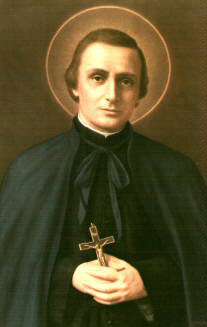 St. Peter Chanel: Saint of the Day for Sunday, April 28, 2024
 Prayer before a Crucifix: Prayer of the Day for Sunday, April 28, 2024
We ask you, humbly: don't scroll away.
Hi readers, it seems you use Catholic Online a lot; that's great! It's a little awkward to ask, but we need your help. If you have already donated, we sincerely thank you. We're not salespeople, but we depend on donations averaging $14.76 and fewer than 1% of readers give. If you donate just $5.00, the price of your coffee, Catholic Online School could keep thriving. Thank you.Help Now >

Copyright 2024 Catholic Online. All materials contained on this site, whether written, audible or visual are the exclusive property of Catholic Online and are protected under U.S. and International copyright laws, © Copyright 2024 Catholic Online. Any unauthorized use, without prior written consent of Catholic Online is strictly forbidden and prohibited.
Catholic Online is a Project of Your Catholic Voice Foundation, a Not-for-Profit Corporation. Your Catholic Voice Foundation has been granted a recognition of tax exemption under Section 501(c)(3) of the Internal Revenue Code. Federal Tax Identification Number: 81-0596847. Your gift is tax-deductible as allowed by law.