We ask you, humbly: don't scroll away.
Hi readers, it seems you use Catholic Online a lot; that's great! It's a little awkward to ask, but we need your help. If you have already donated, we sincerely thank you. We're not salespeople, but we depend on donations averaging $14.76 and fewer than 1% of readers give. If you donate just $5.00, the price of your coffee, Catholic Online School could keep thriving. Thank you.Help Now >
Widukind
FREE Catholic Classes
Saxon leader, and one of the heads of the Westphalian nobility. He was the moving spirit in the struggles of the Saxons for their independence and heathen faith.
The Frankish accounts of the Saxon wars, coloured by national feeling, give only an outline of Widukind's character. After Charlemagne's victory in 777 Widukind fled to Denmark. He saw that at the moment opposition was useless. When Charlemagne was in Spain in 778, Widukind came back and, trusting to the Saxon love of independence, organized a war of revenge. Saxon hordes plundered and devastated the region of the middle Rhine, and even threatened Fulda, so that the monks fled, carrying the remains of St. Boniface. A Frankish army defeated the Saxons at Laisa and rescued the town. In 782 order seemed to be restored among the Saxons, and Widukind again fled to Denmark, but returned once more when Charlemagne began his march toward home. The Wends also were incited to join the uprising. The hatred of the insurgents was directed against the churches and priests, and Willihad, first bishop of Bremen, was obliged for the time to abandon his missionary work. Widukind no longer had time the entire Saxon nation on his side. A strong Frankish party had now sprang up, but the terrible punishment inflicted by Charlemagne on 4000 Saxons at Verden on the Aller greatly strengthened the national party among the Saxons. Widukind again fled to Denmark ; after this he persuaded the inhabitants of the northern Elbe district and the Frisians to join the revolt. Particulars as to Widukind's actions during the last struggles of the Saxons are lacking. Charlemagne saw that he was the leading spirit of the resistance and sought to induce him to submit peacefully. In 785 Widukind was baptized, with many of his companions, at Attigny. Charlemagne believed that the Saxon opposition was now broken, and the pope ordered a general feast of thanksgiving. Widukind took no part in the later Saxon wars. There is no further credible information respecting him. It is fairly probable that Mathilde, second wife of King Henry I of Germany, was a member of the same family. Widukind soon became one of the heroes of legend, and later he appeared as a great builder of churches and a saint. Medieval times regarded Enger, near Herford, as his place of burial. A gravestone purporting to be Widukind's and giving his entire figure, is a work of the twelfth century; what is called Widukind's reliquary is a work of the ninth or tenth century.
We ask you, humbly: don't scroll away.
Hi readers, it seems you use Catholic Online a lot; that's great! It's a little awkward to ask, but we need your help. If you have already donated, we sincerely thank you. We're not salespeople, but we depend on donations averaging $14.76 and fewer than 1% of readers give. If you donate just $5.00, the price of your coffee, Catholic Online School could keep thriving. Thank you.Help Now >


Join the Movement
When you sign up below, you don't just join an email list - you're joining an entire movement for Free world class Catholic education.


-

-
Mysteries of the Rosary
-
St. Faustina Kowalska
-
Litany of the Blessed Virgin Mary
-
Saint of the Day for Wednesday, Oct 4th, 2023
-
Popular Saints
-
St. Francis of Assisi
-
Bible
-
Female / Women Saints
-
7 Morning Prayers you need to get your day started with God
-
Litany of the Blessed Virgin Mary

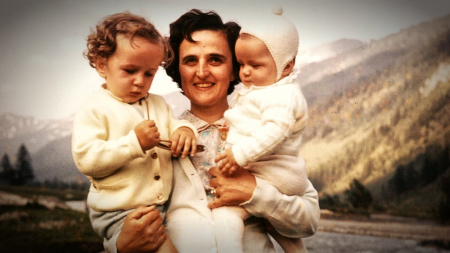
Sacrifices of Faith: The Pro-Life Legacies of St. Gianna and Jessica Hanna
-
How to love God by caring for our bodies
-
Pope Francis calls for negotiations to End Russia-Ukraine War
-
Pope Francis Contemplates Return to U.S. for United Nations Assembly Address
-
Pope Francis Calls on Faithful to Embrace Faith, Hope, and Charity in New Teaching Series


Daily Catholic
- Daily Readings for Monday, April 29, 2024
- St. Catherine of Siena: Saint of the Day for Monday, April 29, 2024
- Prayer for the Dead # 3: Prayer of the Day for Monday, April 29, 2024
- Daily Readings for Sunday, April 28, 2024
- St. Peter Chanel: Saint of the Day for Sunday, April 28, 2024
- Prayer before a Crucifix: Prayer of the Day for Sunday, April 28, 2024
 Daily Readings for Monday, April 29, 2024
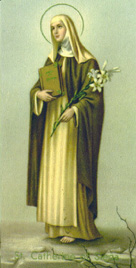 St. Catherine of Siena: Saint of the Day for Monday, April 29, 2024
 Prayer for the Dead # 3: Prayer of the Day for Monday, April 29, 2024


Copyright 2024 Catholic Online. All materials contained on this site, whether written, audible or visual are the exclusive property of Catholic Online and are protected under U.S. and International copyright laws, © Copyright 2024 Catholic Online. Any unauthorized use, without prior written consent of Catholic Online is strictly forbidden and prohibited.
Catholic Online is a Project of Your Catholic Voice Foundation, a Not-for-Profit Corporation. Your Catholic Voice Foundation has been granted a recognition of tax exemption under Section 501(c)(3) of the Internal Revenue Code. Federal Tax Identification Number: 81-0596847. Your gift is tax-deductible as allowed by law.