Because of You, 2.2 Million Students Are Being Formed in the Faith
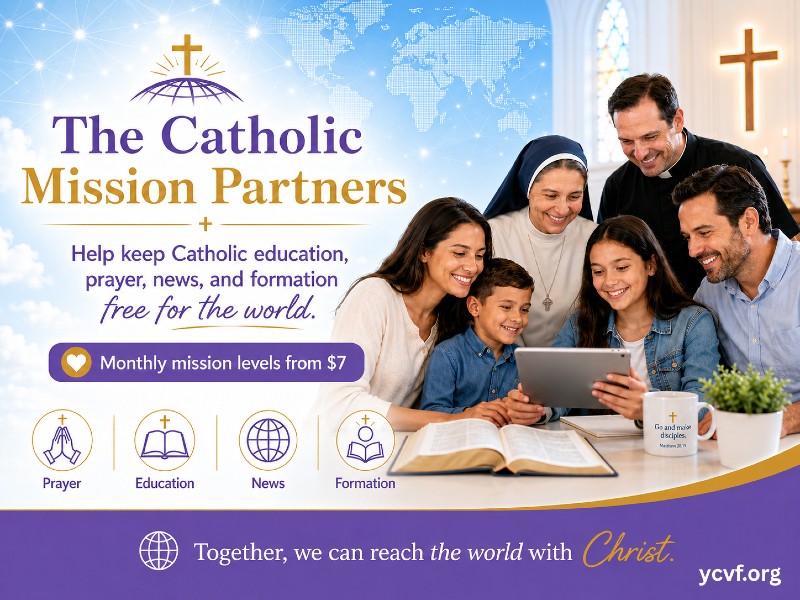
Because of generous supporters like you, Catholic Online School has already delivered free, faithful Catholic education to over 2.2 million students across 193 countries. In an age of noise and algorithms, you are helping form souls with truth, prayer, Scripture, and Christ.
If everyone who reads this gave just $5 — the cost of a coffee — we could reach even more families and keep this life-changing formation free for all. Be Courageous. Be Catholic. Stand with us today.
DONATE TODAY >Alfonso de Valdés
FREE Catholic Classes
Spanish Humanist and chancellor of the Emperor Charles V, born at Cuenca in Castile about 1500; died at Vienna in October, 1532. His talents gave him early advancement and he accompanied Charles V in 1520 on the journey from Spain to the coronation at Aachen, and in 1521 to the Diet of Worms. From 1522 he was a secretary of the imperial chancellery and as secretary wrote a number of important state papers: in 1525, he drew up the report of the battle of Pavia; in 1526 the energetic, graphic, and at times deliberately sarcastic state paper addressed to Pope Clement VII, in which the faithlessness of the pope is stigmatized, and an appeal is made for the convoking of an Ecumenical Council. After the capture and pillage of Rome in 1527, Valdés wrote the dialogue "Lactantius" in which he violently attacked the pope as a disturber of the public peace, an instigator of war, and a perfidious deceiver, declared the fate of Rome the judgment of God, and called the States of the Church the worst governed dominion in the world. The dialogue was printed in 1529 and was widely read. The papal nuncio at Madrid, Baldassare Castiglione, brought an accusation before the Inquisition, but the trial amounted to nothing because Charles V took his servant under his protection, while the grand inquisitor also declared that it was not heretical to speak against the morals of the pope and the priests. Consequently it was decided that the dialogue was not calumnious. Valdés was full of enthusiasm for the ideas of Erasmus of Rotterdam and sought to gain currency for them in Spain. In 1529 he accompanied the emperor to Italy, Germany, and the Netherlands. At the Diet held at Augsburg in 1530 he was an influential negotiator with Melanchthon and the Protestants, and met them in a pacific and conciliatory spirit; yet it cannot be said that he shared their views or showed that he understood Luther's motives; his point of view was solely that of a statesman. In October, 1531, he wrote from Brussels the letter of congratulation to the Catholic of Switzerland after the victory over Zwingli. He was the brother of Juan Valdés, the heretical movement in Naples, many of whose followers became apostates.

Come Grow With Us
Sign up and walk the Catholic journey with millions around the world.
Receive inspiring emails on saints, daily readings, and free faith-building resources—no cost, ever.
An important update for our readers.
Please Watch
- 7 Morning Prayers
- Mysteries of the Rosary
- Litany of the Bl. Virgin Mary
- Popular Saints
- Popular Prayers
- Female Saints
- Saint Feast Days by Month
- Stations of the Cross
- St. Francis of Assisi
- St. Michael the Archangel
- The Apostles' Creed
- Unfailing Prayer to St. Anthony
- Pray the Rosary








Copyright 2026 Catholic Online. All materials contained on this site, whether written, audible or visual are the exclusive property of Catholic Online and are protected under U.S. and International copyright laws, © Copyright 2026 Catholic Online. Any unauthorized use, without prior written consent of Catholic Online is strictly forbidden and prohibited.
Catholic Online is a Project of Your Catholic Voice Foundation, a Not-for-Profit Corporation. Your Catholic Voice Foundation has been granted a recognition of tax exemption under Section 501(c)(3) of the Internal Revenue Code. Federal Tax Identification Number: 81-0596847. Your gift is tax-deductible as allowed by law.
