We ask you, humbly: don't scroll away.
Hi readers, it seems you use Catholic Online a lot; that's great! It's a little awkward to ask, but we need your help. If you have already donated, we sincerely thank you. We're not salespeople, but we depend on donations averaging $14.76 and fewer than 1% of readers give. If you donate just $5.00, the price of your coffee, Catholic Online School could keep thriving. Thank you.Help Now >
Association of Ideas
FREE Catholic Classes
(1) A principle in psychology to account for the succession of mental states;
(2) the basis of a philosophy known as Associationism.
The fact of the association of ideas was noted by some of the earliest philosophers ; Aristotle (De mem. et rem., 2) indicates the three laws of association which have been the basis of nearly all later enumerations. St. Thomas, in his commentary on Aristotle, accepts and illustrates them at some length. Hamilton (Notes on Reid) gives considerable credit to the Spanish Humanist, Vives (1492-1540), for his treatment of the subject. Association of ideas is not, therefore, a discovery of English psychology, as has often been asserted.
It is true, however, that the principle of association of ideas received in English psychology an interpretation never given to it before. The name is derived from Locke who placed it at the head of one of the chapters of his "Essay", but used it only to explain peculiarities of character. Applied to mental states in general, the name is too restricted, since ideas, in the English sense, are only cognitive processes. The association theory held by Hobbes, Berkeley, Hume, and Hamilton, but it received its widest interpretation at the hands of the Associationists, Hartley, Priestley, James Mill, John Stuart Mill, Bain, and Spencer. They regarded it as a principle capable of explaining all mental phenomena. For them it is in the subjective world what the principle of gravitation is in the physical World. Association of ideas, though variously explained, is accepted by all modern psychologists. Sully, Maudsley, James, Hoffding, Munsterberg, Ebbinghaus, Ziehen, Taine, Ribot, Luys, and many others accept it more or less in the spirit of the Associationists.
The traditional laws of association, based on Aristotle, are:
Equally unsatisfactory is the theory of the ultra-spiritualists, who would have us believe that association ot ideas has nothing to do with the bodily organism, but is wholly mental. Thus Hamilton says that all physiological theories are too contemptible for serious criticism. Reid and Bowne reject all traces of perception left in the brain substance. Lotze admits a concomitant oscillation of the brain elements, but considers them quite secondary and as exercising no influence on memory and recall. Like the purely physical theory, this also fails to explain the facts of consciousness and experience. The localization of activities in the various brain-centres, the facts of mental disease in consequence of injury lo the brain, the dependence of memory on the healthy condition of the central organ, etc. have in this theory no rational meaning. We must, then, seek an explanation in a theory that does justice to both the mental and the physical side of the phenomena. A mere psychophysical parallelism, proposed by some, will not, however, suffice, as it offers no explanation, but is a mere restatement of the problem. The Scholastic doctrine, that the subject of sensory activity is neither the body alone nor the soul alone, but the unitary being compounded of body and soul, alone, but the best solution. As sense perception is not purely physiological nor purely mental, but proceeds from a faculty of the soul intrinsically united to an organ, so the association of these perception proceeds from a principle which is at the same time mental and physical. No doubt purely spiritual ideas also associate; but, as St. Thomas teaches, the most spiritual idea is not devoid of its physiological basis, and even in making use of the spiritual ideas which it has already acquired, the intellect has need of images stored in the brain. It requires these organic processes in the production of its abstract ideas. In its basis, the association of ideas is physiological, but it is more than this, as it does not folow the necessary laws of matter. The higher faculties of the mind can command and direct the process. The Scholastic theory does justice to the fact of the dependence of mental activities upon the organism, and yet leaves room for the freedom of the will attested by consciousness and experience.
English Associationism, while claiming to be neither idealistic nor materialistic, and disvowing metaphysics, has erected the principle of association of ideas into a metaphysical principle to explain all mental activity. James Mill enunciated the principle of indissoluble associations: Sensations or ideas occuring together frequently, and never apart, suggest one another with irresistable force, so that we combine them necessarily. This principle is employed to explain necessary judgments and metaphysical concepts. Bain applied the principles of association to logic and ethics. Spencer interpreted them in an evolutionistic sense. Certain beliefs and rnoral principles are such that the associations of the individual are not sufficient to explain them; they are the associations of successive generations handed down by heredity. The whole process is governed by necessary laws. Mental states associate passively, and mental life is but a process of "mental chemistry". Later Associationists, like Sully, have come to recognize that the mind exerts activity in attention, discrimination, judgment, reasoning. With this admission there should logically come also the admission of a soul-substance that attends, discriminates, judges, and reasons; but as they have not come to this conclusion, the soul is for them a "train of thoughts", a "stream of consciousness ", or some other series veiled in metaphorical language. Association of ideas can never explain necessary judgments, conclusions drawn from premises, moral ideas and laws ; these have their causes deeper in the nature of things.

We ask you, humbly: don't scroll away.
Hi readers, it seems you use Catholic Online a lot; that's great! It's a little awkward to ask, but we need your help. If you have already donated, we sincerely thank you. We're not salespeople, but we depend on donations averaging $14.76 and fewer than 1% of readers give. If you donate just $5.00, the price of your coffee, Catholic Online School could keep thriving. Thank you.Help Now >
Join the Movement
When you sign up below, you don't just join an email list - you're joining an entire movement for Free world class Catholic education.


-

-
Mysteries of the Rosary
-
St. Faustina Kowalska
-
Litany of the Blessed Virgin Mary
-
Saint of the Day for Wednesday, Oct 4th, 2023
-
Popular Saints
-
St. Francis of Assisi
-
Bible
-
Female / Women Saints
-
7 Morning Prayers you need to get your day started with God
-
Litany of the Blessed Virgin Mary

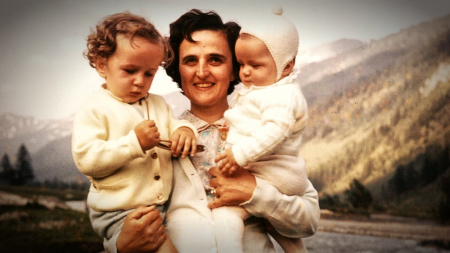
Sacrifices of Faith: The Pro-Life Legacies of St. Gianna and Jessica Hanna
-
How to love God by caring for our bodies
-
Pope Francis calls for negotiations to End Russia-Ukraine War
-
Pope Francis Contemplates Return to U.S. for United Nations Assembly Address
-
Pope Francis Calls on Faithful to Embrace Faith, Hope, and Charity in New Teaching Series

Daily Catholic
- Daily Readings for Sunday, April 28, 2024
- St. Peter Chanel: Saint of the Day for Sunday, April 28, 2024
- Prayer before a Crucifix: Prayer of the Day for Sunday, April 28, 2024
- Daily Readings for Saturday, April 27, 2024
- St. Zita: Saint of the Day for Saturday, April 27, 2024
- Prayer for the Dead # 2: Prayer of the Day for Saturday, April 27, 2024
 Daily Readings for Sunday, April 28, 2024
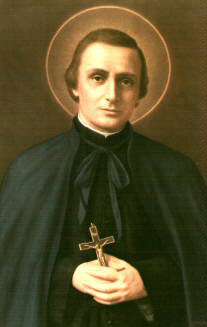 St. Peter Chanel: Saint of the Day for Sunday, April 28, 2024
 Prayer before a Crucifix: Prayer of the Day for Sunday, April 28, 2024
We ask you, humbly: don't scroll away.
Hi readers, it seems you use Catholic Online a lot; that's great! It's a little awkward to ask, but we need your help. If you have already donated, we sincerely thank you. We're not salespeople, but we depend on donations averaging $14.76 and fewer than 1% of readers give. If you donate just $5.00, the price of your coffee, Catholic Online School could keep thriving. Thank you.Help Now >

Copyright 2024 Catholic Online. All materials contained on this site, whether written, audible or visual are the exclusive property of Catholic Online and are protected under U.S. and International copyright laws, © Copyright 2024 Catholic Online. Any unauthorized use, without prior written consent of Catholic Online is strictly forbidden and prohibited.
Catholic Online is a Project of Your Catholic Voice Foundation, a Not-for-Profit Corporation. Your Catholic Voice Foundation has been granted a recognition of tax exemption under Section 501(c)(3) of the Internal Revenue Code. Federal Tax Identification Number: 81-0596847. Your gift is tax-deductible as allowed by law.