We ask you, humbly: don't scroll away.
Hi readers, it seems you use Catholic Online a lot; that's great! It's a little awkward to ask, but we need your help. If you have already donated, we sincerely thank you. We're not salespeople, but we depend on donations averaging $14.76 and fewer than 1% of readers give. If you donate just $5.00, the price of your coffee, Catholic Online School could keep thriving. Thank you.Help Now >
Ticonius
FREE Catholic Classes
(Also TYCONIUS, TYCHONIUS, etc.)
An African Donatist writer of the fourth century who appears to have had some influence on St. Augustine. He defended a milder form of Donatism than Parmenianus. He admitted a church outside his own sect and rejected the re- baptism of Catholics. Parmenianus wrote a letter against him, quoted by St. Augustine (Contra ep. Parmeniani, I, i; P.L., XVIII, 33). Otherwise almost all we know of him is contained in Gennadius (De vir illustr., XVIII):
"Tichonius an African was learned in theology, sufficiently instructed in history, not ignorant of secularknowledge. He wrote books, 'De bello intestino' and 'Expositiones diversarum causarum' [these are both Donatist apologies]: in which, to defend his side, he quotes ancient synods ; from which he is seen to have been of the Donatist party. He composed eight [should be seven] rules for discovering the meaning of theScriptures, which he arranged in one book. He also explained the wholeApocalypse of John, understanding all of it in a spiritual sense, nothing carnally. In this exposition he said that the body [of man ] is the dwelling-place of an angel. He denied the idea of a kingdom of the righteous on earth lasting a thousand years after the resurrection. Nor did he admit two futureresurrections of the dead in the flesh, one of the good and one of the bad, but only one of all, in which the misbegotten and deformed will rise too, so that no part of the human race ever animated by a soul shall perish. He showed the distinction of the resurrection really to be that we mustbelieve that there is arevelation of the righteous now in this world, when those justified by faith rise by baptism from the death of sin to the reward of theeternal life, and the second [ resurrection ] to be the general one of all flesh. He flourished at the same time as Rufinus; in the reign of Theodosius and his son" (ed. Bernoulli, Freiburg and Leipzig, 1895, pp. 68-69).This gives us 379-423 as extreme dates. Ticonius's best known work is the "Seven rules of interpretation" (for the Bible ). They are quoted and explained by St. Augustine in "De doctrina christiana" (III, 30-37; P.L., XXIV, 81-90) and his authority gave them great importance for many centuries in the West. St. Bede too quotes them (Explanatio apocalpsis; P.L., XCIII, 130-132). Ticonius's "Commentary on the Apocalypse" (Bede, op. cit., 132-134) is now lost. It was extant in the library of St. Gallen in the ninth century (No. 242; cf. G. Becker, "Catalogi biblioth. antiqui.", Bonn, 1885, p. 48) and is used by Primasius of Hadrumetum (P.L., LXVIII, 793-936), Ambrose Autpert (Bibl. Max., XIII, 403-657), and others. The "Commentary" ascribed to St. Augustine (P.L., XXXV, 2415-52) is believed to be a modified version of Ticonius. St. Augustine reproaches Ticonius with an anticipation of Pelagian ideas (De doctr. Christ., III, 33).
We ask you, humbly: don't scroll away.
Hi readers, it seems you use Catholic Online a lot; that's great! It's a little awkward to ask, but we need your help. If you have already donated, we sincerely thank you. We're not salespeople, but we depend on donations averaging $14.76 and fewer than 1% of readers give. If you donate just $5.00, the price of your coffee, Catholic Online School could keep thriving. Thank you.Help Now >


Join the Movement
When you sign up below, you don't just join an email list - you're joining an entire movement for Free world class Catholic education.


-

-
Mysteries of the Rosary
-
St. Faustina Kowalska
-
Litany of the Blessed Virgin Mary
-
Saint of the Day for Wednesday, Oct 4th, 2023
-
Popular Saints
-
St. Francis of Assisi
-
Bible
-
Female / Women Saints
-
7 Morning Prayers you need to get your day started with God
-
Litany of the Blessed Virgin Mary


Sacrifices of Faith: The Pro-Life Legacies of St. Gianna and Jessica Hanna
-
How to love God by caring for our bodies
-
Pope Francis calls for negotiations to End Russia-Ukraine War
-
Pope Francis Contemplates Return to U.S. for United Nations Assembly Address
-
Pope Francis Calls on Faithful to Embrace Faith, Hope, and Charity in New Teaching Series


Daily Catholic
- Daily Readings for Sunday, April 28, 2024
- St. Peter Chanel: Saint of the Day for Sunday, April 28, 2024
- Prayer before a Crucifix: Prayer of the Day for Sunday, April 28, 2024
- Daily Readings for Saturday, April 27, 2024
- St. Zita: Saint of the Day for Saturday, April 27, 2024
- Prayer for the Dead # 2: Prayer of the Day for Saturday, April 27, 2024
 Daily Readings for Sunday, April 28, 2024
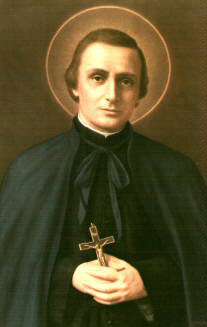 St. Peter Chanel: Saint of the Day for Sunday, April 28, 2024
 Prayer before a Crucifix: Prayer of the Day for Sunday, April 28, 2024

We ask you, humbly: don't scroll away.
Hi readers, it seems you use Catholic Online a lot; that's great! It's a little awkward to ask, but we need your help. If you have already donated, we sincerely thank you. We're not salespeople, but we depend on donations averaging $14.76 and fewer than 1% of readers give. If you donate just $5.00, the price of your coffee, Catholic Online School could keep thriving. Thank you.Help Now >

Copyright 2024 Catholic Online. All materials contained on this site, whether written, audible or visual are the exclusive property of Catholic Online and are protected under U.S. and International copyright laws, © Copyright 2024 Catholic Online. Any unauthorized use, without prior written consent of Catholic Online is strictly forbidden and prohibited.
Catholic Online is a Project of Your Catholic Voice Foundation, a Not-for-Profit Corporation. Your Catholic Voice Foundation has been granted a recognition of tax exemption under Section 501(c)(3) of the Internal Revenue Code. Federal Tax Identification Number: 81-0596847. Your gift is tax-deductible as allowed by law.
