We ask you, humbly: don't scroll away.
Hi readers, it seems you use Catholic Online a lot; that's great! It's a little awkward to ask, but we need your help. If you have already donated, we sincerely thank you. We're not salespeople, but we depend on donations averaging $14.76 and fewer than 1% of readers give. If you donate just $5.00, the price of your coffee, Catholic Online School could keep thriving. Thank you.Help Now >
Richard Smith
FREE Catholic Classes
Bishop of Chalcedon, second Vicar Apostolic of England ; b. at Hanworth, Lincolnshire, Nov., 1568 (not 1566 as commonly stated); d. at Paris, 18 March, 1655. He was educated at Trinity College, Oxford, where he became a Catholic. He was admitted to the English College, Rome, in 1586, studied under Bellarmine, and was ordained priest 7 May 1592. In Feb., 1593, he arrived at Valladolid, where he took the degree of Doctor of Theology, and taught philosophy at the English College till 1598, when he went to Seville as a professor of controversies. In 1603 he went on the English mission, where he made his mark as a missioner. Chosen to represent the case of the secular clergy in the archpriest controversy, he went to Rome, where he opposed Persons, who said of him: "I never dealt with any man in my life more heady and resolute in his opinions". In 1613 he became superior of the small body of English secular priests at Arras College, Paris, who devoted themselves to controversial work. In 1625 he was elected to succeed Dr. Bishop as vicar Apostolic, but the date usually assigned for his consecration as Bishop of Chalcedon (12 Jan., 1625) must be wrong, as he was not elected till 2 Jan. He arrived in England in April, of the same year, residing in Lord Montagu's house at Turvey, Bedfordshire. As vicar Apostolic he came into conflict with the regulars, claiming the rights of an ordinary, but Urban VIII decided (16 Dec., 1627) that he was not an ordinary. In 1628 the Government issued a proclamation for his arrest, and in 1631 he withdrew to Paris, where he lived with Richelieu till the cardinal's death in 1642; then he retired to the convent of the English Augustinian nuns, where he died.
We ask you, humbly: don't scroll away.
Hi readers, it seems you use Catholic Online a lot; that's great! It's a little awkward to ask, but we need your help. If you have already donated, we sincerely thank you. We're not salespeople, but we depend on donations averaging $14.76 and fewer than 1% of readers give. If you donate just $5.00, the price of your coffee, Catholic Online School could keep thriving. Thank you.Help Now >
He wrote: "An answer to T. Bel's late Challenge" (1605); "The Prudentiall Ballance of Religion", (1609); "Vita Dominae Magdalenae Montis-Acuti" i.e., Viscountess Montagu (1609); "De auctore et essentia Protestanticae Religionis" (1619), English translation, 1621; "Collatio doctrinae Catholicorum et Protestantium" (1622), tr. (1631); "Of the distinction of fundamental and not fundamental points of faith" (1645); "Monita quaedam utilia pro Sacerdotibus, Seminaristis, Missionariis Angliae" (1647); "A Treatise of the best kinde of Confessors" (1651); "Of the all-sufficient Eternal Proposer of Matters of Faith" (1653); "Florum Historiae Ecclesiasticae gentis Anglorum libri septem" (1654). Many unpublished documents relating to his troubled episcopate (an impartial history of which yet remains to be written) are preserved in the Westminster Diocesan Archives.

We ask you, humbly: don't scroll away.
Hi readers, it seems you use Catholic Online a lot; that's great! It's a little awkward to ask, but we need your help. If you have already donated, we sincerely thank you. We're not salespeople, but we depend on donations averaging $14.76 and fewer than 1% of readers give. If you donate just $5.00, the price of your coffee, Catholic Online School could keep thriving. Thank you.Help Now >
Join the Movement
When you sign up below, you don't just join an email list - you're joining an entire movement for Free world class Catholic education.


-

-
Mysteries of the Rosary
-
St. Faustina Kowalska
-
Litany of the Blessed Virgin Mary
-
Saint of the Day for Wednesday, Oct 4th, 2023
-
Popular Saints
-
St. Francis of Assisi
-
Bible
-
Female / Women Saints
-
7 Morning Prayers you need to get your day started with God
-
Litany of the Blessed Virgin Mary


Sacrifices of Faith: The Pro-Life Legacies of St. Gianna and Jessica Hanna
-
How to love God by caring for our bodies
-
Pope Francis calls for negotiations to End Russia-Ukraine War
-
Pope Francis Contemplates Return to U.S. for United Nations Assembly Address
-
Pope Francis Calls on Faithful to Embrace Faith, Hope, and Charity in New Teaching Series


Daily Catholic
- Daily Readings for Sunday, April 28, 2024
- St. Peter Chanel: Saint of the Day for Sunday, April 28, 2024
- Prayer before a Crucifix: Prayer of the Day for Sunday, April 28, 2024
- Daily Readings for Saturday, April 27, 2024
- St. Zita: Saint of the Day for Saturday, April 27, 2024
- Prayer for the Dead # 2: Prayer of the Day for Saturday, April 27, 2024
 Daily Readings for Sunday, April 28, 2024
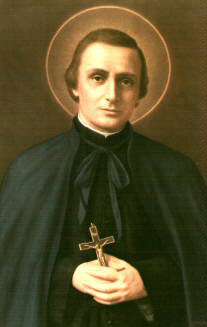 St. Peter Chanel: Saint of the Day for Sunday, April 28, 2024
 Prayer before a Crucifix: Prayer of the Day for Sunday, April 28, 2024
 Hi readers, it seems you use Catholic Online a lot; that's great! It's a little awkward to ask, but we need your help. If you have already donated, we sincerely thank you. We're not salespeople, but we depend on donations averaging $14.76 and fewer than 1% of readers give. If you donate just $5.00, the price of your coffee, Catholic Online School could keep thriving. Thank you. Help Now >

Copyright 2024 Catholic Online. All materials contained on this site, whether written, audible or visual are the exclusive property of Catholic Online and are protected under U.S. and International copyright laws, © Copyright 2024 Catholic Online. Any unauthorized use, without prior written consent of Catholic Online is strictly forbidden and prohibited.
Catholic Online is a Project of Your Catholic Voice Foundation, a Not-for-Profit Corporation. Your Catholic Voice Foundation has been granted a recognition of tax exemption under Section 501(c)(3) of the Internal Revenue Code. Federal Tax Identification Number: 81-0596847. Your gift is tax-deductible as allowed by law.