 Hi readers, it seems you use Catholic Online a lot; that's great! It's a little awkward to ask, but we need your help. If you have already donated, we sincerely thank you. We're not salespeople, but we depend on donations averaging $14.76 and fewer than 1% of readers give. If you donate just $5.00, the price of your coffee, Catholic Online School could keep thriving. Thank you. Help Now >
Girolamo Seripando
FREE Catholic Classes
Italian theologian and cardinal, b. at Troja (Apulia), 6 May, 1493; d. at Trent 17 March, 1563. He was of noble birth, and intended by his parents for the legal profession. After their death, however, and at the age of fourteen he entered the Augustinian Order, at Viterbo, where he joined the study of Greek and Hebrew to that of philosophy and theology. After a short stay in Rome, whither he had been called by his superior general, he was appointed lecturer at Siena (1515), professor of theology at Bologna (1517), and vicar-general (1532), which last charge he filled with great credit for two years. He won such reputation for eloquence by his discourses in the principal cities of Italy, that the Emperor Charles V often made it a point to be present at his sermons. Elected superior general in 1539, he governed for twelve years, with singular prudence, zeal, and piety. He attended (1546) the sessions of the Council of Trent, where he distinguished himself by his zeal for the purity of the text of Holy Writ , and also by his peculiar views concerning original sin and justification. Paul III sent him as his legate to the emperor and to the King of France, after which mission he was offered the Bishopric of Aquila. Seripando not only declined this dignity, but even resigned his charge of superior general (1551), and withdrew into a small convent, from the retirement of which he was called (1553) on a mission from the city of Naples to Charles V. Upon completion he was appointed Archbishop of Salerno. He proved a zealous and efficient pastor. A few years later (1561) Pius IV made him cardinal and second legate of the Holy See at the Council of Trent. Upon the death of Cardinal Gonzaga, he became first president of the same Council. Seripando was an elegant and prolific writer, and a vigorous controversialist, rather than an orator. The following are his principal published works: "Novae constitutiones ordinis S. Augustini" (Venice, 1549); "Oratio in funere Caroli V imperatoris" (Naples; 1559); "Prediche sopra il simbolo degli Apostoli, etc." (Venice, 1567); "Commentarius in D. Pauli epistolas ad Galatas" (Venice, 1569); "Commentaria in D. Pauli epistolas ad Romanos et ad Galatas" (Naples, 1601); "De arte orandi" (Lyons, 1670); and several of his letters, included by Lagomarsini in "Poggiani epist. et orationes" (Rome, 1762).

We ask you, humbly: don't scroll away.
Hi readers, it seems you use Catholic Online a lot; that's great! It's a little awkward to ask, but we need your help. If you have already donated, we sincerely thank you. We're not salespeople, but we depend on donations averaging $14.76 and fewer than 1% of readers give. If you donate just $5.00, the price of your coffee, Catholic Online School could keep thriving. Thank you.Help Now >
Hi readers, it seems you use Catholic Online a lot; that's great! It's a little awkward to ask, but we need your help. If you have already donated, we sincerely thank you. We're not salespeople, but we depend on donations averaging $14.76 and fewer than 1% of readers give. If you donate just $5.00, the price of your coffee, Catholic Online School could keep thriving. Thank you. Help Now >
Join the Movement
When you sign up below, you don't just join an email list - you're joining an entire movement for Free world class Catholic education.


-

-
Mysteries of the Rosary
-
St. Faustina Kowalska
-
Litany of the Blessed Virgin Mary
-
Saint of the Day for Wednesday, Oct 4th, 2023
-
Popular Saints
-
St. Francis of Assisi
-
Bible
-
Female / Women Saints
-
7 Morning Prayers you need to get your day started with God
-
Litany of the Blessed Virgin Mary

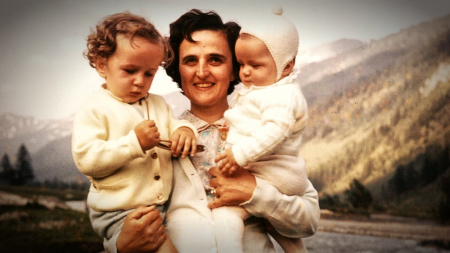
Sacrifices of Faith: The Pro-Life Legacies of St. Gianna and Jessica Hanna
-
How to love God by caring for our bodies
-
Pope Francis calls for negotiations to End Russia-Ukraine War
-
Pope Francis Contemplates Return to U.S. for United Nations Assembly Address
-
Pope Francis Calls on Faithful to Embrace Faith, Hope, and Charity in New Teaching Series


Daily Catholic
- Daily Readings for Sunday, April 28, 2024
- St. Peter Chanel: Saint of the Day for Sunday, April 28, 2024
- Prayer before a Crucifix: Prayer of the Day for Sunday, April 28, 2024
- Daily Readings for Saturday, April 27, 2024
- St. Zita: Saint of the Day for Saturday, April 27, 2024
- Prayer for the Dead # 2: Prayer of the Day for Saturday, April 27, 2024
 Daily Readings for Sunday, April 28, 2024
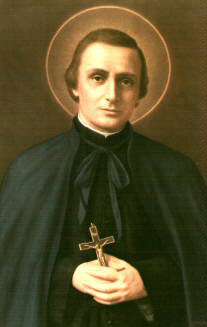 St. Peter Chanel: Saint of the Day for Sunday, April 28, 2024
 Prayer before a Crucifix: Prayer of the Day for Sunday, April 28, 2024


Copyright 2024 Catholic Online. All materials contained on this site, whether written, audible or visual are the exclusive property of Catholic Online and are protected under U.S. and International copyright laws, © Copyright 2024 Catholic Online. Any unauthorized use, without prior written consent of Catholic Online is strictly forbidden and prohibited.
Catholic Online is a Project of Your Catholic Voice Foundation, a Not-for-Profit Corporation. Your Catholic Voice Foundation has been granted a recognition of tax exemption under Section 501(c)(3) of the Internal Revenue Code. Federal Tax Identification Number: 81-0596847. Your gift is tax-deductible as allowed by law.