Karl Friedrich Savigny
FREE Catholic Classes
Diplomatist, born at Berlin, 19 Sept., 1814; died at Frankfort-on-the-Main, 11 Feb., 1875. He was the son of the great jurist Friedrich Karl von Savigny, who was then privy councillor of the court of appeals, member of the Prussian council of State, and professor at the University of Berlin, and of his wife, Kunigunde Brentano, sister of the poet Klemens Brentano. The father was a Protestant, but the mother was a Catholic, and the children were allowed to follow the religion of the mother. Karl Friedrich was first taught at home, then attended the French Gymnasium at Berlin, the Collegium Romanum at Rome, and the Collegium Sebastianum at Naples. He studied law at Berlin, Munich, and Paris. In 1836 he became an auscultator at Berlin ; in 1837 he was a referendar in the court at Aachen, in 1840 secretary of legation at London and Dresden, in 1842 at Lisbon, in 1848 at London. In 1849 he was councillor of legations and member of the ministry of foreign affairs, and in 1850 ambassador at Karlsruhe. While here he was able to win over the Government of Baden for the Prussian policy, and, as Bismarck testified, "by cautious and tactful bearing to win a commanding position at Karlsruhe for the Prussian government."
From 1859 Karl Friedrich was Prussian ambassador at Dresden, from 1862 at Brussels, and from 1864 he was minister with full powers at the Diet of the German Confederation at Frankfort. In 1866 he offered at the Diet the Prussian motion for the reform of the German Confederation, and when it was rejected on 14 June, 1866, he declared the withdrawal of Prussia, upon which the Austro-Prussian war began. Later in connection with Bismarck he was plenipotentiary in making a treaty of peace with the states of southern Germany and Saxony. He was the presiding officer of the government conferences for the drafting of a constitution for the North German Confederation, and was a plenipotentiary at the Reichstag which decided the constitution. Thus he performed important services in national affairs. In 1868 he retired partially, and in 1871 entirely, from government positions in order to become one of the parliamentary leaders of the Catholics. From 1867 he was a member of the Lower House of the Prussian Diet, from 1868 a member of the Lower House of the Diet of the North German Confederation, and later of the German Reichstag, or Parliament of the German Empire. In 1871 he took part in the founding of the Centre Party. He was not particularly distinguished as a speaker, but his knowledge, distinguished personality, and connections were of much benefit to the Catholic cause.
We ask you, humbly: don't scroll away.
Hi readers, it seems you use Catholic Online a lot; that's great! It's a little awkward to ask, but we need your help. If you have already donated, we sincerely thank you. We're not salespeople, but we depend on donations averaging $14.76 and fewer than 1% of readers give. If you donate just $5.00, the price of your coffee, Catholic Online School could keep thriving. Thank you.Help Now >


Join the Movement
When you sign up below, you don't just join an email list - you're joining an entire movement for Free world class Catholic education.


-

-
Mysteries of the Rosary
-
St. Faustina Kowalska
-
Litany of the Blessed Virgin Mary
-
Saint of the Day for Wednesday, Oct 4th, 2023
-
Popular Saints
-
St. Francis of Assisi
-
Bible
-
Female / Women Saints
-
7 Morning Prayers you need to get your day started with God
-
Litany of the Blessed Virgin Mary

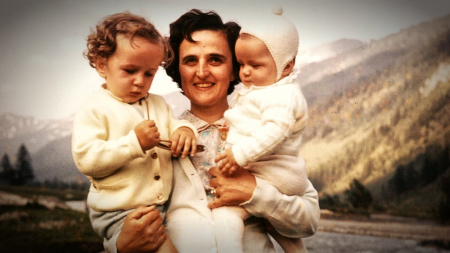
Sacrifices of Faith: The Pro-Life Legacies of St. Gianna and Jessica Hanna
-
How to love God by caring for our bodies
-
Pope Francis calls for negotiations to End Russia-Ukraine War
-
Pope Francis Contemplates Return to U.S. for United Nations Assembly Address
-
Pope Francis Calls on Faithful to Embrace Faith, Hope, and Charity in New Teaching Series


Daily Catholic
- Daily Readings for Sunday, April 28, 2024
- St. Peter Chanel: Saint of the Day for Sunday, April 28, 2024
- Prayer before a Crucifix: Prayer of the Day for Sunday, April 28, 2024
- Daily Readings for Saturday, April 27, 2024
- St. Zita: Saint of the Day for Saturday, April 27, 2024
- Prayer for the Dead # 2: Prayer of the Day for Saturday, April 27, 2024
 Daily Readings for Sunday, April 28, 2024
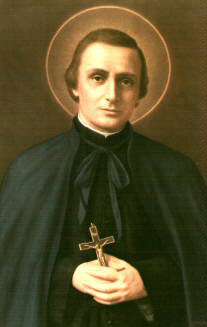 St. Peter Chanel: Saint of the Day for Sunday, April 28, 2024
 Prayer before a Crucifix: Prayer of the Day for Sunday, April 28, 2024
 Hi readers, it seems you use Catholic Online a lot; that's great! It's a little awkward to ask, but we need your help. If you have already donated, we sincerely thank you. We're not salespeople, but we depend on donations averaging $14.76 and fewer than 1% of readers give. If you donate just $5.00, the price of your coffee, Catholic Online School could keep thriving. Thank you. Help Now >

Copyright 2024 Catholic Online. All materials contained on this site, whether written, audible or visual are the exclusive property of Catholic Online and are protected under U.S. and International copyright laws, © Copyright 2024 Catholic Online. Any unauthorized use, without prior written consent of Catholic Online is strictly forbidden and prohibited.
Catholic Online is a Project of Your Catholic Voice Foundation, a Not-for-Profit Corporation. Your Catholic Voice Foundation has been granted a recognition of tax exemption under Section 501(c)(3) of the Internal Revenue Code. Federal Tax Identification Number: 81-0596847. Your gift is tax-deductible as allowed by law.