 Hi readers, it seems you use Catholic Online a lot; that's great! It's a little awkward to ask, but we need your help. If you have already donated, we sincerely thank you. We're not salespeople, but we depend on donations averaging $14.76 and fewer than 1% of readers give. If you donate just $5.00, the price of your coffee, Catholic Online School could keep thriving. Thank you. Help Now >
Samoa
FREE Catholic Classes
(Or NAVIGATORS' ISLANDS).
A group of islands situated in latitude 13§30' and 14§30' south and longitude 168§ and 173§ west, and composed principally of fertile mountainous islands, such as Savai'i, Upolu, Tutuila, Manu'a, of volcanic and coral formations. The natives are tall, muscular, hardy, and fearless seafarers, but ferociously cruel (formerly cannibalistic) in war ; hospitable, but indolent in peace; of dignified and courteous bearing, and skilled in debate. The aboriginal government was an aristocratic federation of chiefs, chosen from certain families, controlling the royal succession.
The first mission work in these islands was done by John Williams of the London ( Protestant ) Missionary Society, 1830. In 1836 Gregory XVI divided Oceanica (which includes Samoa) between the Society of the Sacred Hearts of Jesus and Mary and the Marists. The First Catholic missionaries, Marists, landed in Samoa in 1845. In 1851 the Vicar Apostolic of Central Oceanica appointed by Pius IX was also Administrator of Samoa. This double title was borne by the succeeding bishops, Elloy and Lamaze, until 1896, when Mgr. Broyer was appointed Vicar Apostolic of Samoa and Tokelau, with residence at Apia. The total population is estimated at 37,000, of whom 7500 are Catholics, with l bishop and 21 priests, several of them natives. There are 17 churches with resident pastors, 100 chapel stations under married catechists, schools under Sisters of the Third Order of Mary. Divorce and immorality are the principal obstacles to Catholic progress. The London Missionary Society has 12 missionaries and 8658 church members. There are also Mormon and Wesleyan missions.

The European name of these islands was given them by Bougainville in 1768. In 1872 Commander Meade, U.S.N., negotiated the concession of a coaling station in Tutuila; this was ratified by a treaty in 1878. Treaties with Germany and Great Britain followed in 1879. Native dynastic disorders and consular aggressions necessitated the Berlin Conference of 1889, between the interested powers, resulting in a tripartite government of the islands by the United States, Germany, and Great Britain. Popular disapproval in the United States of "foreign alliances" led to the dissolution of this agreement and a partition in 1899, Tutuila and the islands east of 171§W longitude passing under American control, the rest to Germany, under an imperial governor. Tutuila still remains (1911) under native chiefs and laws (when not conflicting with American law ), with supervision by the commandant of the United States Naval Station.

Join the Movement
When you sign up below, you don't just join an email list - you're joining an entire movement for Free world class Catholic education.


-

-
Mysteries of the Rosary
-
St. Faustina Kowalska
-
Litany of the Blessed Virgin Mary
-
Saint of the Day for Wednesday, Oct 4th, 2023
-
Popular Saints
-
St. Francis of Assisi
-
Bible
-
Female / Women Saints
-
7 Morning Prayers you need to get your day started with God
-
Litany of the Blessed Virgin Mary


Sacrifices of Faith: The Pro-Life Legacies of St. Gianna and Jessica Hanna
-
How to love God by caring for our bodies
-
Pope Francis calls for negotiations to End Russia-Ukraine War
-
Pope Francis Contemplates Return to U.S. for United Nations Assembly Address
-
Pope Francis Calls on Faithful to Embrace Faith, Hope, and Charity in New Teaching Series


Daily Catholic
- Daily Readings for Sunday, April 28, 2024
- St. Peter Chanel: Saint of the Day for Sunday, April 28, 2024
- Prayer before a Crucifix: Prayer of the Day for Sunday, April 28, 2024
- Daily Readings for Saturday, April 27, 2024
- St. Zita: Saint of the Day for Saturday, April 27, 2024
- Prayer for the Dead # 2: Prayer of the Day for Saturday, April 27, 2024
 Daily Readings for Sunday, April 28, 2024
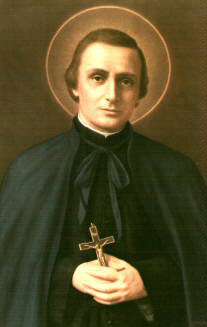 St. Peter Chanel: Saint of the Day for Sunday, April 28, 2024
 Prayer before a Crucifix: Prayer of the Day for Sunday, April 28, 2024
 Hi readers, it seems you use Catholic Online a lot; that's great! It's a little awkward to ask, but we need your help. If you have already donated, we sincerely thank you. We're not salespeople, but we depend on donations averaging $14.76 and fewer than 1% of readers give. If you donate just $5.00, the price of your coffee, Catholic Online School could keep thriving. Thank you. Help Now >

Copyright 2024 Catholic Online. All materials contained on this site, whether written, audible or visual are the exclusive property of Catholic Online and are protected under U.S. and International copyright laws, © Copyright 2024 Catholic Online. Any unauthorized use, without prior written consent of Catholic Online is strictly forbidden and prohibited.
Catholic Online is a Project of Your Catholic Voice Foundation, a Not-for-Profit Corporation. Your Catholic Voice Foundation has been granted a recognition of tax exemption under Section 501(c)(3) of the Internal Revenue Code. Federal Tax Identification Number: 81-0596847. Your gift is tax-deductible as allowed by law.