 Hi readers, it seems you use Catholic Online a lot; that's great! It's a little awkward to ask, but we need your help. If you have already donated, we sincerely thank you. We're not salespeople, but we depend on donations averaging $14.76 and fewer than 1% of readers give. If you donate just $5.00, the price of your coffee, Catholic Online School could keep thriving. Thank you. Help Now >
Archontics
FREE Catholic Classes
(From archon , prince, ruler).
A Gnostic sect which existed in Palestine and Armenia about the middle of the fourth century. St. Epiphanius seems to be the earliest Christian writer who speaks of this strange sect. He relates that a young priest in Palestine named Peter had been convicted of Gnostic errors, deposed from the office of the priesthood and expelled by Bishop Aëtius. He fled into that part of Arabia, where there was a centre of Ebionitism. In his old age, apparently but not really converted, he returned to Palestine, where he lived the life of an anchorite in a cave near Jerusalem and attracted followers by the austerity of his life and the practice of extreme poverty. Shortly before the death of the Emperor Constantius (337-361), Eutactus, coming from Egypt, visited the anchorite Peter and was imbued by him with the doctrines of the sect and carried them into Greater and Lesser Armenia. St. Epiphaniusexcommunicated Peter and the sect seems to have died out soon after.
Following the description of St. Epiphanius in giving a summary of the doctrines of the sect, we find there are seven heavens, each of which is ruled by an archon (prince) surrounded by angels begotten by him, who are the jailers of the souls. In the eighth heaven dwells the supreme Mother of light. The king or tyrant of the seventh heaven is Sabaoth, the god of the Jews, who is the father of the Devil. The devil, dwelling upon earth, rebelled against his father, and opposed him in all things, and by Eve begot Cain and Abel. Cain slew Abel in a quarrel about their sister, whom both loved. The souls, which are of heavenly origin are the food of the princes who cannot live without them. When the soul has reached the stage of Knowledge ( gnosis ), and has escaped the baptism of the Church and the power of Sabaoth, who is the author of the law, it flies to each of the heavens, makes humble prayer to its prince, and finally reaches the supreme Mother and Father of all things, from whom it has dropped upon the earth. Theodoret adds that it is the practice of some of these heretics to pour oil and water on the heads of the dead, thereby rendering them invisible to the princes and withdrawing them from their power. "Some of them", continues St. Epiphanius , "pretend to fast after the manner of the monks, deceiving the simple, and boast of having renounced all property. They deny the resurrection of the body, admitting only that of the soul ; they condemn baptism and reject the participation of the Holy Mysteries as something introduced by the tyrant Sabaoth, and teach other fables full of impiety." They are addicted, says St. John Damascene, "to a most shameful kind of lust." Their apocryphal books were the greater and lesser "Symphonia", the "Anabatikon [assumption] of Isaias ", a book called Allogeneis , and other pseudo-prophetical writings. They rejected the Old Testament, but used sentences torn from their context both in the Old and the New Testament to prop up their heresy. St. Epiphanius refutes their extravagant doctrines at some length, showing the absurdity and dishonesty of their abuse of Scripture texts. He writes, not with the calm detachment of the historian, but with the zeal of the pastor who is dealing with contemporary error.



Join the Movement
When you sign up below, you don't just join an email list - you're joining an entire movement for Free world class Catholic education.


-

-
Mysteries of the Rosary
-
St. Faustina Kowalska
-
Litany of the Blessed Virgin Mary
-
Saint of the Day for Wednesday, Oct 4th, 2023
-
Popular Saints
-
St. Francis of Assisi
-
Bible
-
Female / Women Saints
-
7 Morning Prayers you need to get your day started with God
-
Litany of the Blessed Virgin Mary


Sacrifices of Faith: The Pro-Life Legacies of St. Gianna and Jessica Hanna
-
How to love God by caring for our bodies
-
Pope Francis calls for negotiations to End Russia-Ukraine War
-
Pope Francis Contemplates Return to U.S. for United Nations Assembly Address
-
Pope Francis Calls on Faithful to Embrace Faith, Hope, and Charity in New Teaching Series


Daily Catholic
- Daily Readings for Sunday, April 28, 2024
- St. Peter Chanel: Saint of the Day for Sunday, April 28, 2024
- Prayer before a Crucifix: Prayer of the Day for Sunday, April 28, 2024
- Daily Readings for Saturday, April 27, 2024
- St. Zita: Saint of the Day for Saturday, April 27, 2024
- Prayer for the Dead # 2: Prayer of the Day for Saturday, April 27, 2024
 Daily Readings for Sunday, April 28, 2024
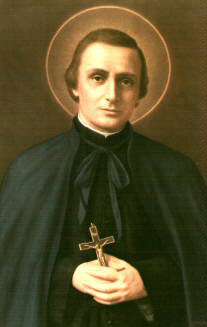 St. Peter Chanel: Saint of the Day for Sunday, April 28, 2024
 Prayer before a Crucifix: Prayer of the Day for Sunday, April 28, 2024


Copyright 2024 Catholic Online. All materials contained on this site, whether written, audible or visual are the exclusive property of Catholic Online and are protected under U.S. and International copyright laws, © Copyright 2024 Catholic Online. Any unauthorized use, without prior written consent of Catholic Online is strictly forbidden and prohibited.
Catholic Online is a Project of Your Catholic Voice Foundation, a Not-for-Profit Corporation. Your Catholic Voice Foundation has been granted a recognition of tax exemption under Section 501(c)(3) of the Internal Revenue Code. Federal Tax Identification Number: 81-0596847. Your gift is tax-deductible as allowed by law.