The Court of Arches
FREE Catholic Classes
The Court of Arches, so called from the fact that it was anciently held in the Church of St. Mary le Bow (Sancta Maria de Arcubus), in Cheapside, was the chief and most ancient court and consistory of the jurisdiction of the Archbishop of Canterbury. Originally the judge of this court, the official Principal of the Arches, took cognizance of causes throughout the ecclesiastical province , and by his patent was invested with the right of hearing appeals from the Dean of the Arches. This latter exercised jurisdiction over a "peculiar," consisting of thirteen parishes including St. Mary le Bow, within the diocese, but exempt from the jurisdiction of the Bishop of London. Eventually the office of Dean and that of Principal of the Arches became merged; and by the Public Worship Regulation Act of 1874 a judge of the provincial courts of Canterbury and York was provided, and "all proceedings hereafter taken before the judge in matters arising within the province of Canterbury shall be deemed to be taken in the Arches Court of Canterbury." [From the Court of Arches an appeal originally lay to the Pope. After the Reformation it was transferred to the King in Chancery (25 Hen. VIII, c. 19); and later (2 & 3 Will. IV, c. 92; 3 & 4 Will. IV, c. 41) to the Judicial Committee of the Privy Council.] Suits are conducted by means of citation, production of libel (accusation), answer to libel, arguments of advocates, and the judge's decree. This court exercises appellate jurisdiction from each of the diocesan courts within the province of Canterbury. It may also take original cognizance of causes by letters of Request from such courts. It latterly sat in the hall belonging to the College of Civilians (Doctors' Commons) until the ecclesiastical courts were thrown open to the bar and to solicitors generally, and all probate and divorce business taken away (1857), since when it sits at Lambeth or Westminster.
We ask you, humbly: don't scroll away.
Hi readers, it seems you use Catholic Online a lot; that's great! It's a little awkward to ask, but we need your help. If you have already donated, we sincerely thank you. We're not salespeople, but we depend on donations averaging $14.76 and fewer than 1% of readers give. If you donate just $5.00, the price of your coffee, Catholic Online School could keep thriving. Thank you.Help Now >
 Hi readers, it seems you use Catholic Online a lot; that's great! It's a little awkward to ask, but we need your help. If you have already donated, we sincerely thank you. We're not salespeople, but we depend on donations averaging $14.76 and fewer than 1% of readers give. If you donate just $5.00, the price of your coffee, Catholic Online School could keep thriving. Thank you. Help Now >

Join the Movement
When you sign up below, you don't just join an email list - you're joining an entire movement for Free world class Catholic education.


-

-
Mysteries of the Rosary
-
St. Faustina Kowalska
-
Litany of the Blessed Virgin Mary
-
Saint of the Day for Wednesday, Oct 4th, 2023
-
Popular Saints
-
St. Francis of Assisi
-
Bible
-
Female / Women Saints
-
7 Morning Prayers you need to get your day started with God
-
Litany of the Blessed Virgin Mary


Sacrifices of Faith: The Pro-Life Legacies of St. Gianna and Jessica Hanna
-
How to love God by caring for our bodies
-
Pope Francis calls for negotiations to End Russia-Ukraine War
-
Pope Francis Contemplates Return to U.S. for United Nations Assembly Address
-
Pope Francis Calls on Faithful to Embrace Faith, Hope, and Charity in New Teaching Series


Daily Catholic
- Daily Readings for Sunday, April 28, 2024
- St. Peter Chanel: Saint of the Day for Sunday, April 28, 2024
- Prayer before a Crucifix: Prayer of the Day for Sunday, April 28, 2024
- Daily Readings for Saturday, April 27, 2024
- St. Zita: Saint of the Day for Saturday, April 27, 2024
- Prayer for the Dead # 2: Prayer of the Day for Saturday, April 27, 2024
 Daily Readings for Sunday, April 28, 2024
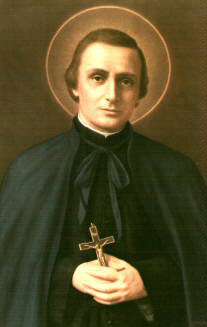 St. Peter Chanel: Saint of the Day for Sunday, April 28, 2024
 Prayer before a Crucifix: Prayer of the Day for Sunday, April 28, 2024



Copyright 2024 Catholic Online. All materials contained on this site, whether written, audible or visual are the exclusive property of Catholic Online and are protected under U.S. and International copyright laws, © Copyright 2024 Catholic Online. Any unauthorized use, without prior written consent of Catholic Online is strictly forbidden and prohibited.
Catholic Online is a Project of Your Catholic Voice Foundation, a Not-for-Profit Corporation. Your Catholic Voice Foundation has been granted a recognition of tax exemption under Section 501(c)(3) of the Internal Revenue Code. Federal Tax Identification Number: 81-0596847. Your gift is tax-deductible as allowed by law.