We have one question for you.
Has Catholic Online given you $5 worth of value this year? Maybe you came here for a prayer. Maybe you read today's Mass readings. Maybe you researched a saint. Maybe you needed an answer about the Catholic Faith. Maybe your child used Catholic Online School. If the answer is no, you don't owe us anything. Keep using Catholic Online. But if the answer is yes, we're asking you to give $5 today.
Catholic Online School has served 2.2 million student enrollments in 193 countries, and we continue working to make Catholic education available regardless of a family's financial circumstances. We don't need every reader to give. We need the readers who recognize the value of what they've received to stand behind it. Is Catholic Online worth $5 to you?
GIVE TODAY >>Fasting and Abstinence
Lent and Fasting: Origins and Histories
It's the sacred season of Lent. Recall that the three disciplines of Lent are prayer, fasting, and almsgiving. One of the questions people frequently have about Lent pertains to fasting. For example, why is it important? Is it required? And what's the history of fasting in the Church? Connected to fasting is the practice of abstinence, with its own set of questions.
To begin, let's start with some basic definitions. Today, people talk about fasting in different ways, often with enhancing physical health in mind. We might think of juice fasts or water fasts or carb fasts. Spiritually speaking, fasting has a different meaning.
What does it mean to fast in terms of Lent? To fast is to abstain from food. St. Thomas Aquinas notes that fasting consists of taking only one meal a day (ST, II-II, q. 147, a. 6). This definition has been refined recently by the Church in terms of what's allowed during Lent.
We can also make a distinction between fasting and abstinence in reference to the Lenten precept of the Church to observe the days of fasting and abstinence (CCC 2043). When abstinence is used in reference to Lent, we are speaking about regulating the quality of the food that is taken. For example, on Ash Wednesday, Friday of the Lord's Passion, and all other Fridays during Lent, Latin Rite Catholics are obliged to abstain from eating flesh meat. On Ash Wednesday and Friday of the Lord's passion, Catholics both fast and abstain from flesh meat.
What about the origin and history of fasting in the Church? There is an ancient practice of fasting in sorrow and repentance for sins found in the Old Testament. Fasting also accompanied fervent prayer to God. It was understood as a way of humbling oneself before the Lord and expressing sincere repentance and trust in His mercy. These insights remain meaningful today. Fasting does not make God love us more, nor does He require proof of our devotion. Rather, fasting is a concrete way we respond to His love, turning our hearts more fully toward Him and expressing that love through action. As the old adage goes, actions speak louder than words.
In the New Testament, the Lord Jesus does not seem to emphasize fasting while his disciples are with him. When questioned about this by John's disciples, Jesus insists that fasting is inappropriate in times of joy. In saying this, he compared himself to the bridegroom and his disciples to wedding guests (Matt 9:14 ff; Mark 2:18 ff; Luke 5:33 ff). In other words, while Jesus and his disciples are together, it is a time of joy like a wedding feast, not a time for fasting. Jesus notes that when the bridegroom is taken away, then there will be fasting, which seems to imply fasting as a sign of mourning the loss of the bridegroom and also in anticipation of and preparation for his return.
In the early Church, we find that the apostles were familiar with fasting and did so prior to making important decisions to gain divine assistance (Acts 13:2 ff; 14:23).
In the concepts of anticipation and preparation for the Lord Jesus we find a connection to the practice of fasting and abstinence during Lent. Lent is a time of penance and atonement for sin in preparation for the celebration of the resurrection of the Lord. Fasting and abstinence are integral to that preparation for several reasons, such as building virtue, self-mastery, and helping to avoid sinful tendencies that may ultimately lead to spiritual death in the case of mortal sin.
The practice of fasting during Lent finds its genesis in our Lord's journey into the desert where he fasted and prayed for forty days and nights in preparation to begin his public ministry (Matt 4:1-2; Luke 4:1-3). The forty days of Lent are in imitation of Christ's time in the desert. During Lent, the Christian walks into the desert with Christ and fasts so as to have the strength to avoid temptation with the help of God's grace. Lent is also a penitential season in which we strive to atone for our sins and purify our lives in preparation for the celebration of Christ's glorious rising from the tomb on Easter Sunday.
Today, many Catholics fast and abstain only on Ash Wednesday and Friday of the Lord's Passion and abstain from flesh meat on other Fridays of Lent, which is the minimum required by the precepts of the Church. In ancient times, however, the forty-day period of Lent sometimes involved extended and more austere fasts, as some Catholics practice today. For example, some Catholics fasted each of the forty days (except for Sunday and sometimes Saturdays) up to the ninth hour or 3:00 p.m., which is the hour that Christ gave up his spirit on the cross (Matt 27:50). The intent was to unite one's suffering through fasting to the passion of Christ. Since our Lord's suffering ended at the ninth hour, so too was the fast ended at that hour. St. Athanasius recommended in his Festal Letter (AD 331) that Christians engage in a forty-day fast prior to a stricter fast during Holy Week.
The historian Socrates (not the philosopher that lived before Christ) reports that Christians fasted in varied ways according to their local customs. Some abstained from all living creatures, others ate only fish, others ate birds and fish, others ate only bread, and still others abstained from all food. He reports that the fast ended at the ninth hour according to when the Lord died on the cross.
What is clear in all this is that the ancient tradition of fasting in order to unite oneself to Christ, do penance in atonement for sins, and prepare for the celebration of the resurrection is an integral part of the Christian life. Lent in particular is that time when we engage in those penitential practices for the spiritual benefit of the entire Church.
The Benefits of Fasting According To St. Thomas Aquinas
Lent is penitential in character. This means that Lent is a time prescribed by the Church to engage in acts of penance and mortification in atonement for the sins we have committed. It is recognized that an integral part of repentance, defined as turning away from sin and back toward God, includes penance both as an expression of sorrow for having offended God and others and as a means of helping to redress the wrongs we have committed.
Fasting has long been recognized as an excellent means of penance, with many spiritual benefits. In the post-modern world, however, the practice of fasting as a means of spiritual benefit has fallen into disuse. The focus is more often on the physical advantages of fasting while its spiritual benefits are disregarded. The Christian recognizes the primary importance of remaining spiritually healthy in view of eternal life, as opposed to a myopic, pagan view in which the material and temporal are given all the emphasis.

What are some of the spiritual benefits of fasting? To explore that question, let's look at the teaching of St. Thomas Aquinas. St. Thomas teaches that fasting is practiced for a threefold purpose: 1) we fast "in order to bridle the lusts of the flesh"; 2) we fast "in order that the mind may arise more freely to the contemplation of heavenly things," noting that Daniel received a revelation from God after fasting for three weeks (Dan 10:2 ff); and 3) we fast "in order to satisfy for sins," as it is written in Joel 2:12: "Be converted to Me with all your heart, in fasting and in weeping and in mourning" (ST, II-II, q. 147, a. 1).
St. Thomas is pointing to some well understood truths in the Catholic spiritual tradition in terms of the spiritual benefits of fasting. First, he notes that fasting helps to bring the body or the flesh under the soul's control. When we fast, we force the body into compliance, which builds self-control and self-mastery, two important virtues in the Christian life. St. Paul speaks about how the desires of the flesh are against the spirit and vice-versa (Gal 5:17). Fasting helps to rectify that disorder, bringing the flesh under the spirit's control, as it should be.
Second, St. Thomas points out that fasting tends to raise the mind and heart to heavenly things, toward the contemplation of God. Fasting empowers us in prayer. It focuses the intellect on seeking to know God and the will on obtaining God as the greatest good. It helps to purify the desires and aspirations of the soul toward the divine beauty and truth of God. Christians who have walked the path of spiritual perfection for some time often report having powerful experiences of the presence of God while fasting. God finds our acts of voluntary suffering for the love of him irresistible.
Third, St. Thomas notes that fasting is a means of atoning for our sins, something we've mentioned already. Fasting is a means of taking responsibility for our sins; it helps us make amends before God for those times we have offended him, others, and his holy Church. This is not to say that fasting confers forgiveness for the guilt of sins. We obtain forgiveness for our sins from God by virtue of the merits of Christ's saving death and resurrection. We are forgiven the eternal guilt of sin through repentance and the sacrament of confession (see John 20:22-23). Nevertheless, we can make restitution before God for our sins through acts of penance like fasting.

Because we are sinners, the Church teaches that Christians are required to do penance. In other words, repentance and penance go hand-in-hand. An example of this is found in the sacrament of Penance. After receiving absolution in the sacrament, penitents are always given some type of penance by the priest who acts as the minister of Christ's forgiveness. Penance, then, is a universal requirement for Christians who commit personal sin.
Church Law on Fasting and Abstinence
Fasting is listed as the fourth precept of the Church, which states: "You shall observe the days of fasting and abstinence established by the Church" (CCC 2043). This means that Catholics are under grave obligation to substantially observe these laws. Christians are required by divine law to do penance for their sins penance is not optional.
The Church, as a caring mother, is providing us a specific means and season for completing acts of penance. Her goal is to see to it that her children attain eternal life. Her precept on fasting, then, is for our spiritual benefit. Catholics who intentionally neglect and/or reject all forms of penance violate divine law and thus would be guilty of grave sin. Grave sin committed with full knowledge and full consent is by definition mortal sin and thus places a soul in peril (CCC 1857).
Because the season of Lent is of penitential character, the Church sets forth the days of penance as Ash Wednesday and all Fridays during Lent. Catholics are obliged to both fast and abstain from flesh meat on Ash Wednesday and Friday of the Lord's Passion and abstain from flesh meat on all other Fridays during Lent. These requirements are binding on Catholics of the following age ranges:
Latin Rite Catholics from age 18 up through to the beginning of their 60th year (their 59th birthday) are required to fast, unless they have a serious reason for not doing so. According to Pope Paul VI's apostolic constitution Paenitemini, "The law of fasting allows only one full meal a day, but does not prohibit taking some food in the morning and evening, observing as far as quantity and quality are concerned approved local custom." (Paenitemini, ch. III., III., 2).
It's often thought that a person can have one full meal and two "lesser meals" that cannot add up to a full meal. But Paenitemini doesn't require us to weigh up food to make sure it doesn't equate to a full meal. The point is, only one full meal is allowed, and one can take some food two other times on that day. Liquids such as juice, coffee, tea, or milk do not technically violate the fast, although refraining from ingesting any animal products such as milk is virtuous.

Latin Rite Catholics who have reached age 14 are required to abstain from flesh meat on Ash Wednesday and all Fridays during Lent. If a solemnity happens to fall on a Friday, abstinence is not required on that day. Notice there is no upper age limit on the requirement to abstain.
How is flesh meat defined? The U.S. bishops document, "Questions and Answers About Lent and Lenten Practices" states:
Abstinence laws consider that meat comes only from animals such as chickens, cows, sheep or pigs all of which live on land. Birds are also considered meat. Abstinence does not include meat juices and liquid foods made from meat. Thus, such foods as chicken broth, consomm, soups cooked or flavored with meat, meat gravies or sauces, as well as seasonings or condiments made from animal fat are technically not forbidden. However, moral theologians have traditionally taught that we should abstain from all animal-derived products (except foods such as gelatin, butter, cheese and eggs, which do not have any meat taste). Fish are a different category of animal. Salt and freshwater species of fish, amphibians, reptiles, (cold-blooded animals) and shellfish are permitted.
Paul VI states in Paenitemini: "The law of abstinence forbids the use of meat, but not of eggs, the products of milk or condiments made of animal fat" (III., 1).
Who is exempted from fasting and abstinence laws? "Questions and Answers About Lent and Lenten Practices" states:
Those that are excused from fast and abstinence outside the age limits include the physically or mentally ill including individuals suffering from chronic illnesses such as diabetes. Also excluded are pregnant or nursing women. In all cases, common sense should prevail, and ill persons should not further jeopardize their health by fasting.
One question that often comes up, is whether Catholics are required to abstain from flesh meat on all Fridays throughout the year. It should be noted, all Fridays remain a day of penance since on that day we remember Christ's saving death. The US bishops urge Catholics to engage in some form of suitable penance on all Friday's throughout the year. This is done to join with Christ in his suffering passion that we may be one day glorified with him. Although abstinence from flesh meat is not binding on Fridays outside of Lent under pain of sin, it holds primacy of place ("Pastoral Statement on Penance and Abstinence").
I think you'll agree, in learning about the Church's laws on fasting and abstinence it becomes clear she indeed acts as a mother who takes us by the hand and guides us toward salvation in Christ. The Church's precepts on fasting and abstinence are reasonable, biblically based, and spiritually beneficial. In these acts of penance, we not only help to atone for our sins but build self-mastery, a virtue which is of enormous benefit even in our life this side of heaven.

Printable PDF of Fasting and Abstinence
More Lent & Easter
Catholic Online Is Free. But We Need Your Help.
Please Watch

Easter 2026 / Lent 2026
Begins on Wednesday February 18th, 2026
Ends on Thursday April 2nd, 2026
'So it is written that the Christ would suffer and on the third day rise from the dead'
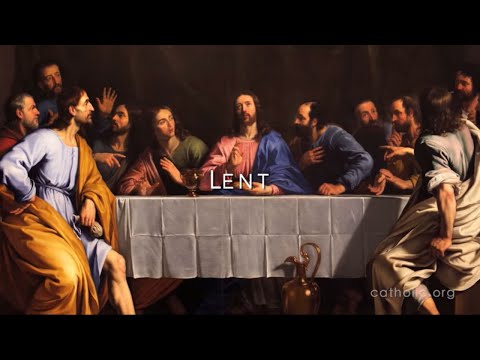

Lent Event
Importance
Stations of the Cross
Every Friday
 Stations of the Cross refers to the depiction of the final hours (or Passion) of Jesus, and the devotion commemorating the Passion... continue reading
Living Lent
February 18th, 2026 - April 2nd, 2026
 Commit to your faith and choose to 'live' Lent. Join our 40-day challenge to authentically live the Lenten season. Get inspired, don't just observe Lent, live it!... continue reading
Mardi Gras / Fat Tuesday
February 17th, 2026
 In France, the people feasted on foods that would be given up during the forty days of Lent. Meats, eggs, and milk were finished off in one day, giving the holiday its French title of 'Mardi Gras' which means Fat Tuesday... continue reading
Ash Wednesday
February 18th, 2026
 Ash Wednesday marks the beginning of the Season of Lent. It takes place 46 days before Easter Sunday. It is a season of penance, reflection, and fasting... continue reading

Palm Sunday
March 29th, 2026
 Palm Sunday, the Sunday before Easter, commemorates Jesus' triumphal entry into Jerusalem, an event mentioned in all four canonical Gospels... continue reading
Holy Week
March 29th, 2026 – April 4th, 2026
 On Palm Sunday, we celebrate the first joy of the season, as we celebrate Our Lord's triumphant entrance into Jerusalem where he was welcomed by... continue reading
Holy Thursday / Last Supper
April 2nd, 2026
 Holy Thursday is the most complex and profound of all religious observances. It celebrates his last supper with the disciples, a celebration of Passover... continue reading
Good Friday
April 3rd, 2026
 On Good Friday, each member of the Church tries to understand at what cost Christ has won our redemption. In the solemn ceremonies of Holy Week... continue reading
Easter Sunday
April 5th, 2026
 Easter is the principal feast of the ecclesiastical year. Leo I calls it the greatest feast, and says that Christmas is celebrated only in preparation for Easter... continue reading
FREE Online Lent / Easter Classes Enroll Now
Ascension of Our Lord
Thursday May 14th, 2026
 The Ascension of Our Lord, a Holy Day of Obligation, celebrates the day that Christ, in the presence of His apostles, ascended bodily into Heaven. The Ascension occurred on the 40th day of Easter, a Thursday... continue reading
Pentecost
Sunday May 24th, 2026
 Pentecost Sunday is one of the most ancient feasts of the Church, celebrated early enough to be mentioned in the Acts of the Apostles (20:16) and Corinthians (16:8)... continue reading
Fasting and Abstinence
Every Friday
 For most people the easiest practice to consistently fulfill will be the traditional one, to abstain from meat on all Fridays of the year. During Lent abstinence from meat on Fridays is obligatory in the... continue reading
What did you give up for Lent?
All of Lent
 From the humorous to the bizarre, people have had interesting Lenten experiences. Tell us about what you are going to give up for this Lenten Year... continue reading
 Everything answered from when does lent end, ashes, giving something up, stations of the cross and blessed palms. The key to understanding the meaning of Lent is simple... continue reading
The Resurrection of Jesus is the crowning truth of our faith in Christ, a faith believed and lived as the central truth by the first Christian community... continue reading
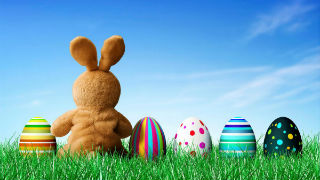 The Easter Bunny is a symbol of Easter that is popular in western culture, especially with children. According to folklore, the Easter Bunny hides Easter eggs for children to find on Easter morning... continue reading

 He is not here, for he has been raised just as he said. - Matthew 28:6. Learn more about the Post-Resurrection Appearances of Jesus Christ... continue reading
 Catholic Online Shopping offers a variety of Easter gifts & Easter treats for all ages! Choose a gift for someone special and celebrate the joy of Easter... continue reading
Easter / Lent News
5 Beautiful scriptures to remind you what Easter is all about Watch

This Easter, make sure to take a moment with your family to thank Jesus for his amazing sacrifice. LOS ANGELES, CA (Catholic Online) - Turn ... continue reading
Good Friday: The Crucifixion of Jesus Christ, the Church and the Sacraments Watch
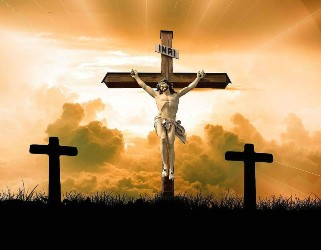
We will soon commemorate Good Friday. This is the day when the whole world stands still. We will recall the great Sacrifice offered on the ... continue reading
The surprising origins of the Easter Bunny -- it's not what you think! Watch

The Easter Bunny is a symbol of Easter that is popular in western culture, especially with children. According to folklore, the Easter ... continue reading
The Sacred Triduum: Holy Thursday, Good Friday and Easter. The Mystery of Faith Watch
"Beginning with the Easter Triduum as its source of light, the new age of the Resurrection fills the whole liturgical year with its ... continue reading
Footwashing, the Holy Thursday Mandatum: God is Love and Love is a Verb Watch

As we enter into these three days, the one day, we make this mystery our own. No mere spectators in this Act of Love we become ... continue reading

Come Grow With Us
Sign up and walk the Catholic journey with millions around the world.
Receive inspiring emails on saints, daily readings, and free faith-building resources—no cost, ever.
Catholic Online Is Free. But We Need Your Help.
Please Watch
- 7 Morning Prayers
- Mysteries of the Rosary
- Litany of the Bl. Virgin Mary
- Popular Saints
- Popular Prayers
- Female Saints
- Saint Feast Days by Month
- Stations of the Cross
- St. Francis of Assisi
- St. Michael the Archangel
- The Apostles' Creed
- Unfailing Prayer to St. Anthony
- Pray the Rosary




Copyright 2026 Catholic Online. All materials contained on this site, whether written, audible or visual are the exclusive property of Catholic Online and are protected under U.S. and International copyright laws, © Copyright 2026 Catholic Online. Any unauthorized use, without prior written consent of Catholic Online is strictly forbidden and prohibited.
Catholic Online is a Project of Your Catholic Voice Foundation, a Not-for-Profit Corporation. Your Catholic Voice Foundation has been granted a recognition of tax exemption under Section 501(c)(3) of the Internal Revenue Code. Federal Tax Identification Number: 81-0596847. Your gift is tax-deductible as allowed by law.
