We ask you, urgently: don't scroll past this
Dear readers, Catholic Online was de-platformed by Shopify for our pro-life beliefs. They shut down our Catholic Online, Catholic Online School, Prayer Candles, and Catholic Online Learning Resources essential faith tools serving over 1.4 million students and millions of families worldwide. Our founders, now in their 70's, just gave their entire life savings to protect this mission. But fewer than 2% of readers donate. If everyone gave just $5, the cost of a coffee, we could rebuild stronger and keep Catholic education free for all. Stand with us in faith. Thank you.Help Now >
Bl. Alix Le Clercq
Facts
Author and Publisher - Catholic Online
Printable Catholic Saints PDFs
Shop Bl. Alix Le Clercq
Alix Le Clercq was born at Remiremont in the duchy of Lorraine in 1576. Her family was a solid one, of good position, but little is known about her life until she was nearly seventeen. Alix was attractive and intelligent, what the French call "spirituelle." About this time, she became a nun. When her family moved to Hymont, she met Peter Fourier, who became her spiritual director, and in 1597 she and three other women formed a new foundation under his direction. At her father's insistence, she went to a convent at Ormes, was unimpressed by its secular atmosphere, and in 1598 the wealthy Judith d'Apremont gave Alix and her group a house on her estate, which they used as their Motherhouse in the founding of a new congregation dedicated to the education of children. Despite opposition from Alix's father and others, and the lack of formal ecclesiastical approval, they established several new foundations. In 1616 they received two papal bulls formally approving the Augustinian Canonesses of the Congregation of Our Lady from Rome. Differences about what the bulls granted and internal strife caused Father Fourier to replace Alix as superioress of the Congregation, and the last years of her life were bitter, as even Father Fourier seemed to turn against her. She died in her convent at Nancy on January 9, and was beatified in 1947.
More Saints
 New Saints canonized by Pope Francis
FREE Saint Classes Printable Saint PDF's Light a Virtual Saint Candle
Join the Movement
When you sign up below, you don't just join an email list - you're joining an entire movement for Free world class Catholic education.
-

- Easter / Lent
- Ascension Day
- 7 Morning Prayers
- Mysteries of the Rosary
- Litany of the Bl. Virgin Mary
- Popular Saints
- Popular Prayers
- Female Saints
- Saint Feast Days by Month
- Stations of the Cross
- St. Francis of Assisi
- St. Michael the Archangel
- The Apostles' Creed
- Unfailing Prayer to St. Anthony
- Pray the Rosary


The Coup Against Trump: A Treasonous Conspiracy to Overthrow the United States

Back to School: Reclaiming the Catholic Family

The Law of Forgiveness: Hope for Every Heart
Daily Catholic
- Daily Readings for Monday, August 18, 2025
- St. Helena: Saint of the Day for Monday, August 18, 2025
- St. Christopher's Prayer for Strength: Prayer of the Day for Monday, August 18, 2025
- Daily Readings for Sunday, August 17, 2025
- St. Clare of Montefalco: Saint of the Day for Sunday, August 17, 2025
- Act of Faith: Prayer of the Day for Sunday, August 17, 2025
 Daily Readings for Monday, August 18, 2025
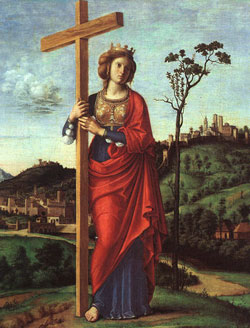 St. Helena: Saint of the Day for Monday, August 18, 2025
 St. Christopher's Prayer for Strength: Prayer of the Day for Monday, August 18, 2025
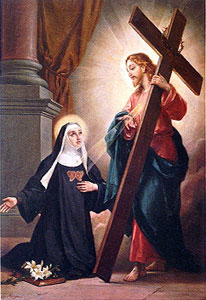 St. Clare of Montefalco: Saint of the Day for Sunday, August 17, 2025

Copyright 2025 Catholic Online. All materials contained on this site, whether written, audible or visual are the exclusive property of Catholic Online and are protected under U.S. and International copyright laws, © Copyright 2025 Catholic Online. Any unauthorized use, without prior written consent of Catholic Online is strictly forbidden and prohibited.
Catholic Online is a Project of Your Catholic Voice Foundation, a Not-for-Profit Corporation. Your Catholic Voice Foundation has been granted a recognition of tax exemption under Section 501(c)(3) of the Internal Revenue Code. Federal Tax Identification Number: 81-0596847. Your gift is tax-deductible as allowed by law.