We ask you, urgently: don't scroll past this
Dear readers, Catholic Online was de-platformed by Shopify for our pro-life beliefs. They shut down our Catholic Online, Catholic Online School, Prayer Candles, and Catholic Online Learning Resources essential faith tools serving over 1.4 million students and millions of families worldwide. Our founders, now in their 70's, just gave their entire life savings to protect this mission. But fewer than 2% of readers donate. If everyone gave just $5, the cost of a coffee, we could rebuild stronger and keep Catholic education free for all. Stand with us in faith. Thank you.Help Now >
St. Mary of Egypt
Facts
Patron: of Chastity (warfare against the flesh; deliverance from carnal passions); Demons (deliverance from); Fever; Skin diseases; Temptations of the flesh
Birth: 344
Death: 421
Author and Publisher - Catholic Online
Printable Catholic Saints PDFs
Shop St. Mary of Egypt
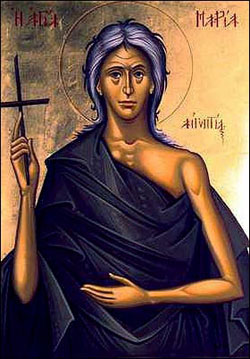
In Cyril of Scythopolis' life of St. Cyryacus, he tells of a woman named Mary found by Cyryacus and his companions living as a hermitess in the Jordanian desert. She told him she had been a famous singer and actress who had sinned and was doing penance in the desert. When they returned, she was dead. Around the story was built an elaborate legend that had tremendous popularity during the Middle Ages according to which she was an Egyptian who went to Alexandria when she was twelve and lived as an actress and courtesan for seventeen years. She was brought to the realization of her evil life before an icon of the Blessed Virgin, and at Mary's direction, went to the desert east of Palestine, where she lived as a hermitess for forty-seven years, not seeing a single human being and beset by all kinds of temptations, which were mitigated by her prayers to the Blessed Virgin. She was discovered about 430 by a holy man named Zosimus, who was impressed by her spiritual knowledge and wisdom. He saw her the following Lent, but when he returned, he found her dead and buried her. When he returned to his monastery near the Jordan, he told the brethren what had happened and the story spread. Her feast day is April 2.
More Saints
 New Saints canonized by Pope Francis
FREE Saint Classes Printable Saint PDF's Light a Virtual Saint Candle
Join the Movement
When you sign up below, you don't just join an email list - you're joining an entire movement for Free world class Catholic education.
-

- Easter / Lent
- Ascension Day
- 7 Morning Prayers
- Mysteries of the Rosary
- Litany of the Bl. Virgin Mary
- Popular Saints
- Popular Prayers
- Female Saints
- Saint Feast Days by Month
- Stations of the Cross
- St. Francis of Assisi
- St. Michael the Archangel
- The Apostles' Creed
- Unfailing Prayer to St. Anthony
- Pray the Rosary


The Assumption of the Blessed Virgin Mary: A Sign of Our Eternal Hope

Mary’s ‘Magnificat’ Still Strengthens the Hope of the Faithful, Pope Leo Affirms

Mary, Our Icon of Hope, Leads Us to the Goal of Life
Daily Catholic
- Daily Readings for Sunday, August 17, 2025
- St. Clare of Montefalco: Saint of the Day for Sunday, August 17, 2025
- Act of Faith: Prayer of the Day for Sunday, August 17, 2025
- Daily Readings for Saturday, August 16, 2025
- St. Stephen the Great: Saint of the Day for Saturday, August 16, 2025
- Glory to God: Prayer of the Day for Saturday, August 16, 2025
 Daily Readings for Sunday, August 17, 2025
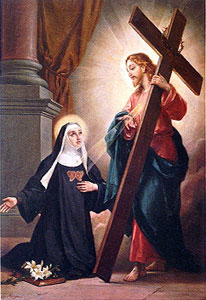 St. Clare of Montefalco: Saint of the Day for Sunday, August 17, 2025
 Act of Faith: Prayer of the Day for Sunday, August 17, 2025
 St. Stephen the Great: Saint of the Day for Saturday, August 16, 2025


Copyright 2025 Catholic Online. All materials contained on this site, whether written, audible or visual are the exclusive property of Catholic Online and are protected under U.S. and International copyright laws, © Copyright 2025 Catholic Online. Any unauthorized use, without prior written consent of Catholic Online is strictly forbidden and prohibited.
Catholic Online is a Project of Your Catholic Voice Foundation, a Not-for-Profit Corporation. Your Catholic Voice Foundation has been granted a recognition of tax exemption under Section 501(c)(3) of the Internal Revenue Code. Federal Tax Identification Number: 81-0596847. Your gift is tax-deductible as allowed by law.