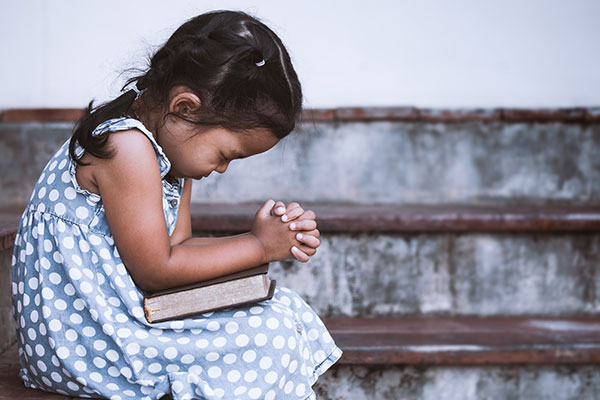
 Dear readers, Catholic Online was de-platformed by Shopify for our pro-life beliefs. They shut down our Catholic Online, Catholic Online School, Prayer Candles, and Catholic Online Learning Resources essential faith tools serving over 2.2 million students and millions of families worldwide. Our founders, now in their 70's, just gave their entire life savings to protect this mission. But fewer than 2% of readers donate. If everyone gave just $5, the cost of a coffee, we could rebuild stronger and keep Catholic education free for all. Stand with us in faith. Thank you. DONATE TODAY >
Cardinal Ratzinger on the Contemplation of Beauty
FREE Catholic Classes
2002 Message to the Communion and Liberation
ROME, MAY 3, 2005 (Zenit) - Catholic Online is reprinting this message that Cardinal Joseph Ratzinger (now Benedict XVI) sent to a meeting of the ecclesial movement Communion and Liberation in August 2002. The group was meeting in Rimini, Italy.
* * *
"The Feeling of Things, the Contemplation of Beauty"
By Cardinal Joseph Ratzinger
Every year, in the Liturgy of the Hours for the Season of Lent, I am struck anew by a paradox in Vespers for Monday of the Second Week of the Psalter. Here, side by side, are two antiphons, one for the Season of Lent, the other for Holy Week. Both introduce Psalm 44 [45], but they present strikingly contradictory interpretations. The Psalm describes the wedding of the King, his beauty, his virtues, his mission, and then becomes an exaltation of his bride. In the Season of Lent, Psalm 44 is framed by the same antiphon used for the rest of the year. The third verse of the Psalm says: "You are the fairest of the children of men and grace is poured upon your lips."
Naturally, the Church reads this psalm as a poetic-prophetic representation of Christ's spousal relationship with his Church. She recognizes Christ as the fairest of men, the grace poured upon his lips points to the inner beauty of his words, the glory of his proclamation. So it is not merely the external beauty of the Redeemer's appearance that is glorified: rather, the beauty of Truth appears in him, the beauty of God himself who draws us to himself and, at the same time captures us with the wound of Love, the holy passion ("eros"), that enables us to go forth together, with and in the Church his Bride, to meet the Love who calls us.
On Monday of Holy Week, however, the Church changes the antiphon and invites us to interpret the Psalm in the light of Isaiah 53:2: "He had neither beauty, no majesty, nothing to attract our eyes, no grace to make us delight in him." How can we reconcile this? The appearance of the "fairest of the children of men" is so wretched that no one desires to look at him. Pilate presented him to the crowd saying: "Behold the man!" to rouse sympathy for the crushed and battered Man, in whom no external beauty remained.
Augustine, who in his youth wrote a book on the Beautiful and the Harmonious ["De pulchro et apto"] and who appreciated beauty in words, in music, in the figurative arts, had a keen appreciation of this paradox and realized that in this regard, the great Greek philosophy of the beautiful was not simply rejected but rather, dramatically called into question and what the beautiful might be, what beauty might mean, would have to be debated anew and suffered. Referring to the paradox contained in these texts, he spoke of the contrasting blasts of "two trumpets," produced by the same breath, the same Spirit. He knew that a paradox is contrast and not contradiction. Both quotes come from the same Spirit who inspires all Scripture, but sounds different notes in it. It is in this way that he sets us before the totality of true Beauty, of Truth itself.
In the first place, the text of Isaiah supplies the question that interested the Fathers of the Church, whether or not Christ was beautiful. Implicit here is the more radical question of whether beauty is true or whether it is not ugliness that leads us to the deepest truth of reality. Whoever believes in God, in the God who manifested himself, precisely in the altered appearance of Christ crucified as love "to the end" (John 13:1), knows that beauty is truth and truth beauty; but in the suffering Christ he also learns that the beauty of truth also embraces offence, pain, and even the dark mystery of death, and that this can only be found in accepting suffering, not in ignoring it.
Certainly, the consciousness that beauty has something to do with pain was also present in the Greek world. For example, let us take Plato's "Phaedrus." Plato contemplates the encounter with beauty as the salutary emotional shock that makes man leave his shell and sparks his "enthusiasm" by attracting him to what is other than himself. Man, says Plato, has lost the original perfection that was conceived for him. He is now perennially searching for the healing primitive form. Nostalgia and longing impel him to pursue the quest; beauty prevents him from being content with just daily life. It causes him to suffer.
In a Platonic sense, we could say that the arrow of nostalgia pierces man, wounds him and in this way gives him wings, lifts him upwards toward the transcendent. In his discourse in the Symposium, Aristophanes says that lovers do not know what they really want from each other. From the search for what is more than their pleasure, it is obvious that the souls of both are thirsting for something other than amorous pleasure. But the heart cannot express this "other" thing, "it has only a vague perception of what it truly wants and wonders about it as an enigma."
In the 14th century, in the book "The Life in Christ" by the Byzantine theologian, Nicholas Cabasilas, we rediscover Plato's experience in which the ultimate object of nostalgia, transformed by the new Christian experience, continues to be nameless. Cabasilas says: "When men have a longing so great that it surpasses human nature and eagerly desire and are able to accomplish things beyond human thought, it is the Bridegroom who has smitten them with this longing. It is he who has sent a ray of his beauty into their eyes. The greatness of the wound already shows the arrow which has struck home, the longing indicates who has inflicted the wound" (cf. "The Life in Christ," the Second Book, 15).
The beautiful wounds, but this is exactly how it summons man to his final destiny. What Plato said, and, more than 1,500 years later, Cabasilas, has nothing to do with superficial aestheticism and irrationalism or with the flight from clarity and the importance of reason. The beautiful is knowledge certainly, but, in a superior form, since it arouses man to the real greatness of the truth. Here Cabasilas has remained entirely Greek, since he puts knowledge first when he says, "In fact it is knowing that causes love and gives birth to it. ... Since this knowledge is sometimes very ample and complete and at other times imperfect, it follows that the love potion has the same effect" (cf. ibid.).
He is not content to leave this assertion in general terms. In his characteristically rigorous thought, he distinguishes between two kinds of knowledge: knowledge through instruction which remains, so to speak, "second hand" and does not imply any direct contact with reality itself. The second type of knowledge, on the other hand, is knowledge through personal experience, through a direct relationship with the reality. "Therefore we do not love it to the extent that it is a worthy object of love, and since we have not perceived the very form itself we do not experience its proper effect."

True knowledge is being struck by the arrow of Beauty that wounds man, moved by reality, "how it is Christ himself who is present and in an ineffable way disposes and forms the souls of men" (cf. ibid.).
Being struck and overcome by the beauty of Christ is a more real, more profound knowledge than mere rational deduction. Of course we must not underrate the importance of theological reflection, of exact and precise theological thought; it remains absolutely necessary. But to move from here to disdain or to reject the impact produced by the response of the heart in the encounter with beauty as a true form of knowledge would impoverish us and dry up our faith and our theology. We must rediscover this form of knowledge; it is a pressing need of our time.
Starting with this concept, Hans Urs von Balthasar built his "Opus magnum of Theological Aesthetics." Many of its details have passed into theological work, while his fundamental approach, in truth the essential element of the whole work, has not been so readily accepted. Of course, this is not just, or principally, a theological problem, but a problem of pastoral life that has to foster the human person's encounter with the beauty of faith.
All too often arguments fall on deaf ears because in our world too many contradictory arguments compete with one another, so much so that we are spontaneously reminded of the medieval theologians' description of reason, that it "has a wax nose": In other words, it can be pointed in any direction, if one is clever enough. Everything makes sense, is so convincing, whom should we trust?
The encounter with the beautiful can become the wound of the arrow that strikes the heart and in this way opens our eyes, so that later, from this experience, we take the criteria for judgment and can correctly evaluate the arguments. For me an unforgettable experience was the Bach concert that Leonard Bernstein conducted in Munich after the sudden death of Karl Richter. I was sitting next to the Lutheran Bishop Hanselmann. When the last note of one of the great Thomas-Kantor-Cantatas triumphantly faded away, we looked at each other spontaneously and right then we said: "Anyone who has heard this, knows that the faith is true."
The music had such an extraordinary force of reality that we realized, no longer by deduction, but by the impact on our hearts, that it could not have originated from nothingness, but could only have come to be through the power of the Truth that became real in the composer's inspiration. Isn't the same thing evident when we allow ourselves to be moved by the icon of the Trinity of Rublëv? In the art of the icons, as in the great Western paintings of the Romanesque and Gothic period, the experience described by Cabasilas, starting with interiority, is visibly portrayed and can be shared.

In a rich way Pavel Evdokimov has brought to light the interior pathway that an icon establishes. An icon does not simply reproduce what can be perceived by the senses, but rather it presupposes, as he says, "a fasting of sight." Inner perception must free itself from the impression of the merely sensible, and in prayer and ascetical effort acquire a new and deeper capacity to see, to perform the passage from what is merely external to the profundity of reality, in such a way that the artist can see what the senses as such do not see, and what actually appears in what can be perceived: the splendor of the glory of God, the "glory of God shining on the face of Christ " (2 Corinthians 4:6).
To admire the icons and the great masterpieces of Christian art in general, leads us on an inner way, a way of overcoming ourselves; thus in this purification of vision that is a purification of the heart, it reveals the beautiful to us, or at least a ray of it. In this way we are brought into contact with the power of the truth. I have often affirmed my conviction that the true apology of Christian faith, the most convincing demonstration of its truth against every denial, are the saints, and the beauty that the faith has generated. Today, for faith to grow, we must lead ourselves and the persons we meet to encounter the saints and to enter into contact with the Beautiful.
Now however, we still have to respond to an objection. We have already rejected the assumption which claims that what has just been said is a flight into the irrational, into mere aestheticism.
Rather, it is the opposite that is true: This is the very way in which reason is freed from dullness and made ready to act.
Today another objection has even greater weight: the message of beauty is thrown into complete doubt by the power of falsehood, seduction, violence and evil. Can the beautiful be genuine, or, in the end, is it only an illusion? Isn't reality perhaps basically evil? The fear that in the end it is not the arrow of the beautiful that leads us to the truth, but that falsehood, all that is ugly and vulgar, may constitute the true "reality" has at all times caused people anguish.
At present this has been expressed in the assertion that after Auschwitz it was no longer possible to write poetry; after Auschwitz it is no longer possible to speak of a God who is good. People wondered: Where was God when the gas chambers were operating? This objection, which seemed reasonable enough before Auschwitz when one realized all the atrocities of history, shows that in any case a purely harmonious concept of beauty is not enough. It cannot stand up to the confrontation with the gravity of the questioning about God, truth and beauty. Apollo, who for Plato's Socrates was "the God" and the guarantor of unruffled beauty as "the truly divine" is absolutely no longer sufficient.
In this way, we return to the "two trumpets" of the Bible with which we started, to the paradox of being able to say of Christ: "You are the fairest of the children of men," and: "He had no beauty, no majesty to draw our eyes, no grace to make us delight in him." In the passion of Christ the Greek aesthetic that deserves admiration for its perceived contact with the Divine but which remained inexpressible for it, in Christ's passion is not removed but overcome.
The experience of the beautiful has received new depth and new realism. The One who is the Beauty itself let himself be slapped in the face, spat upon, crowned with thorns; the Shroud of Turin can help us imagine this in a realistic way. However, in his Face that is so disfigured, there appears the genuine, extreme beauty: the beauty of love that goes "to the very end"; for this reason it is revealed as greater than falsehood and violence. Whoever has perceived this beauty knows that truth, and not falsehood, is the real aspiration of the world. It is not the false that is "true," but indeed, the Truth.
It is, as it were, a new trick of what is false to present itself as "truth" and to say to us: over and above me there is basically nothing, stop seeking or even loving the truth; in doing so you are on the wrong track. The icon of the crucified Christ sets us free from this deception that is so widespread today. However it imposes a condition: that we let ourselves be wounded by him, and that we believe in the Love who can risk setting aside his external beauty to proclaim, in this way, the truth of the beautiful.
Falsehood however has another strategem. A beauty that is deceptive and false, a dazzling beauty that does not bring human beings out of themselves to open them to the ecstasy of rising to the heights, but indeed locks them entirely into themselves. Such beauty does not reawaken a longing for the Ineffable, readiness for sacrifice, the abandonment of self, but instead stirs up the desire, the will for power, possession and pleasure. It is that type of experience of beauty of which Genesis speaks in the account of the Original Sin. Eve saw that the fruit of the tree was "beautiful" to eat and was "delightful to the eyes."
The beautiful, as she experienced it, aroused in her a desire for possession, making her, as it were, turn in upon herself. Who would not recognize, for example, in advertising, the images made with supreme skill that are created to tempt the human being irresistibly, to make him want to grab everything and seek the passing satisfaction rather than be open to others.
So it is that Christian art today is caught between two fires (as perhaps it always has been): It must oppose the cult of the ugly, which says that everything beautiful is a deception and only the representation of what is crude, low and vulgar is the truth, the true illumination of knowledge. Or it has to counter the deceptive beauty that makes the human being seem diminished instead of making him great, and for this reason is false.
Is there anyone who does not know Dostoyevsky's often-quoted sentence: "The Beautiful will save us"? However, people usually forget that Dostoyevsky is referring here to the redeeming Beauty of Christ. We must learn to see him. If we know him, not only in words, but if we are struck by the arrow of his paradoxical beauty, then we will truly know him, and know him not only because we have heard others speak about him. Then we will have found the beauty of Truth, of the Truth that redeems. Nothing can bring us into close contact with the beauty of Christ himself other than the world of beauty created by faith and light that shines out from the faces of the saints, through whom his own light becomes visible.
Contact
Prefect of the Congregation for the Faith
https://www.catholic.org
, VA
Cardinal Joseph Ratzinger - Prefect of the Congregation for the Faith, 661 869-1000
info@yourcatholicvoice.org
Keywords
Ratzinger, Pope, Communion, Liberation, Ecclesial, Beauty

More Catholic PRWire
Showing 1 - 50 of 4,716
A Recession Antidote
Randy Hain
Monaco & The Vatican: Monaco's Grace Kelly Exhibit to Rome--A Review of Monegasque-Holy See Diplomatic History
Dna. Maria St. Catherine Sharpe, t.o.s.m., T.O.SS.T.
The Why of Jesus' Death: A Pauline Perspective
Jerom Paul
A Royal Betrayal: Catholic Monaco Liberalizes Abortion
Dna. Maria St.Catherine De Grace Sharpe, t.o.s.m., T.O.SS.T.
Embrace every moment as sacred time
Mary Regina Morrell
My Dad
JoMarie Grinkiewicz
Letting go is simple wisdom with divine potential
Mary Regina Morrell
Father Lombardi's Address on Catholic Media
Catholic Online
Pope's Words to Pontifical Latin American College
Catholic Online
Prelate: Genetics Needs a Conscience
Catholic Online
State Aid for Catholic Schools: Help or Hindrance?
Catholic Online
Scorsese Planning Movie on Japanese Martyrs
Catholic Online
2 Nuns Kidnapped in Kenya Set Free
Catholic Online
Holy See-Israel Negotiation Moves Forward
Catholic Online
Franchising to Evangelize
Catholic Online
Catholics Decry Anti-Christianity in Israel
Catholic Online
Pope and Gordon Brown Meet About Development Aid
Catholic Online
Pontiff Backs Latin America's Continental Mission
Catholic Online
Cardinal Warns Against Anti-Catholic Education
Catholic Online
Full Circle
Robert Gieb

Three words to a deeper faith
Paul Sposite
Relections for Lent 2009
chris anthony
Wisdom lies beyond the surface of life
Mary Regina Morrell
World Food Program Director on Lent
Catholic Online
Moral Clarity
DAN SHEA
Pope's Lenten Message for 2009
Catholic Online
A Prayer for Monaco: Remembering the Faith Legacy of Prince Rainier III & Princess Grace and Contemplating the Moral Challenges of Prince Albert II
Dna. Maria St. Catherine Sharpe
Keeping a Lid on Permissiveness
Sally Connolly
Glimpse of Me
Sarah Reinhard
The 3 stages of life
Michele Szekely
Sex and the Married Woman
Cheryl Dickow
A Catholic Woman Returns to the Church
Cheryl Dickow
Modernity & Morality
Dan Shea
Just a Minute
Sarah Reinhard
Catholic identity ... triumphant reemergence!
Hugh McNichol
Edging God Out
Paul Sposite
Burying a St. Joseph Statue
Cheryl Dickow
George Bush Speaks on Papal Visit
Catholic Online
Sometimes moving forward means moving the canoe
Mary Regina Morrell
Action Changes Things: Teaching our Kids about Community Service
Lisa Hendey

Easter... A Way of Life
Paul Spoisite
Papal initiative...peace and harmony!
Hugh McNichol
Proclaim the mysteries of the Resurrection!
Hugh McNichol
Jerusalem Patriarch's Easter Message
Catholic Online
Good Friday Sermon of Father Cantalamessa
Catholic Online
Papal Address at the End of the Way of the Cross
Catholic Online
Cardinal Zen's Meditations for Via Crucis
Catholic Online
Interview With Vatican Aide on Jewish-Catholic Relations
Catholic Online
Pope Benedict XVI On the Easter Triduum
Catholic Online
Holy Saturday...anticipation!
Hugh McNichol

Come Grow With Us
Sign up and walk the Catholic journey with millions around the world.
Receive inspiring emails on saints, daily readings, and free faith-building resources—no cost, ever.
WHAT HAPPENS IF WE CAN’T CONTINUE?
Please Watch
- 7 Morning Prayers
- Mysteries of the Rosary
- Litany of the Bl. Virgin Mary
- Popular Saints
- Popular Prayers
- Female Saints
- Saint Feast Days by Month
- Stations of the Cross
- St. Francis of Assisi
- St. Michael the Archangel
- The Apostles' Creed
- Unfailing Prayer to St. Anthony
- Pray the Rosary





Copyright 2026 Catholic Online. All materials contained on this site, whether written, audible or visual are the exclusive property of Catholic Online and are protected under U.S. and International copyright laws, © Copyright 2026 Catholic Online. Any unauthorized use, without prior written consent of Catholic Online is strictly forbidden and prohibited.
Catholic Online is a Project of Your Catholic Voice Foundation, a Not-for-Profit Corporation. Your Catholic Voice Foundation has been granted a recognition of tax exemption under Section 501(c)(3) of the Internal Revenue Code. Federal Tax Identification Number: 81-0596847. Your gift is tax-deductible as allowed by law.