We ask you, humbly: don't scroll away.
Hi readers, it seems you use Catholic Online a lot; that's great! It's a little awkward to ask, but we need your help. If you have already donated, we sincerely thank you. We're not salespeople, but we depend on donations averaging $14.76 and fewer than 1% of readers give. If you donate just $5.00, the price of your coffee, Catholic Online School could keep thriving. Thank you.Help Now >
Johann Ladislaus von Oberwart Pyrker
FREE Catholic Classes
(FELSÖ-EÖR)
He was born at Langh near Stuhlweissenburg, Hungary, 2 Nov., 1772; died at Vienna, 2 Dec., 1847. He was descended from an old Hungarian noble family. His father was one of the eighteen brave hussars who distinguished themselves in the battle of Kunersdorf. Graduated from Stuhlweissenburg and Fünfkirchen, he applied for a civil service position in Ofen but was unsuccessful. In 1792 he entered the Cistercian chapter house at Lilienfeld, where he was ordained priest (1796). In quick succession he was steward, chancellor, prior, abbot, for a time, parish priest at Türnitz, and brought the monastery to the greatest material and spiritual prosperity. He was appointed Bishop of Zips (1818), Patriarch of Aquileia and Primate of Dalmatia with his see in Venice (1820), and finally Archbishop of Erlau, earning the love and veneration of his diocesans. He founded health resorts in Karlsbad and Gastein for sick soldiers, a seminary for country school teachers at Erlau, and donated 10,000 florins toward the adornment of the cathedral at Erlau. His great collection of paintings forms the basis of the Hungarian National Museum. For these charitable gifts he was knighted by the emperor with the title of Felsö-Eör.
Pyrker wrote dramatic, epic, and lyric poetry. His first dramatic work, "Historische Schauspiele", appeared in 1810, and contained three five-act tragedies: "Die Corvinen", "Karl der Kleine, König von Ungarn", and "Zrinis Tod". It was not even considered worthy of discussion or criticism, and the various editions of his collected works do not contain the dramas. The "Tunisias", an epic in twelve cantos, describing the conquest of Tunis by Charles V, appeared in 1820, and there have been frequent later editions. A sketch of a "Tunisias" with striking resemblances was found in the textbooks of the Jesuit Jacob Masen. It is possible that the Jesuit's textbook (Palæstra eloquentiæ) was used at the time of Pyrker's youth. Another epic, "Rudolphias", glorifies Rudolph of Hapsburg, and was printed in Vienna in 1824. Grillparzer dramatized the same material in his "Ottokars Glück und Ende", which has many similarities with the well-known "Ode to Hapsburg" written by the Latin poet Avancini, S.J., probably read in the schools at the end of the eighteenth century. Pyrker also wrote several short stories: "Die Perlen der heiligen Vorzeit" (1821); "Bilder aus dem Leben Jesu und der Apostel" and "Legenden der Heiligen auf alle Sonntage und Festtage des Jahres" (1842). As a lyric poet Pyrker published only a few monographs, e.g. "Lilienfelds Freude", and "Lieder der Sehnsucht nach den Alpen" (1845).

We ask you, humbly: don't scroll away.
Hi readers, it seems you use Catholic Online a lot; that's great! It's a little awkward to ask, but we need your help. If you have already donated, we sincerely thank you. We're not salespeople, but we depend on donations averaging $14.76 and fewer than 1% of readers give. If you donate just $5.00, the price of your coffee, Catholic Online School could keep thriving. Thank you.Help Now >

Join the Movement
When you sign up below, you don't just join an email list - you're joining an entire movement for Free world class Catholic education.


-

-
Mysteries of the Rosary
-
St. Faustina Kowalska
-
Litany of the Blessed Virgin Mary
-
Saint of the Day for Wednesday, Oct 4th, 2023
-
Popular Saints
-
St. Francis of Assisi
-
Bible
-
Female / Women Saints
-
7 Morning Prayers you need to get your day started with God
-
Litany of the Blessed Virgin Mary


Sacrifices of Faith: The Pro-Life Legacies of St. Gianna and Jessica Hanna
-
How to love God by caring for our bodies
-
Pope Francis calls for negotiations to End Russia-Ukraine War
-
Pope Francis Contemplates Return to U.S. for United Nations Assembly Address
-
Pope Francis Calls on Faithful to Embrace Faith, Hope, and Charity in New Teaching Series


Daily Catholic
- Daily Readings for Sunday, April 28, 2024
- St. Peter Chanel: Saint of the Day for Sunday, April 28, 2024
- Prayer before a Crucifix: Prayer of the Day for Sunday, April 28, 2024
- Daily Readings for Saturday, April 27, 2024
- St. Zita: Saint of the Day for Saturday, April 27, 2024
- Prayer for the Dead # 2: Prayer of the Day for Saturday, April 27, 2024
 Daily Readings for Sunday, April 28, 2024
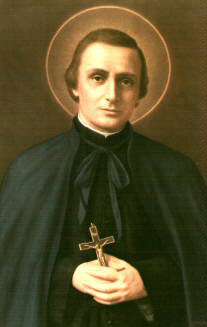 St. Peter Chanel: Saint of the Day for Sunday, April 28, 2024
 Prayer before a Crucifix: Prayer of the Day for Sunday, April 28, 2024


Copyright 2024 Catholic Online. All materials contained on this site, whether written, audible or visual are the exclusive property of Catholic Online and are protected under U.S. and International copyright laws, © Copyright 2024 Catholic Online. Any unauthorized use, without prior written consent of Catholic Online is strictly forbidden and prohibited.
Catholic Online is a Project of Your Catholic Voice Foundation, a Not-for-Profit Corporation. Your Catholic Voice Foundation has been granted a recognition of tax exemption under Section 501(c)(3) of the Internal Revenue Code. Federal Tax Identification Number: 81-0596847. Your gift is tax-deductible as allowed by law.