We ask you, humbly: don't scroll away.
Hi readers, it seems you use Catholic Online a lot; that's great! It's a little awkward to ask, but we need your help. If you have already donated, we sincerely thank you. We're not salespeople, but we depend on donations averaging $14.76 and fewer than 1% of readers give. If you donate just $5.00, the price of your coffee, Catholic Online School could keep thriving. Thank you.Help Now >
Juan Ponce de León
FREE Catholic Classes
Explorer, born at San Servas in the province of Campos, 1460; died in Cuba, 1521.
He was descended from an ancient and noble family ; the surname of León was acquired through the marriage of one of the Ponces to Doña Aldonza de León, a daughter of Alfonso IX. As a lad Ponce de León served as page to Pedro Nuñuz de Guzmán, later the tutor of the brother of Charles V, the Infante Don Fernando. In 1493, Ponce sailed to Hispaniola ( San Domingo ) with Columbus on his second voyage, an expedition which included many aristocratic young men, and adventurous noblemen who had been left without occupation after the fall of Granada. When Nicolás Ovando came to Hispaniola in 1502 as governor, he found the natives in a state of revolt, and in the war which followed Ponce rendered such valuable services that he was appointed Ovando's lieutenant with headquarters in a town in the eastern part of the island. While here, he heard from the Indians that there was much wealth in the neighbouring Island of Buriquien ( Porto Rico ), and he asked and obtained permission to visit it in 1508, where he discovered many rich treasures ; for his work in this expedition he was appointed Adelantado or Governor of Boriquien. Having reduced the natives, he was soon afterward removed from office, but not until he had amassed a considerable fortune. At this time stories of Eastern Asia were prevalent which told of a famous spring the waters of which had the marvellous virtue of restoring to youth and vigour those who drank them. Probably the Spaniards heard from the Indians tales that reminded them of this Fons Juventutis, and they got the idea that this fountain was situated on an island called Bimini which lay to the north of Hispaniola.
We ask you, humbly: don't scroll away.
Hi readers, it seems you use Catholic Online a lot; that's great! It's a little awkward to ask, but we need your help. If you have already donated, we sincerely thank you. We're not salespeople, but we depend on donations averaging $14.76 and fewer than 1% of readers give. If you donate just $5.00, the price of your coffee, Catholic Online School could keep thriving. Thank you.Help Now >
Ponce obtained from Charles V, 23 February, 1512, a patent authorizing him to discover and people the Island of Bimini, giving him jurisdiction over the island for life, and bestowing upon him the title of Adelantado. On 3 March, 1513, Ponce set out from San German ( Porto Rico ) with three ships, fitted out at his own expense. Setting his course in a northwesterly direction, eleven days later he reached Guanahani, where Columbus first saw land. Continuing his way, on Easter Sunday ( Pascua de Flores ), 27 March, he came within sight of the coast which he named Florida in honour of the day and on account of the luxuriant vegetation. On 2 April he landed at a spot a little to the north of the present site of St. Augustine and formally took possession in the name of the Crown. He now turned back, following the coast to its southern extremity and up the west coast to latitude 27°30', and then returned to Porto Rico. During this trip he had several encounters with the natives, who showed great courage and determination in their attacks, which probably accounts for the fact that Ponce did not attempt to found a settlement or penetrate into the interior in search of the treasure which was believed to be hidden there.
Although his first voyage had been without result as far as the acquisition of gold and slaves, and the discovery of the "fountain of youth" were concerned, Ponce determined to secure possession of his new discovery. Through his friend, Pedro Nuñez de Guzmán, he secured a second grant dated 27 September, 1514, which gave him power to settle the Island of Bimini and the Island of Florida, for such he thought Florida to be. In 1521 he set out with two ships and landing upon the Florida coast, just where, it is not known, he was furiously attacked by the natives while he was building houses for his settlers. Finally driven to re-embark, he set sail for Cuba, where he died of the wound which he had received.

We ask you, humbly: don't scroll away.
Hi readers, it seems you use Catholic Online a lot; that's great! It's a little awkward to ask, but we need your help. If you have already donated, we sincerely thank you. We're not salespeople, but we depend on donations averaging $14.76 and fewer than 1% of readers give. If you donate just $5.00, the price of your coffee, Catholic Online School could keep thriving. Thank you.Help Now >
Join the Movement
When you sign up below, you don't just join an email list - you're joining an entire movement for Free world class Catholic education.


-

-
Mysteries of the Rosary
-
St. Faustina Kowalska
-
Litany of the Blessed Virgin Mary
-
Saint of the Day for Wednesday, Oct 4th, 2023
-
Popular Saints
-
St. Francis of Assisi
-
Bible
-
Female / Women Saints
-
7 Morning Prayers you need to get your day started with God
-
Litany of the Blessed Virgin Mary


Sacrifices of Faith: The Pro-Life Legacies of St. Gianna and Jessica Hanna
-
How to love God by caring for our bodies
-
Pope Francis calls for negotiations to End Russia-Ukraine War
-
Pope Francis Contemplates Return to U.S. for United Nations Assembly Address
-
Pope Francis Calls on Faithful to Embrace Faith, Hope, and Charity in New Teaching Series


Daily Catholic
- Daily Readings for Sunday, April 28, 2024
- St. Peter Chanel: Saint of the Day for Sunday, April 28, 2024
- Prayer before a Crucifix: Prayer of the Day for Sunday, April 28, 2024
- Daily Readings for Saturday, April 27, 2024
- St. Zita: Saint of the Day for Saturday, April 27, 2024
- Prayer for the Dead # 2: Prayer of the Day for Saturday, April 27, 2024
 Daily Readings for Sunday, April 28, 2024
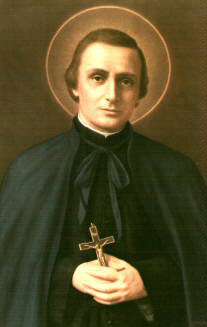 St. Peter Chanel: Saint of the Day for Sunday, April 28, 2024
 Prayer before a Crucifix: Prayer of the Day for Sunday, April 28, 2024
 Hi readers, it seems you use Catholic Online a lot; that's great! It's a little awkward to ask, but we need your help. If you have already donated, we sincerely thank you. We're not salespeople, but we depend on donations averaging $14.76 and fewer than 1% of readers give. If you donate just $5.00, the price of your coffee, Catholic Online School could keep thriving. Thank you. Help Now >

Copyright 2024 Catholic Online. All materials contained on this site, whether written, audible or visual are the exclusive property of Catholic Online and are protected under U.S. and International copyright laws, © Copyright 2024 Catholic Online. Any unauthorized use, without prior written consent of Catholic Online is strictly forbidden and prohibited.
Catholic Online is a Project of Your Catholic Voice Foundation, a Not-for-Profit Corporation. Your Catholic Voice Foundation has been granted a recognition of tax exemption under Section 501(c)(3) of the Internal Revenue Code. Federal Tax Identification Number: 81-0596847. Your gift is tax-deductible as allowed by law.