We ask you, humbly: don't scroll away.
Hi readers, it seems you use Catholic Online a lot; that's great! It's a little awkward to ask, but we need your help. If you have already donated, we sincerely thank you. We're not salespeople, but we depend on donations averaging $14.76 and fewer than 1% of readers give. If you donate just $5.00, the price of your coffee, Catholic Online School could keep thriving. Thank you.Help Now >
Phocæa
FREE Catholic Classes
A titular see in Asia, suffragan of Ephesus. The town of Phocæa was founded in the eleventh century B. C. by colonists from Phocidia led by two Athenians. They settled first on a small island on the neighbouring coast, a territory given by the Cymæans, between the Bays of Cymæus and Hermæus, 23 miles north of Smyrna. It was admitted to the Ionian Confederation after having accepted kings of the race of Codrus. Its fine position, its two ports, and the enterprising spirit of the inhabitants made it one of the chief maritime cities of ancient times. Historians speak of it but rarely before the Roman wars against Antiochus, The prætor Æmilius Regillus took possession of the town (189 B. C. ); he disturbed neither its boundaries nor its laws. During the war against Aristonicus, who reclaimed the throne of Pergamum, the Phocæans took his part and, through the intervention of Massilia, escaped being severely punished by the Romans. At the time the latter had definitively established his power in Asia, Phocæa was only a commercial town; its money was coined until the time of the later Empire; but its harbour gradually silted up and the inhabitants abandoned it. In 978 Theodore Carentenus built Bardas Sclerus near Phocæa. In 1090 the Turk Tchaga of Smyrna took possession of it for a short time. The Venetians traded there after 1082, but the Genoese quickly supplanted them.
We ask you, humbly: don't scroll away.
Hi readers, it seems you use Catholic Online a lot; that's great! It's a little awkward to ask, but we need your help. If you have already donated, we sincerely thank you. We're not salespeople, but we depend on donations averaging $14.76 and fewer than 1% of readers give. If you donate just $5.00, the price of your coffee, Catholic Online School could keep thriving. Thank you.Help Now >
In 1275 Michael VIII Palæologus gave Manuel Zaccaria the territory of the city and the right to exploit the neighbouring alum mines. In 1304 the Genoese, with the co-operation of the Greeks of the adjoining towns, erected a fortress to defend the town against the Turks, and some distance from the ancient Phocæa founded a city which they called New Phocæa. In 1336 Andronicus the Young, allied with Saroukhan, Sultan of Magnesia, besieged the two towns and obliged them to pay the tribute stipulated in 1275. They continued also to pay annually to Saroukhan 500 ducats. From 1340 to 1345 the Greeks occupied the two towns, and again in 1358 for a short period. At the time of the invasion of Timur in 1403, they purchased peace by the payment of money. In the midst of difficulties the Genoese colony continued until the end of 1455, when it passed into the hands of the Turks. In 1650 a naval battle between the Turks and Venetians took place in sight of Phocæa. To-day Phocæa, in Turkish Fotchatin, or Eski Fotcha (ancient Phocæa), is the capital of a caza of the vilayet of Smyrna, has about 6000 inhabitants (4500 Greeks), and exports salt. About six miles to the north, Yeni Fotcha (new Phocæa) is situated on the Gulf of Tchandarli; it has 4500 inhabitants (3500 Greeks), and exports agricultural products.
Seven Greek bishops of Phocæa are known by their signatures at the Councils; Mark, at Sardica (344); Theoctistus, at Ephesus (441); Quintus, at Chalcedon (451); John, at Constantinople (692); Leo, at Nice (787); Nicetas, at Constantinople (869); Paul, at Constantinople (879). In 1387 ancient Phocæa was separated from Ephesus and given to the suffragan of Smyrna. In 1403 it still had a titular. The Genoese colony had its Latin bishops, seven of whose names are recorded from 1346 to 1475; the later ones were undoubtedly non-residents: Bartholomew, 1346; John, 1383; John, before 1427; Nicholas, 1427; Ludovicus, about 1450; Stephanus, 1457; Ægidius, 1475.
 Hi readers, it seems you use Catholic Online a lot; that's great! It's a little awkward to ask, but we need your help. If you have already donated, we sincerely thank you. We're not salespeople, but we depend on donations averaging $14.76 and fewer than 1% of readers give. If you donate just $5.00, the price of your coffee, Catholic Online School could keep thriving. Thank you. Help Now >
Join the Movement
When you sign up below, you don't just join an email list - you're joining an entire movement for Free world class Catholic education.


-

-
Mysteries of the Rosary
-
St. Faustina Kowalska
-
Litany of the Blessed Virgin Mary
-
Saint of the Day for Wednesday, Oct 4th, 2023
-
Popular Saints
-
St. Francis of Assisi
-
Bible
-
Female / Women Saints
-
7 Morning Prayers you need to get your day started with God
-
Litany of the Blessed Virgin Mary


Sacrifices of Faith: The Pro-Life Legacies of St. Gianna and Jessica Hanna
-
How to love God by caring for our bodies
-
Pope Francis calls for negotiations to End Russia-Ukraine War
-
Pope Francis Contemplates Return to U.S. for United Nations Assembly Address
-
Pope Francis Calls on Faithful to Embrace Faith, Hope, and Charity in New Teaching Series


Daily Catholic
- Daily Readings for Sunday, April 28, 2024
- St. Peter Chanel: Saint of the Day for Sunday, April 28, 2024
- Prayer before a Crucifix: Prayer of the Day for Sunday, April 28, 2024
- Daily Readings for Saturday, April 27, 2024
- St. Zita: Saint of the Day for Saturday, April 27, 2024
- Prayer for the Dead # 2: Prayer of the Day for Saturday, April 27, 2024
 Daily Readings for Sunday, April 28, 2024
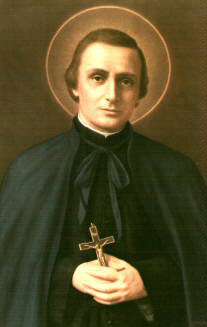 St. Peter Chanel: Saint of the Day for Sunday, April 28, 2024
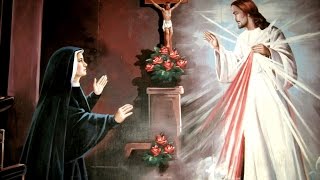
 Prayer before a Crucifix: Prayer of the Day for Sunday, April 28, 2024


Copyright 2024 Catholic Online. All materials contained on this site, whether written, audible or visual are the exclusive property of Catholic Online and are protected under U.S. and International copyright laws, © Copyright 2024 Catholic Online. Any unauthorized use, without prior written consent of Catholic Online is strictly forbidden and prohibited.
Catholic Online is a Project of Your Catholic Voice Foundation, a Not-for-Profit Corporation. Your Catholic Voice Foundation has been granted a recognition of tax exemption under Section 501(c)(3) of the Internal Revenue Code. Federal Tax Identification Number: 81-0596847. Your gift is tax-deductible as allowed by law.