We ask you, humbly: don't scroll away.
Hi readers, it seems you use Catholic Online a lot; that's great! It's a little awkward to ask, but we need your help. If you have already donated, we sincerely thank you. We're not salespeople, but we depend on donations averaging $14.76 and fewer than 1% of readers give. If you donate just $5.00, the price of your coffee, Catholic Online School could keep thriving. Thank you.Help Now >
St. Paul-without-the-Walls
FREE Catholic Classes
( San Paolo fuori le mura ).
An abbey nullius. As early as 200 the burial place of the great Apostle in the Via Ostia was marked by a cella memoriæ , near which the Catacomb of Comodilla was established. Constantine, according to the "Liber Pontificalis", transformed it into basilica ; in 386 Theodosius began the erection of a much larger and more beautiful basilica, but the work including the mosaics was not completed till the pontificate of St. Leo the Great. The Christian poet, Proudentius, describes the splendours of the monument in a few, expressive lines. As it was dedicated also to Saints Taurinus and Herculanus, martyrs of Ostia in the fifth century, it was called the basilica trium Dominorum. Of the ancient basilica there remain only the interior portion of the apse with the triumphal arch and the mosaics of the latter; the mosaics of the apse and the tabernacle of the confession of Arnolfo del Cambio belong to the thirteenth century. In the old basilica each pope had his portrait in a frieze extending above the columns separating the four aisles and naves. In 1823 a fire, started through the negligence of a workman who was repairing the lead of the roof, resulted in the destruction of the basilica. Alone of all the churches of Rome, it had preserved its primitive character for one thousand four hundred and thirty-five years. The whole world contributed to its restoration. The Khedive of Egypt sent pillars of alabaster, the Emperor of Russia the precious malachite and lapis lazuli of the tabernacle. The work on the principal façade, looking toward the Tiber, was completed by the Italian Government, which declared the church a national monument. The interior of the walls of the nave are adorned with scenes from the life of St. Paul in two series of mosaics (Gagliardi, Podesti, Balbi, etc). The graceful cloister of the monastery was erected between 1220 and 1241. The sacristy contains a fine statue of Boniface IX. In the time of Gregory the Great there were two monasteries near the basilica : St. Aristus's for men and St. Stefano's for women. Services were carried out by a special body of clerics instituted by Pope Simplicius. In the course of time the monasteries and the clergy of the basilica declined; St. Gregory II restored the former and entrusted the monks with the care of the basilica. The popes continued their generosity toward the monastery ; the basilica was again injured during the Saracen invasions in the ninth century. In consequence of this John VIII fortified the basilica, the monastery, and the dwellings of the peasantry, forming the town of Joannispolis, which was still remembered in the thirteenth century. In 937, when St. Odo of Cluny came to Rome, Alberico II, patrician of Rome, entrusted the monastery and basilica to his congregation and Odo placed Balduino of Monte Cassino in charge. Gregory VII was abbot of the monastery and in his time Pantaleone of Amalfi presented the bronze gates of the basilica, which were executed by Constantinopolitan artists. Martin V entrusted it to the monks of the Congregation of Monte Cassino. It was then made an abbey nullius. The jurisdiction of the abbot extended over the districts of Civitella San Paolo, Leprignano, and Nazzano, all of which formed parishes ; the parish of San Paolo in Rome, however, is under the jurisdiction of the cardinal vicar.


We ask you, humbly: don't scroll away.
Hi readers, it seems you use Catholic Online a lot; that's great! It's a little awkward to ask, but we need your help. If you have already donated, we sincerely thank you. We're not salespeople, but we depend on donations averaging $14.76 and fewer than 1% of readers give. If you donate just $5.00, the price of your coffee, Catholic Online School could keep thriving. Thank you.Help Now >
Join the Movement
When you sign up below, you don't just join an email list - you're joining an entire movement for Free world class Catholic education.


-

-
Mysteries of the Rosary
-
St. Faustina Kowalska
-
Litany of the Blessed Virgin Mary
-
Saint of the Day for Wednesday, Oct 4th, 2023
-
Popular Saints
-
St. Francis of Assisi
-
Bible
-
Female / Women Saints
-
7 Morning Prayers you need to get your day started with God
-
Litany of the Blessed Virgin Mary


Sacrifices of Faith: The Pro-Life Legacies of St. Gianna and Jessica Hanna
-
How to love God by caring for our bodies
-
Pope Francis calls for negotiations to End Russia-Ukraine War
-
Pope Francis Contemplates Return to U.S. for United Nations Assembly Address
-
Pope Francis Calls on Faithful to Embrace Faith, Hope, and Charity in New Teaching Series


Daily Catholic
- Daily Readings for Sunday, April 28, 2024
- St. Peter Chanel: Saint of the Day for Sunday, April 28, 2024
- Prayer before a Crucifix: Prayer of the Day for Sunday, April 28, 2024
- Daily Readings for Saturday, April 27, 2024
- St. Zita: Saint of the Day for Saturday, April 27, 2024
- Prayer for the Dead # 2: Prayer of the Day for Saturday, April 27, 2024
 Daily Readings for Sunday, April 28, 2024
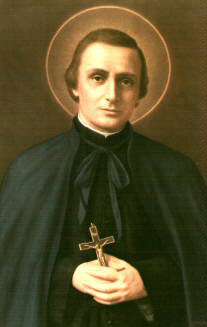 St. Peter Chanel: Saint of the Day for Sunday, April 28, 2024
 Prayer before a Crucifix: Prayer of the Day for Sunday, April 28, 2024


Copyright 2024 Catholic Online. All materials contained on this site, whether written, audible or visual are the exclusive property of Catholic Online and are protected under U.S. and International copyright laws, © Copyright 2024 Catholic Online. Any unauthorized use, without prior written consent of Catholic Online is strictly forbidden and prohibited.
Catholic Online is a Project of Your Catholic Voice Foundation, a Not-for-Profit Corporation. Your Catholic Voice Foundation has been granted a recognition of tax exemption under Section 501(c)(3) of the Internal Revenue Code. Federal Tax Identification Number: 81-0596847. Your gift is tax-deductible as allowed by law.
