We ask you, humbly: don't scroll away.
Hi readers, it seems you use Catholic Online a lot; that's great! It's a little awkward to ask, but we need your help. If you have already donated, we sincerely thank you. We're not salespeople, but we depend on donations averaging $14.76 and fewer than 1% of readers give. If you donate just $5.00, the price of your coffee, Catholic Online School could keep thriving. Thank you.Help Now >
Pope Paschal II
FREE Catholic Classes
(RAINERIUS).
Succeeded Urban II, and reigned from 13 Aug., 1099, till he died at Rome, 21 Jan., 1118. Born in central Italy, he was received at an early age as a monk in Cluny. In his twentieth year he was sent on business of the monastery to Rome, and was retained at the papal court by Gregory VII, and made Cardinal-Priest of St. Clement's church. It was in this church that the conclave met after the death of Pope Urban, and Cardinal Rainerius was the unanimous choice of the sacred college. He protested vigorously against his election, maintaining, with some justice, that his monastic training had not fitted him to deal with the weighty problems which confronted the papacy in that troublous age. His protestations were disregarded by his colleagues, and he was consecrated the following day in St. Peter's. Once pope, he betrayed no further hesitation and wielded the sceptre with a firm and prudent grasp. The main lines of his policy had been laid by the master minds of Gregory and Urban, in whose footsteps he faithfully followed, while the unusual length of his pontificate, joined to a great amiability of character, made his reign an important factor in the development of the medieval papal dominion. Urban II had lived to witness the complete success of his wonderful movement for the liberation of the Holy Land and the defence of Christendom. He had died a fortnight after Jerusalem fell into the hands of the crusaders. To continue the work inaugurated by Urban remained the fixed policy of the Holy See for many generations. Paschal laboured vigorously by synods and journeys through Italy and France to keep alive the crusading spirit. Of more vital importance was the Investiture Conflict (see INVESTITURE, CONFLICT OF). It was fortunate that the antipope, Guibert (Clement III), died a few months after the elevation of Paschal. Three other antipopes, Theodoric (1100), Aleric (1102), and Maginulf, who took the name of Sylvester IV (1105), were offered by the imperialistic faction; but the schism was practically ended. Two of these pretendants were sent by Paschal to do penance in monasteries ; the third had little or no following. Henry IV, broken by his previous conflicts, had no desire to renew the struggle. He obstinately refused to abjure his claim to imperial investitures, and, consequently, was again excommunicated, and died at Liège, 7 Aug., 1106.

His death and the accession of his son were of dubious advantage to the papal cause; for although he had posed as the champion of the Church, he soon showed himself as unwilling as his father had been to relinquish any of the pretensions of the crown. Since the pope continued to denounce and anathematize lay investitures in the synods over which he presided, the chief of which were at Guastalla (1106) and Troyes (1107), and since Henry persisted in bestowing benefices at pleasure, the friendly relations between the two powers soon became strained. Paschal decided to change his proposed journey to Germany, and proceeded to France, where he was received enthusiastically by King Philip (who did penance for his adultery and was reconciled to the Church ) and by the French people. Henry resented the discussion of a German question on foreign soil, though the question of Investitures was one of universal interest; and he threatened to cut the knot with his sword, as soon as circumstances permitted his going to Rome to receive the imperial crown. In August, 1110, he crossed the Alps with a well-organized army, and, what emphasized the entrance of a new factor in medieval politics, accompanied by a band of imperialistic lawyers, one of whom, David, was of Celtic origin. Crushing out opposition on his way through the peninsula, Henry sent an embassy to arrange with the pontiff the preliminaries of his coronation. The outcome was embodied in the Concordat of Sutri. Before receiving the imperial crown, Henry was to abjure all claims to investitures, whilst the pope undertook to compel the prelates and abbots of the empire to restore all the temporal rights and privileges which they held from the crown.
When the compact was made public in St. Peter's on the date assigned for the coronation, 12 Feb., 1111, there arose a fierce tumult led by the prelates who by one stroke of the pen had been degraded from the estate of princes of the empire to beggary. The indignation was the more intense, because the rights of the Roman See had been secured from a similar confiscation. After fruitless wrangling and three days of rioting, Henry carried the pope and his cardinals into captivity. Abandoned as he was by everyone, Paschal, after two months of imprisonment, yielded to the king that right of investiture against which so many heroes had contended. Henry's violence rebounded upon himself. All Christendom united in anathematizing him. The voices raised to condemn the faint-heartedness of Paschal were drowned by the universal denunciation of his oppressor. Paschal humbly acknowledged his weakness, but refused to break the promise he had made not to inflict any censure upon Henry for his violence. It was unfortunate for Paschal's memory that he should be so closely associated with the episode of Sutri. As head of the Church, he developed a far-reaching activity. He maintained discipline in every corner of Europe. The greatest champions of religion, men like St. Anselm of Canterbury, looked up to him with reverence. He gave his approval to the new orders of Cîteaux and Fontevrauld. On his numerous journeys he brought the papacy into direct contact with the people and dedicated a large number of churches. If it was not given to him to solve the problem of Investitures, he cleared the way for his more fortunate successor.
We ask you, humbly: don't scroll away.
Hi readers, it seems you use Catholic Online a lot; that's great! It's a little awkward to ask, but we need your help. If you have already donated, we sincerely thank you. We're not salespeople, but we depend on donations averaging $14.76 and fewer than 1% of readers give. If you donate just $5.00, the price of your coffee, Catholic Online School could keep thriving. Thank you.Help Now >

Join the Movement
When you sign up below, you don't just join an email list - you're joining an entire movement for Free world class Catholic education.


-

-
Mysteries of the Rosary
-
St. Faustina Kowalska
-
Litany of the Blessed Virgin Mary
-
Saint of the Day for Wednesday, Oct 4th, 2023
-
Popular Saints
-
St. Francis of Assisi
-
Bible
-
Female / Women Saints
-
7 Morning Prayers you need to get your day started with God
-
Litany of the Blessed Virgin Mary

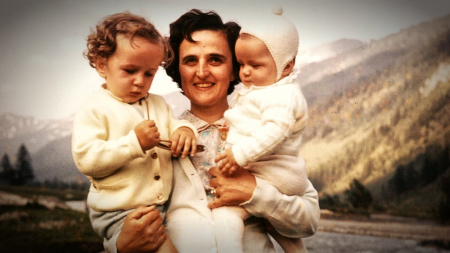
Sacrifices of Faith: The Pro-Life Legacies of St. Gianna and Jessica Hanna
-
How to love God by caring for our bodies
-
Pope Francis calls for negotiations to End Russia-Ukraine War
-
Pope Francis Contemplates Return to U.S. for United Nations Assembly Address
-
Pope Francis Calls on Faithful to Embrace Faith, Hope, and Charity in New Teaching Series

Daily Catholic
- Daily Readings for Sunday, April 28, 2024
- St. Peter Chanel: Saint of the Day for Sunday, April 28, 2024
- Prayer before a Crucifix: Prayer of the Day for Sunday, April 28, 2024
- Daily Readings for Saturday, April 27, 2024
- St. Zita: Saint of the Day for Saturday, April 27, 2024
- Prayer for the Dead # 2: Prayer of the Day for Saturday, April 27, 2024
 Daily Readings for Sunday, April 28, 2024
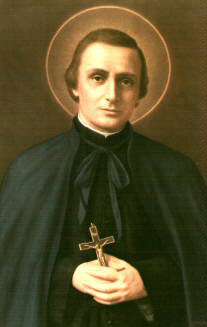 St. Peter Chanel: Saint of the Day for Sunday, April 28, 2024
 Prayer before a Crucifix: Prayer of the Day for Sunday, April 28, 2024


Copyright 2024 Catholic Online. All materials contained on this site, whether written, audible or visual are the exclusive property of Catholic Online and are protected under U.S. and International copyright laws, © Copyright 2024 Catholic Online. Any unauthorized use, without prior written consent of Catholic Online is strictly forbidden and prohibited.
Catholic Online is a Project of Your Catholic Voice Foundation, a Not-for-Profit Corporation. Your Catholic Voice Foundation has been granted a recognition of tax exemption under Section 501(c)(3) of the Internal Revenue Code. Federal Tax Identification Number: 81-0596847. Your gift is tax-deductible as allowed by law.