We ask you, humbly: don't scroll away.
Hi readers, it seems you use Catholic Online a lot; that's great! It's a little awkward to ask, but we need your help. If you have already donated, we sincerely thank you. We're not salespeople, but we depend on donations averaging $14.76 and fewer than 1% of readers give. If you donate just $5.00, the price of your coffee, Catholic Online School could keep thriving. Thank you.Help Now >
Ophir
FREE Catholic Classes
Ophir, in the Bible , designates a people and a country.
The people, for whom a Semitic descent is claimed, is mentioned in Gen., x, 29, with the other "sons of Jectan", whose dwelling "was from Messa as we go on as far as Sehar, a mountain in the east" ( Genesis 10:30 ).
The place Ophir was that from which the Bible represents Solomon's fleet bringing gold, silver, thyine (probably santal) wood, precious stones, ivory, apes, and peacocks ( 1 Kings 9:26-28 ; 10:11, 22 ; 2 Chronicles 8:17-18 ; 9:10 ). Its location has been sought where the articles mentioned are native productions; still, while Ophir is repeatedly spoken of as a gold-producing region ( Job 22:24 ; 28:16 ; Psalm 44:10 ; Isaiah 13:12 ), it does not follow that the other articles came from there; whether they were natural products, or only bought and sold there, or even purchased by the merchantmen at intervening ports, cannot be gathered from the text, as it states merely that they were fetched to Asiongaber. The Bible does not give the geographical position of Ophir; it only says that the voyage out from Asiongaber and back lasted three years ( 1 Kings 10:22 ). Scholars have been guided in their several identifications of the site by the importance they attach to this or that particular indication in the sacred text –especially the products brought to Solomon –also by resemblances, real or fanciful, between the Hebrew names of Ophir and of the articles mentioned in connexion therewith and names used in various countries and languages. The Greek translators of the Bible , by rendering the Hebrew Ophir into Sophir, the Coptic name for India, would locate the Biblical El Dorado in India, according to some in the land of the Abhira, east of the delta of the Indus, according to others, on the coast of Malabar or at Ceylon, and according to others still in the Malay Peninsula. The opinion that it was situated on the southern or south-eastern coast of Arabia has many advocates, who contend from the text of Gen., x, 29, 30, that Ophir must be located between Saba and Hevilath. Another opinion says it was not in Asia, but either on the south-eastern coast of Africa (Sofala) or inland in Mashonaland.
 Hi readers, it seems you use Catholic Online a lot; that's great! It's a little awkward to ask, but we need your help. If you have already donated, we sincerely thank you. We're not salespeople, but we depend on donations averaging $14.76 and fewer than 1% of readers give. If you donate just $5.00, the price of your coffee, Catholic Online School could keep thriving. Thank you. Help Now >
We ask you, humbly: don't scroll away.
Hi readers, it seems you use Catholic Online a lot; that's great! It's a little awkward to ask, but we need your help. If you have already donated, we sincerely thank you. We're not salespeople, but we depend on donations averaging $14.76 and fewer than 1% of readers give. If you donate just $5.00, the price of your coffee, Catholic Online School could keep thriving. Thank you.Help Now >

Join the Movement
When you sign up below, you don't just join an email list - you're joining an entire movement for Free world class Catholic education.


-

-
Mysteries of the Rosary
-
St. Faustina Kowalska
-
Litany of the Blessed Virgin Mary
-
Saint of the Day for Wednesday, Oct 4th, 2023
-
Popular Saints
-
St. Francis of Assisi
-
Bible
-
Female / Women Saints
-
7 Morning Prayers you need to get your day started with God
-
Litany of the Blessed Virgin Mary


Sacrifices of Faith: The Pro-Life Legacies of St. Gianna and Jessica Hanna
-
How to love God by caring for our bodies
-
Pope Francis calls for negotiations to End Russia-Ukraine War
-
Pope Francis Contemplates Return to U.S. for United Nations Assembly Address
-
Pope Francis Calls on Faithful to Embrace Faith, Hope, and Charity in New Teaching Series


Daily Catholic
- Daily Readings for Sunday, April 28, 2024
- St. Peter Chanel: Saint of the Day for Sunday, April 28, 2024
- Prayer before a Crucifix: Prayer of the Day for Sunday, April 28, 2024
- Daily Readings for Saturday, April 27, 2024
- St. Zita: Saint of the Day for Saturday, April 27, 2024
- Prayer for the Dead # 2: Prayer of the Day for Saturday, April 27, 2024
 Daily Readings for Sunday, April 28, 2024
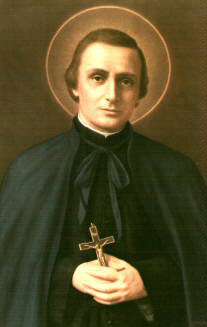 St. Peter Chanel: Saint of the Day for Sunday, April 28, 2024
 Prayer before a Crucifix: Prayer of the Day for Sunday, April 28, 2024


Copyright 2024 Catholic Online. All materials contained on this site, whether written, audible or visual are the exclusive property of Catholic Online and are protected under U.S. and International copyright laws, © Copyright 2024 Catholic Online. Any unauthorized use, without prior written consent of Catholic Online is strictly forbidden and prohibited.
Catholic Online is a Project of Your Catholic Voice Foundation, a Not-for-Profit Corporation. Your Catholic Voice Foundation has been granted a recognition of tax exemption under Section 501(c)(3) of the Internal Revenue Code. Federal Tax Identification Number: 81-0596847. Your gift is tax-deductible as allowed by law.