St. Omer
FREE Catholic Classes
Born of a distinguished family towards the close of the sixth or the beginning of the seventh century, at Guldendal, Switzerland ; died c. 670. the death of his mother, he, with his father, the monastery of Luxeuil in the Diocese of Besançon probably about 615. Under the direction o Eustachius, Omer studied the Scriptures, in which he acquired remarkable proficiency. When King Dagobert requested the appointment of a bishop important city of Terouenne, the capital of the ancient territory of the Morini in Belgic Gaul, he was appointed and consecrated in 637.
Though the Morini had received the Faith from Saints Fuscian and Victoricus, and later Antmund and Adelbert, nearly every vestige of Christianity had disappeared. When Saint Omer entered upon his episcopal duties the Abbot of Luxeuil sent to his asistance several monks, among whom are mentioned Saints Bertin, Mommolin, and Ebertran, and Saint Omer had the satisfaction of seeing the true religion firmly established in a short time. About 654 he founded the Abbey of Saint Peter (now Saint Bertin's ) in Sithiu, soon to equal if not surpass the old monastery of Luxeuil for the number of learned and zealous men educated there. Several years later he erected the Church of Our Lady of Sithiu, with a small monastery adjoining, which he turned over to the monks of Saint Bertin . The exact date of his death is unknown, but he is believed to have died about the year 670. The place of his burial is uncertain; most probably he was laid to rest in the church of Our Lady which is now the cathedral of Saint Omer's. His feast is celebrated on 9 September—when and by whom he was to the altar cannot be ascertained.

We ask you, humbly: don't scroll away.
Hi readers, it seems you use Catholic Online a lot; that's great! It's a little awkward to ask, but we need your help. If you have already donated, we sincerely thank you. We're not salespeople, but we depend on donations averaging $14.76 and fewer than 1% of readers give. If you donate just $5.00, the price of your coffee, Catholic Online School could keep thriving. Thank you.Help Now >

Join the Movement
When you sign up below, you don't just join an email list - you're joining an entire movement for Free world class Catholic education.


-

-
Mysteries of the Rosary
-
St. Faustina Kowalska
-
Litany of the Blessed Virgin Mary
-
Saint of the Day for Wednesday, Oct 4th, 2023
-
Popular Saints
-
St. Francis of Assisi
-
Bible
-
Female / Women Saints
-
7 Morning Prayers you need to get your day started with God
-
Litany of the Blessed Virgin Mary


Sacrifices of Faith: The Pro-Life Legacies of St. Gianna and Jessica Hanna
-
How to love God by caring for our bodies
-
Pope Francis calls for negotiations to End Russia-Ukraine War
-
Pope Francis Contemplates Return to U.S. for United Nations Assembly Address
-
Pope Francis Calls on Faithful to Embrace Faith, Hope, and Charity in New Teaching Series


Daily Catholic
- Daily Readings for Sunday, April 28, 2024
- St. Peter Chanel: Saint of the Day for Sunday, April 28, 2024
- Prayer before a Crucifix: Prayer of the Day for Sunday, April 28, 2024
- Daily Readings for Saturday, April 27, 2024
- St. Zita: Saint of the Day for Saturday, April 27, 2024
- Prayer for the Dead # 2: Prayer of the Day for Saturday, April 27, 2024
 Daily Readings for Sunday, April 28, 2024
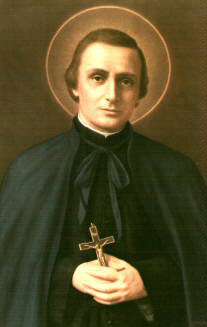 St. Peter Chanel: Saint of the Day for Sunday, April 28, 2024
 Prayer before a Crucifix: Prayer of the Day for Sunday, April 28, 2024
We ask you, humbly: don't scroll away.
Hi readers, it seems you use Catholic Online a lot; that's great! It's a little awkward to ask, but we need your help. If you have already donated, we sincerely thank you. We're not salespeople, but we depend on donations averaging $14.76 and fewer than 1% of readers give. If you donate just $5.00, the price of your coffee, Catholic Online School could keep thriving. Thank you.Help Now >

 Hi readers, it seems you use Catholic Online a lot; that's great! It's a little awkward to ask, but we need your help. If you have already donated, we sincerely thank you. We're not salespeople, but we depend on donations averaging $14.76 and fewer than 1% of readers give. If you donate just $5.00, the price of your coffee, Catholic Online School could keep thriving. Thank you. Help Now >

Copyright 2024 Catholic Online. All materials contained on this site, whether written, audible or visual are the exclusive property of Catholic Online and are protected under U.S. and International copyright laws, © Copyright 2024 Catholic Online. Any unauthorized use, without prior written consent of Catholic Online is strictly forbidden and prohibited.
Catholic Online is a Project of Your Catholic Voice Foundation, a Not-for-Profit Corporation. Your Catholic Voice Foundation has been granted a recognition of tax exemption under Section 501(c)(3) of the Internal Revenue Code. Federal Tax Identification Number: 81-0596847. Your gift is tax-deductible as allowed by law.