We ask you, humbly: don't scroll away.
Hi readers, it seems you use Catholic Online a lot; that's great! It's a little awkward to ask, but we need your help. If you have already donated, we sincerely thank you. We're not salespeople, but we depend on donations averaging $14.76 and fewer than 1% of readers give. If you donate just $5.00, the price of your coffee, Catholic Online School could keep thriving. Thank you.Help Now >
Michael Scotus
FREE Catholic Classes
(SCOTT or SCOT)
A thirteenth century mathematician, philosopher, and scholar. He was born in Scotland, about the year 1175. The contention that he was an Irishman seems to be disposed of by the fact that when, in 1223, he was offered the Archbishopric of Cashel, he declined on the ground that he was ignorant of the Irish language. It is not clear whether "Scotus" indicates merely a native of Scotland, or one of the clan Scott, or Scot, which was very numerous in the Scottish lowlands. There is a tradition to the effect that he studied first at the cathedral school of Durham, and afterwards at the Universities of Oxford and Paris. At the last mentioned place he was known as "the mathematician", which implies that he studied in the Faculty of Arts . it is probable that he studied theology also. At any rate, he was beyond doubt a cleric. It seems likely that, on leaving Paris, he visited the University of Bologna, before repairing to Sicily, to the Court of Frederick II. This occurred about 1200. At Palermo, he joined the circle of learned men who surrounded the emperor; by some, indeed, he is said to have been elevated to the rank of imperial tutor, although the Manuscripts, as a rule, entitled him " astrologer to the Lord Emperor Frederick". In 1209 he went to Toledo, made the acquaintance of several distinguished Arabian scholars and wrote his "Abbreviatio Avicennæ", the Manuscript, of which bears the date 1210. He also took up the study of astronomy and alchemy, and translated from the Arabic several works on those subjects. That he was interested in the philosophy of the Arabians is evident from the fact that he translated several philosophical commentaries of Averroes.
After his return to Palermo, about 1220, Michael devoted special attention to the science and practice of medicine. He received several signs of pontifical as well as imperial favour. By Pope Honorius III he was offered several ecclesiastical benefices, among them being the Archbishopric of Cashel, in Ireland. He was also offered the Archbishopric of Canterbury both by Honorius in 1223, and by Gregory IX in 1227. In this case, however, it was the unwillingness of the local clergy and not that of the candidate himself that stood in the way of Michael's preferment. His disappointment is, according to his latest biographer, reflected in the gloomy "prophecies" which he composed about this time, and which were so well known during the Middle Ages. According to Roger Bacon, Michael visited Oxford "about the year 1230", bearing with him "certain books of Aristotle and commentaries of learned men concerning physics, and mathematics". The date of his death is uncertain; it is generally given as 1234. The legend which grew up around the name of Michael Scot was due to his extraordinary reputation as a scholar and an adept in the secret arts. He figures as a magician in Dante's "Inferno" in Boccaccio's "Decamerone", in local Italian and Scottish folk-lore, and in Sir Walter Scott's "Lay of the Last Minstrel". The most important of his original works are;
- (1) "Liber Physiognomiæ", first printed in 1477, and since then reprinted eighteen times in various languages;
- (2) "Astronomia", still in Manuscript in the Bodleian Library ;
- (3) "Liber Introductorius", also in Manuscript, ibid.;
- (4) "Liber Luminis Luminum", in a Manuscript of the Riciardi coll., Florence;
- (5) "De Alchimia", in Manuscript in Corpus Christi College, Oxford.
Besides the translations mentioned above, a Latin version of Aristotle's "Ethics" made from the Greek text is sometimes attributed to Michael Scot.
We ask you, humbly: don't scroll away.
Hi readers, it seems you use Catholic Online a lot; that's great! It's a little awkward to ask, but we need your help. If you have already donated, we sincerely thank you. We're not salespeople, but we depend on donations averaging $14.76 and fewer than 1% of readers give. If you donate just $5.00, the price of your coffee, Catholic Online School could keep thriving. Thank you.Help Now >
Join the Movement
When you sign up below, you don't just join an email list - you're joining an entire movement for Free world class Catholic education.


-

-
Mysteries of the Rosary
-
St. Faustina Kowalska
-
Litany of the Blessed Virgin Mary
-
Saint of the Day for Wednesday, Oct 4th, 2023
-
Popular Saints
-
St. Francis of Assisi
-
Bible
-
Female / Women Saints
-
7 Morning Prayers you need to get your day started with God
-
Litany of the Blessed Virgin Mary

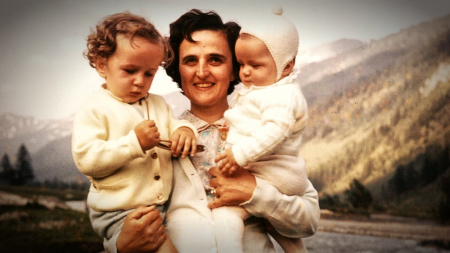
Sacrifices of Faith: The Pro-Life Legacies of St. Gianna and Jessica Hanna
-
How to love God by caring for our bodies
-
Pope Francis calls for negotiations to End Russia-Ukraine War
-
Pope Francis Contemplates Return to U.S. for United Nations Assembly Address
-
Pope Francis Calls on Faithful to Embrace Faith, Hope, and Charity in New Teaching Series
Daily Catholic
- Daily Readings for Monday, April 29, 2024
- St. Catherine of Siena: Saint of the Day for Monday, April 29, 2024
- Prayer for the Dead # 3: Prayer of the Day for Monday, April 29, 2024
- Daily Readings for Sunday, April 28, 2024
- St. Peter Chanel: Saint of the Day for Sunday, April 28, 2024
- Prayer before a Crucifix: Prayer of the Day for Sunday, April 28, 2024
 Daily Readings for Monday, April 29, 2024
 St. Catherine of Siena: Saint of the Day for Monday, April 29, 2024
 Prayer for the Dead # 3: Prayer of the Day for Monday, April 29, 2024
 Hi readers, it seems you use Catholic Online a lot; that's great! It's a little awkward to ask, but we need your help. If you have already donated, we sincerely thank you. We're not salespeople, but we depend on donations averaging $14.76 and fewer than 1% of readers give. If you donate just $5.00, the price of your coffee, Catholic Online School could keep thriving. Thank you. Help Now >


Copyright 2024 Catholic Online. All materials contained on this site, whether written, audible or visual are the exclusive property of Catholic Online and are protected under U.S. and International copyright laws, © Copyright 2024 Catholic Online. Any unauthorized use, without prior written consent of Catholic Online is strictly forbidden and prohibited.
Catholic Online is a Project of Your Catholic Voice Foundation, a Not-for-Profit Corporation. Your Catholic Voice Foundation has been granted a recognition of tax exemption under Section 501(c)(3) of the Internal Revenue Code. Federal Tax Identification Number: 81-0596847. Your gift is tax-deductible as allowed by law.