 Hi readers, it seems you use Catholic Online a lot; that's great! It's a little awkward to ask, but we need your help. If you have already donated, we sincerely thank you. We're not salespeople, but we depend on donations averaging $14.76 and fewer than 1% of readers give. If you donate just $5.00, the price of your coffee, Catholic Online School could keep thriving. Thank you. Help Now >
Angelo Clareno da Cingoli
FREE Catholic Classes
One of the leaders of the so-called Spiritual Franciscans, b. at Fossombrone about 1247; d. at Santa Maria d'Aspro, 15 June, 1337. He entered the order in 1262, or thereabouts. Believing that the rule of St. Francis was not being observed and interpreted according to the mind and spirit of the Seraphic Father, he retired to a hermitage with a few companions and formed a new branch of the order known as the "Clareni." By the Bull of Sixtus IV, "Dominus Noster Jesus Christus," the "Clareni" were united to the main body of the order and placed under the obedience of the Minister General. The influence of the prophetical writings of Joachim of Floris , a Calabrian abbot, on Angelo and his followers, and in fact on the "Spirituals" generally of the thirteenth century, cannot be overrated. They all looked forward to the time when the religious orders, whose laxity had been occasioned in great measure by the general looseness of the times, would be restored to their former discipline under a papa angelicus and a new order of Friars. But the number of Angelo's followers was small; and his so-called reform brought upon himself in particular, and the "Clareni" in general, the suspicious disfavour of the Friars Minor who were not prepared to follow the extreme interpretation of the rule of St. Francis which Angelo had adopted. Angelo became in consequence little better than a homeless and persecuted wanderer, travelling through Greece, Armenia, and the different provinces of Italy until, in 1311, he came to Avignon to answer the charge of heresy that had been brought against him. He was finally acquitted after a tedious and searching examination. In 1337 he retired to the little hermitage of Santa Maria d'Aspro, in the diocese of Marsico in Basilicata, where he died in the odour of sanctity on the 15th of June of the same year. Angelo Clareno is the author, at least in great part, of the "Chronica septem tribulationum Ordinis Minorum," which records the persecutions suffered by the "Spirituals," beginning with the innovations made during St. Francis' sojourn in the East, and continuing under Elias, Crescentius, and Bonaventure. This work is characterized by heroic endurance; but is tinged with bias and bitterness. Another work of Angelo's that deserves mention is the "Declaratio regulae Minorum."
We ask you, humbly: don't scroll away.
Hi readers, it seems you use Catholic Online a lot; that's great! It's a little awkward to ask, but we need your help. If you have already donated, we sincerely thank you. We're not salespeople, but we depend on donations averaging $14.76 and fewer than 1% of readers give. If you donate just $5.00, the price of your coffee, Catholic Online School could keep thriving. Thank you.Help Now >
We ask you, humbly: don't scroll away.
Hi readers, it seems you use Catholic Online a lot; that's great! It's a little awkward to ask, but we need your help. If you have already donated, we sincerely thank you. We're not salespeople, but we depend on donations averaging $14.76 and fewer than 1% of readers give. If you donate just $5.00, the price of your coffee, Catholic Online School could keep thriving. Thank you.Help Now >
Join the Movement
When you sign up below, you don't just join an email list - you're joining an entire movement for Free world class Catholic education.


-

-
Mysteries of the Rosary
-
St. Faustina Kowalska
-
Litany of the Blessed Virgin Mary
-
Saint of the Day for Wednesday, Oct 4th, 2023
-
Popular Saints
-
St. Francis of Assisi
-
Bible
-
Female / Women Saints
-
7 Morning Prayers you need to get your day started with God
-
Litany of the Blessed Virgin Mary


Sacrifices of Faith: The Pro-Life Legacies of St. Gianna and Jessica Hanna
-
How to love God by caring for our bodies
-
Pope Francis calls for negotiations to End Russia-Ukraine War
-
Pope Francis Contemplates Return to U.S. for United Nations Assembly Address
-
Pope Francis Calls on Faithful to Embrace Faith, Hope, and Charity in New Teaching Series


Daily Catholic
- Daily Readings for Sunday, April 28, 2024
- St. Peter Chanel: Saint of the Day for Sunday, April 28, 2024
- Prayer before a Crucifix: Prayer of the Day for Sunday, April 28, 2024
- Daily Readings for Saturday, April 27, 2024
- St. Zita: Saint of the Day for Saturday, April 27, 2024
- Prayer for the Dead # 2: Prayer of the Day for Saturday, April 27, 2024
 Daily Readings for Sunday, April 28, 2024
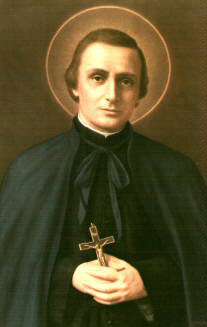 St. Peter Chanel: Saint of the Day for Sunday, April 28, 2024
 Prayer before a Crucifix: Prayer of the Day for Sunday, April 28, 2024
Hi readers, it seems you use Catholic Online a lot; that's great! It's a little awkward to ask, but we need your help. If you have already donated, we sincerely thank you. We're not salespeople, but we depend on donations averaging $14.76 and fewer than 1% of readers give. If you donate just $5.00, the price of your coffee, Catholic Online School could keep thriving. Thank you. Help Now >
Prayer before a Crucifix: Prayer of the Day for Sunday, April 28, 2024
Hi readers, it seems you use Catholic Online a lot; that's great! It's a little awkward to ask, but we need your help. If you have already donated, we sincerely thank you. We're not salespeople, but we depend on donations averaging $14.76 and fewer than 1% of readers give. If you donate just $5.00, the price of your coffee, Catholic Online School could keep thriving. Thank you. Help Now >


Copyright 2024 Catholic Online. All materials contained on this site, whether written, audible or visual are the exclusive property of Catholic Online and are protected under U.S. and International copyright laws, © Copyright 2024 Catholic Online. Any unauthorized use, without prior written consent of Catholic Online is strictly forbidden and prohibited.
Catholic Online is a Project of Your Catholic Voice Foundation, a Not-for-Profit Corporation. Your Catholic Voice Foundation has been granted a recognition of tax exemption under Section 501(c)(3) of the Internal Revenue Code. Federal Tax Identification Number: 81-0596847. Your gift is tax-deductible as allowed by law.