We ask you, humbly: don't scroll away.
Hi readers, it seems you use Catholic Online a lot; that's great! It's a little awkward to ask, but we need your help. If you have already donated, we sincerely thank you. We're not salespeople, but we depend on donations averaging $14.76 and fewer than 1% of readers give. If you donate just $5.00, the price of your coffee, Catholic Online School could keep thriving. Thank you.Help Now >
Labarum (Chi-Rho)
FREE Catholic Classes
Labarum is the name by which the military standard adopted by Constantine the Great after his celebrated vision (Lactantius, "De mortibus persecutorum", 44), was known in antiquity. The original labarum, designed under the emperor's direction on the day subsequent to the appearance of the "cross of light", is described by Eusebius (Vita Constant., I:26) as "a long spear, overlaid with gold", which with a transverse bar formed the figure of a cross. "On the top of the whole was fixed a wreath of gold and precious stones, and within this the symbol of the Saviour's name, two letters indicating the name of Christ by means of the initial letters, the letter X intersection P at the centre." These two letters formed what is known as the monogram of Constantine, so called -- not because it was the invention of this emperor, for it had been a familiar Christian symbol prior to his conversion -- but because of the great popularity it enjoyed from the date of its appearance on the imperial standards. From the cross-bar of the spear, was suspended a purple banner with the Greek inscription TOUTO NIKA -- i.e. conquer by this (sign), usually rendered in Latin "In hoc signo vinces" (in this sign thou shalt conquer). This banner, square in form, covered with a rich embroidery of precious stones, and "being also richly interlaced with gold, presented an indescribable degree of beauty to the beholder". The part of the staff immediately above the embroidered banner was adorned with medallions of the emperor and his children. Fifty soldiers of the imperial guard, distinguished for bravery and piety, were entrusted with the care and defense of the new sacred standard (Vita Constant., II:8). Standards, similar to the original labarum in its essential features were supplied to all the legions, and the monogram was also engraved on the soldiers' shields. An idea of some of the deviations in form of the standards furnished to different divisions of the army may be obtained from several coins of Constantine's reign still preserved. On one coin, for instance, the portrait of the emperor and his sons are represented on the banner instead of on the staff; on a second the banner is inscribed with the monogram and surmounted by the equal-armed cross, while the royal portraits, though on the shaft, are below instead of above the banner. In form, the labarum of Constantine was an adaptation of the already existing cavalry standard of the Roman army; the pagan emblems were merely replaced by Christian symbols. The term labarum , which is of uncertain derivation, was probably familiar in the Roman army from the reign of Hadrian.
We ask you, humbly: don't scroll away.
Hi readers, it seems you use Catholic Online a lot; that's great! It's a little awkward to ask, but we need your help. If you have already donated, we sincerely thank you. We're not salespeople, but we depend on donations averaging $14.76 and fewer than 1% of readers give. If you donate just $5.00, the price of your coffee, Catholic Online School could keep thriving. Thank you.Help Now >


Join the Movement
When you sign up below, you don't just join an email list - you're joining an entire movement for Free world class Catholic education.


-

-
Mysteries of the Rosary
-
St. Faustina Kowalska
-
Litany of the Blessed Virgin Mary
-
Saint of the Day for Wednesday, Oct 4th, 2023
-
Popular Saints
-
St. Francis of Assisi
-
Bible
-
Female / Women Saints
-
7 Morning Prayers you need to get your day started with God
-
Litany of the Blessed Virgin Mary


Sacrifices of Faith: The Pro-Life Legacies of St. Gianna and Jessica Hanna
-
How to love God by caring for our bodies
-
Pope Francis calls for negotiations to End Russia-Ukraine War
-
Pope Francis Contemplates Return to U.S. for United Nations Assembly Address
-
Pope Francis Calls on Faithful to Embrace Faith, Hope, and Charity in New Teaching Series


Daily Catholic
- Daily Readings for Sunday, April 28, 2024
- St. Peter Chanel: Saint of the Day for Sunday, April 28, 2024
- Prayer before a Crucifix: Prayer of the Day for Sunday, April 28, 2024
- Daily Readings for Saturday, April 27, 2024
- St. Zita: Saint of the Day for Saturday, April 27, 2024
- Prayer for the Dead # 2: Prayer of the Day for Saturday, April 27, 2024
 Daily Readings for Sunday, April 28, 2024
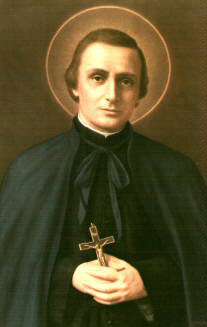 St. Peter Chanel: Saint of the Day for Sunday, April 28, 2024
 Prayer before a Crucifix: Prayer of the Day for Sunday, April 28, 2024
We ask you, humbly: don't scroll away.
Hi readers, it seems you use Catholic Online a lot; that's great! It's a little awkward to ask, but we need your help. If you have already donated, we sincerely thank you. We're not salespeople, but we depend on donations averaging $14.76 and fewer than 1% of readers give. If you donate just $5.00, the price of your coffee, Catholic Online School could keep thriving. Thank you.Help Now >


Copyright 2024 Catholic Online. All materials contained on this site, whether written, audible or visual are the exclusive property of Catholic Online and are protected under U.S. and International copyright laws, © Copyright 2024 Catholic Online. Any unauthorized use, without prior written consent of Catholic Online is strictly forbidden and prohibited.
Catholic Online is a Project of Your Catholic Voice Foundation, a Not-for-Profit Corporation. Your Catholic Voice Foundation has been granted a recognition of tax exemption under Section 501(c)(3) of the Internal Revenue Code. Federal Tax Identification Number: 81-0596847. Your gift is tax-deductible as allowed by law.
