Ammonian Sections
FREE Catholic Classes
Divisions of the four Gospels indicated in the margin of nearly all Greek and Latin manuscripts They are about 1165 in number; 355 for St Matthew, 235 for St. Mark, 343 for St. Luke, and 232 for St. John; the numbers, however, vary slightly in different manuscripts Until recently it was commonly believed that these divisions were devised by Ammonius of Alexandria, at the beginning of the third century (c. 220), in connection with a Harmony of the Gospels, now lost, which he composed. He divided the four Gospels, it was said, into small numbered sections, which were similar in content where the narratives are parallel, and then wrote the sections of the three last Gospels, or simply the section numbers with the name of the respective evangelist, in parallel columns opposite the corresponding sections of the Gospel of St. Matthew, which he had chosen as the basis of his Harmony. Of late, however, the view has obtained among scholars that the work of Ammonius was restricted to what Eusebius states concerning it in his letter to Carpianus, namely, that he placed the parallel passages of the last three Gospels alongside the text of St. Matthew , and the sections hitherto credited to Ammonius are now ascribed to Eusebius ( A.D. 265-340). At any rate the Harmony of Ammonius suggested to Eusebius, as he himself tells us (loc. cit.), the idea of drawing up ten tables ( kanones ) in which the sections in question were so classified as to show at a glance where each Gospel agreed with or differed from the others. In the first nine tables he placed in parallel columns the numbers of the sections common to the four, or three, or two, evangelists ; namely: (1) Matt., Mark, Luke, John; (2) Matt., Mark, Luke; (3) Matt., Luke, John; (4) Matt., Mark, John; (5) Matt., Luke; (6) Matt., Mark; (7) Matt., John; (8) Luke, Mark; (9) Luke, John. In the tenth he noted successively the sections special to each evangelist. The usefulness of these tables for the purpose of reference and comparison soon brought them into common use, and from the fifth century the Ammonian sections, with references to the Eusebian tables, were indicated in the margin of the manuscripts (It need hardly be said that our chapters and verses were not then in existence ; the first date from the thirteenth, the latter from the sixteenth century.) Opposite each section was written its number, and underneath this the number of the Eusebian table to be consulted in order to find the parallel texts or text; a reference to the tenth table would of course show that this section was proper to that evangelist. These marginal notes are reproduced in several editions of Tischendorf's New Testament.
We ask you, humbly: don't scroll away.
Hi readers, it seems you use Catholic Online a lot; that's great! It's a little awkward to ask, but we need your help. If you have already donated, we sincerely thank you. We're not salespeople, but we depend on donations averaging $14.76 and fewer than 1% of readers give. If you donate just $5.00, the price of your coffee, Catholic Online School could keep thriving. Thank you.Help Now >


Join the Movement
When you sign up below, you don't just join an email list - you're joining an entire movement for Free world class Catholic education.


-

-
Mysteries of the Rosary
-
St. Faustina Kowalska
-
Litany of the Blessed Virgin Mary
-
Saint of the Day for Wednesday, Oct 4th, 2023
-
Popular Saints
-
St. Francis of Assisi
-
Bible
-
Female / Women Saints
-
7 Morning Prayers you need to get your day started with God
-
Litany of the Blessed Virgin Mary


Sacrifices of Faith: The Pro-Life Legacies of St. Gianna and Jessica Hanna
-
How to love God by caring for our bodies
-
Pope Francis calls for negotiations to End Russia-Ukraine War
-
Pope Francis Contemplates Return to U.S. for United Nations Assembly Address
-
Pope Francis Calls on Faithful to Embrace Faith, Hope, and Charity in New Teaching Series


Daily Catholic
- Daily Readings for Sunday, April 28, 2024
- St. Peter Chanel: Saint of the Day for Sunday, April 28, 2024
- Prayer before a Crucifix: Prayer of the Day for Sunday, April 28, 2024
- Daily Readings for Saturday, April 27, 2024
- St. Zita: Saint of the Day for Saturday, April 27, 2024
- Prayer for the Dead # 2: Prayer of the Day for Saturday, April 27, 2024
 Daily Readings for Sunday, April 28, 2024
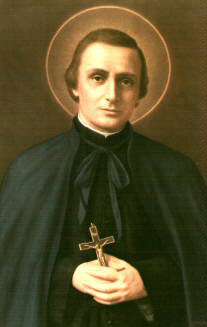 St. Peter Chanel: Saint of the Day for Sunday, April 28, 2024
 Prayer before a Crucifix: Prayer of the Day for Sunday, April 28, 2024



Copyright 2024 Catholic Online. All materials contained on this site, whether written, audible or visual are the exclusive property of Catholic Online and are protected under U.S. and International copyright laws, © Copyright 2024 Catholic Online. Any unauthorized use, without prior written consent of Catholic Online is strictly forbidden and prohibited.
Catholic Online is a Project of Your Catholic Voice Foundation, a Not-for-Profit Corporation. Your Catholic Voice Foundation has been granted a recognition of tax exemption under Section 501(c)(3) of the Internal Revenue Code. Federal Tax Identification Number: 81-0596847. Your gift is tax-deductible as allowed by law.