Valerian Kalinka
FREE Catholic Classes
Polish historian, born near Cracow in 1826; died at Jaroslaw in 1886. He fled from Poland in 1846 on account of political entanglements, worked on the "Czas" newspaper in 1848, but finally took refuge in Paris, where his first work was written -- "Galicia und Cracoio", an historical and social picture of the country from 1772 to 1850. He afterwards thought of writing a history of the Polish emigration, but eventually chose to edit a weekly periodical entitled "Political Polish News", the principal contributors to which were himself and Klaczko. Though forbidden everywhere but in Posen, it existed for four years, and dealt with every aspect of Polish national life. Kalinka's articles show a very practical acquaintance with law, administration, history, and statistics, and had mostly to do with the inner life of Poland. After 1863, when searching for documents for a life of Prince Adam Czartoryski, he stumbled on important papers which he published in two volumes as "The Last Years of Stanislaus Augustus" (1787-95). This work placed him at once in the first rank of Polish writers. Poland had not yet had such an historian, especially in the province of diplomacy and foreign politics. While marking out a new line, it carefully pointed out the errors of the past, and showed how they might have been avoided. Szujski, though unknown to Kalinka, was at the same time working in the same direction. Both were accused of undermining patriotic self- respect, of lowering Poland in foreign eyes, and of destroying veneration for the past. In the preface to this work, Kalinka had already answered these charges. A Pole is not less a Pole when he learns from past errors how to serve his country better. About this time Kalinka entered the novitiate of the Resurrection Fathers in Rome, where, save for a few visits to Galicia, he subsequently resided until in 1877, after a visit to the Catholic missions in Bulgaria, he became chaplain of a convent in Jaroslaw. Here in 1880 appeared the first volume of his "Sejmczteroletni" (The Four Years Diet). Polish literature has no better book, and none whose perusal is more painful. It exhibits all the weaknesses in the leading men of Poland, and all their political blunders. To the many fierce reproaches it called forth Kalinka replied: "History calls first for truth ; nor can truth harm patriotism." A grave style, artistic grouping, faithful narrative of facts, profound political insight, and splendid literary talent make this book the greatest historical lesson in the Polish language. The second volume, even surpassing the first, appeared in 1886, and with it came to an end the thirty years labour of Kalinka. He was not only a profound and far-seeing politician and one of Poland's best historians, but also one of her most zealous priests.
We ask you, humbly: don't scroll away.
Hi readers, it seems you use Catholic Online a lot; that's great! It's a little awkward to ask, but we need your help. If you have already donated, we sincerely thank you. We're not salespeople, but we depend on donations averaging $14.76 and fewer than 1% of readers give. If you donate just $5.00, the price of your coffee, Catholic Online School could keep thriving. Thank you.Help Now >


Join the Movement
When you sign up below, you don't just join an email list - you're joining an entire movement for Free world class Catholic education.


-

-
Mysteries of the Rosary
-
St. Faustina Kowalska
-
Litany of the Blessed Virgin Mary
-
Saint of the Day for Wednesday, Oct 4th, 2023
-
Popular Saints
-
St. Francis of Assisi
-
Bible
-
Female / Women Saints
-
7 Morning Prayers you need to get your day started with God
-
Litany of the Blessed Virgin Mary


Sacrifices of Faith: The Pro-Life Legacies of St. Gianna and Jessica Hanna
-
How to love God by caring for our bodies
-
Pope Francis calls for negotiations to End Russia-Ukraine War
-
Pope Francis Contemplates Return to U.S. for United Nations Assembly Address
-
Pope Francis Calls on Faithful to Embrace Faith, Hope, and Charity in New Teaching Series


Daily Catholic
- Daily Readings for Sunday, April 28, 2024
- St. Peter Chanel: Saint of the Day for Sunday, April 28, 2024
- Prayer before a Crucifix: Prayer of the Day for Sunday, April 28, 2024
- Daily Readings for Saturday, April 27, 2024
- St. Zita: Saint of the Day for Saturday, April 27, 2024
- Prayer for the Dead # 2: Prayer of the Day for Saturday, April 27, 2024
 Daily Readings for Sunday, April 28, 2024
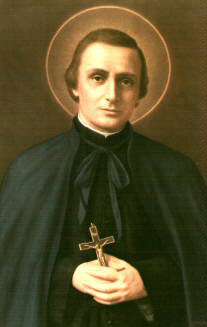 St. Peter Chanel: Saint of the Day for Sunday, April 28, 2024
 Prayer before a Crucifix: Prayer of the Day for Sunday, April 28, 2024
 Hi readers, it seems you use Catholic Online a lot; that's great! It's a little awkward to ask, but we need your help. If you have already donated, we sincerely thank you. We're not salespeople, but we depend on donations averaging $14.76 and fewer than 1% of readers give. If you donate just $5.00, the price of your coffee, Catholic Online School could keep thriving. Thank you. Help Now >

Copyright 2024 Catholic Online. All materials contained on this site, whether written, audible or visual are the exclusive property of Catholic Online and are protected under U.S. and International copyright laws, © Copyright 2024 Catholic Online. Any unauthorized use, without prior written consent of Catholic Online is strictly forbidden and prohibited.
Catholic Online is a Project of Your Catholic Voice Foundation, a Not-for-Profit Corporation. Your Catholic Voice Foundation has been granted a recognition of tax exemption under Section 501(c)(3) of the Internal Revenue Code. Federal Tax Identification Number: 81-0596847. Your gift is tax-deductible as allowed by law.