We ask you, humbly: don't scroll away.
Hi readers, it seems you use Catholic Online a lot; that's great! It's a little awkward to ask, but we need your help. If you have already donated, we sincerely thank you. We're not salespeople, but we depend on donations averaging $14.76 and fewer than 1% of readers give. If you donate just $5.00, the price of your coffee, Catholic Online School could keep thriving. Thank you.Help Now >
Venerable John Buckley
FREE Catholic Classes
( Alias John Jones; alias John Griffith; in religion, Godfrey Maurice). Priest and martyr, born at Clynog Fawr, Carnarvonshire, Wales, England, 12 July 1598.
There is much confusion between the above and Robert (or Herbert; in religion, Sigebert) Buckley, the monk of Westminster who was the sole connecting link between the pre- and post-Reformation English Benedictines. This accounts for any apparent discrepancy in John's history. Thus it is said that he was a native of Shropshire, also that he was imprisoned in the Marshalsea, 1582-4, both of which statements are incorrect. He was of a good Welsh family, which had remained faithful to the Church. As a youth, he entered the Franciscan convent at Greenwich; at its dissolution in 1559 he went to the Continent, and was professed at Pontoise, France. After many years he journeyed to Rome, where he stayed at the Ara Coeli convent of the Observantines. Although he was a Conventual, he joined the Roman province of the Reformati in 1591, as he had become imbued with the ideals of the Strict Observance. He then begged to be allowed to go upon the English mission, which his superiors permitted, and he also received a special blessing and commendation from Clement VIII. He reached London about the end of 1592, and stayed temporarily at the house which Father John Gerard had provided for missionary priests ; he then laboured in different parts of the country, and his brother Franciscans in England elected him their provincial.
We ask you, humbly: don't scroll away.
Hi readers, it seems you use Catholic Online a lot; that's great! It's a little awkward to ask, but we need your help. If you have already donated, we sincerely thank you. We're not salespeople, but we depend on donations averaging $14.76 and fewer than 1% of readers give. If you donate just $5.00, the price of your coffee, Catholic Online School could keep thriving. Thank you.Help Now >
In 1596 the priest-catcher Topcliffe was informed by a spy that Buckley had visited two Catholics and had said Mass in their house, but it was afterwards shown that these people were in prison when the alleged offence took place. However, Father Buckley was promptly arrested and severely tortured. He was also cruelly scourged, and Topcliffe took him to his house and practised unspeakable barbarities upon him, all of which he endured with a surprising fortitude. He was then imprisoned for nearly two years, and on 3 July, 1598, was tried on the charge of "going over the seas in the first year of Her majesty's reign (1558) and there being made a priest by the authority from Rome and then returning to England contrary to statute" (27 Eliz. c. 2). He was convicted of high treason and sentenced to be hanged, drawn, and quartered.
As by this time the people had grown tired of these butcheries, the execution was arranged for a early hour in the morning. The place was St. Thomas's Watering, in what is now the Old Kent Road, at the site of the junction of the old Roman road to London with the main line of Watling Street. Such ancient landmarks had been immemorially used as places of execution, Tyburn itself being merely the point where Walting Street crossed the Roman road to Silchester. In spite of the earliness of the hour, a large crowd had gathered. On the gallows he declared that he was dying for his Faith, and he was innocent of any political offence, in which declaration the people clearly showed their belief and sympathy. The usual atrocities were carried out; his dismembered remains were fixed on the poles on the roads to Newington and Lambeth (now represented by Tabard Street and Lambeth Road respectiverly); they were removed by some young Catholic gentlemen, one of whom suffered a long imprisonment for this offence alone. One of the relics eventually reached Pontoise, where the martyr had been professed. He was declared Venerable by Leo XIII.
We ask you, humbly: don't scroll away.
Hi readers, it seems you use Catholic Online a lot; that's great! It's a little awkward to ask, but we need your help. If you have already donated, we sincerely thank you. We're not salespeople, but we depend on donations averaging $14.76 and fewer than 1% of readers give. If you donate just $5.00, the price of your coffee, Catholic Online School could keep thriving. Thank you.Help Now >

Join the Movement
When you sign up below, you don't just join an email list - you're joining an entire movement for Free world class Catholic education.


-

-
Mysteries of the Rosary
-
St. Faustina Kowalska
-
Litany of the Blessed Virgin Mary
-
Saint of the Day for Wednesday, Oct 4th, 2023
-
Popular Saints
-
St. Francis of Assisi
-
Bible
-
Female / Women Saints
-
7 Morning Prayers you need to get your day started with God
-
Litany of the Blessed Virgin Mary

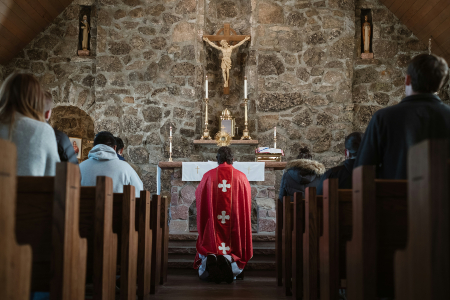
U.S. Catholic Parishes Experience Resurgence of Traditional Practices
-
Pope Francis Urges Faith and Prayers for Peace
-
Florida Welcomes Volunteer Chaplains to Public Schools
-
10 Fascinating Details About St. Joseph the Worker: Celebrating His Feast Day - May 1
-
St. Joseph the Worker: Model for Men, Young and Old

Daily Catholic
- Daily Readings for Thursday, May 02, 2024
- St. Athanasius: Saint of the Day for Thursday, May 02, 2024
- The Our Father: Prayer of the Day for Thursday, May 02, 2024
- Daily Readings for Wednesday, May 01, 2024
- St. Marculf: Saint of the Day for Wednesday, May 01, 2024
- To Saint Peregrine: Prayer of the Day for Wednesday, May 01, 2024
 Daily Readings for Thursday, May 02, 2024
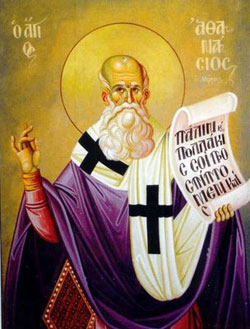 St. Athanasius: Saint of the Day for Thursday, May 02, 2024
 The Our Father: Prayer of the Day for Thursday, May 02, 2024


Copyright 2024 Catholic Online. All materials contained on this site, whether written, audible or visual are the exclusive property of Catholic Online and are protected under U.S. and International copyright laws, © Copyright 2024 Catholic Online. Any unauthorized use, without prior written consent of Catholic Online is strictly forbidden and prohibited.
Catholic Online is a Project of Your Catholic Voice Foundation, a Not-for-Profit Corporation. Your Catholic Voice Foundation has been granted a recognition of tax exemption under Section 501(c)(3) of the Internal Revenue Code. Federal Tax Identification Number: 81-0596847. Your gift is tax-deductible as allowed by law.