 Hi readers, it seems you use Catholic Online a lot; that's great! It's a little awkward to ask, but we need your help. If you have already donated, we sincerely thank you. We're not salespeople, but we depend on donations averaging $14.76 and fewer than 1% of readers give. If you donate just $5.00, the price of your coffee, Catholic Online School could keep thriving. Thank you. Help Now >
Itinerarium
FREE Catholic Classes
A form of prayer used by monks and clerics before setting out on a journey, and for that reason usually printed at the end of the Breviary, where it can be conveniently found when required. Most probably the use of such prayers originated in monastic observance. The early rules of the Fathers of the Desert — St. Anthony and St. Pachomius — as well as that of St. Basil, legislate minutely as to the behaviour of monks when travelling, and impose various restrictions and duties upon them. St. Benedict, whose rule, more than any other, has exerted so wide an influence over all ecclesiastical customs, monastic and otherwise, in the Western Church, laid down (chap. lxvii) that when any of the brethren were to be sent on a journey, they should, before setting out, commend themselves to the prayers of the abbot and community, by whom they were to be daily remembered during their absence from the monastery. According to monastic tradition, if the absence were to be only a short one, i.e. if they were to return the same or the following day, they merely asked the abbot's blessing, usually at the conclusion of one of the canonical hours, and then requested the prayers of the community.

But if the journey was, to occupy a longer time, a more solemn form of itinerarium was customary. Kneeling or lying prostrate at the altar steps, some versicles and prayers were recited over them by the abbot, who then dismissed the travellers with his blessing and the kiss of peace. This was most likely the origin of the itinerarium as we have it at present. The constitutions of the various orders and congregations usually legislate for the particular prayers to be used by their members before a journey, and the duty of a community to pray for those who may be travelling is fulfilled at the present day by the versicle "Divinum auxilium", said for absent brethren at the end of each of the canonical hours. The inclusion of the itinerarium in the secular Roman Breviary indicates that its use is at least recommended to all clerics, though not obligatory. The "Cæremoniale Episcoporum" directs that a prelate ought to recite it with his chaplains or household before commencing a Journey; and Gavanti mentions an ancient pontifical containing a longer form of itinerarium for the use of prelates. The usual form consists of the canticle "Benedictus" with antiphon, certain versicles, and several collects. Two of these latter are very ancient, being found in the Gregorian Sacramentary. In some modern editions of the monastic Breviary a shorter form of itinerarium is also given, for use "ante ambulationem extra monasterium".


Join the Movement
When you sign up below, you don't just join an email list - you're joining an entire movement for Free world class Catholic education.


-

-
Mysteries of the Rosary
-
St. Faustina Kowalska
-
Litany of the Blessed Virgin Mary
-
Saint of the Day for Wednesday, Oct 4th, 2023
-
Popular Saints
-
St. Francis of Assisi
-
Bible
-
Female / Women Saints
-
7 Morning Prayers you need to get your day started with God
-
Litany of the Blessed Virgin Mary


Sacrifices of Faith: The Pro-Life Legacies of St. Gianna and Jessica Hanna
-
How to love God by caring for our bodies
-
Pope Francis calls for negotiations to End Russia-Ukraine War
-
Pope Francis Contemplates Return to U.S. for United Nations Assembly Address
-
Pope Francis Calls on Faithful to Embrace Faith, Hope, and Charity in New Teaching Series


Daily Catholic
- Daily Readings for Sunday, April 28, 2024
- St. Peter Chanel: Saint of the Day for Sunday, April 28, 2024
- Prayer before a Crucifix: Prayer of the Day for Sunday, April 28, 2024
- Daily Readings for Saturday, April 27, 2024
- St. Zita: Saint of the Day for Saturday, April 27, 2024
- Prayer for the Dead # 2: Prayer of the Day for Saturday, April 27, 2024
 Daily Readings for Sunday, April 28, 2024
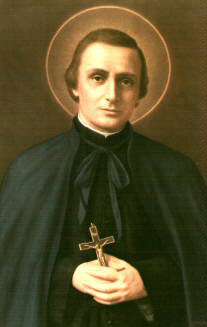 St. Peter Chanel: Saint of the Day for Sunday, April 28, 2024
 Prayer before a Crucifix: Prayer of the Day for Sunday, April 28, 2024
We ask you, humbly: don't scroll away.
Hi readers, it seems you use Catholic Online a lot; that's great! It's a little awkward to ask, but we need your help. If you have already donated, we sincerely thank you. We're not salespeople, but we depend on donations averaging $14.76 and fewer than 1% of readers give. If you donate just $5.00, the price of your coffee, Catholic Online School could keep thriving. Thank you.Help Now >

Copyright 2024 Catholic Online. All materials contained on this site, whether written, audible or visual are the exclusive property of Catholic Online and are protected under U.S. and International copyright laws, © Copyright 2024 Catholic Online. Any unauthorized use, without prior written consent of Catholic Online is strictly forbidden and prohibited.
Catholic Online is a Project of Your Catholic Voice Foundation, a Not-for-Profit Corporation. Your Catholic Voice Foundation has been granted a recognition of tax exemption under Section 501(c)(3) of the Internal Revenue Code. Federal Tax Identification Number: 81-0596847. Your gift is tax-deductible as allowed by law.