 Hi readers, it seems you use Catholic Online a lot; that's great! It's a little awkward to ask, but we need your help. If you have already donated, we sincerely thank you. We're not salespeople, but we depend on donations averaging $14.76 and fewer than 1% of readers give. If you donate just $5.00, the price of your coffee, Catholic Online School could keep thriving. Thank you. Help Now >
Improperia
FREE Catholic Classes
The Improperia are the reproaches which in the liturgy of the Office of Good Friday the Saviour is made to utter against the Jews, who, in requital for all the Divine favours and particularly for the delivery from the bondage of Egypt and safe conduct into the Promised Land, inflicted on Him the ignominies of the Passion and a cruel death. It is during the Adoration of the Cross that these touching remonstrances are rendered by the choir. In all they consist of three distinct parts. Of these the third -- composed of the antiphon "Crucem tuam adoramus", the first verse of Psalm lxvi, the versicle "Crux fidelis", and the hymn "Pange lingua gloriosi lauream" -- does not belong to the Improperia strictly so called. The first part consists of three reproaches, namely, the Popule meus" ( Micah 6:3 ), "Ego eduxi" ( Jeremiah 2:21 ) and "Quid ultra" ( Isaiah 5:2, 40 ), the Trisagion ( Sanctus Deus, Santus fortis, Sanctus immortalis ) being repeated after each in the Latin and Greek languages. The second part contains nine reproaches pervaded by the same strain of remonstrance. Each of these is a verse taken from some portion of the Scriptures and followed in every instance by the "Popule meus" as a sort of refrain. Originally these striking sentences were rendered to a plain-song melody. In the year 1560 Palestrina gave them such an appropriate and beautiful musical setting that Pius IV ordered it to be used in the Sixtine Chapel, where one may still hear on Good Friday each year these exquisite compositions, which are unsurpassed in simple beauty, dramatic feeling, and depth of impressiveness. The best edition of Palestrina's "Improperia" is probably that published by Dr. Proske in the fourth volume of "Musica Divina" in 1863. This version is founded on the Altaemps-Otthoboni manuscript preserved in the Vatican Library (cf. Grove, "Dictionary of Music", s.v.). The precise date of the appearance of the Improperia in the liturgy is not ascertained. Definite references to it are found in documents of the ninth and tenth centuries, and even traces exist in manuscripts of a much earlier date. In his work "De antiquâ ecclesiæ disciplinâ", Martène (c. xxiii) gives a number of fragmentary Ordines , some of which go back as far as 600. Many others mention the Improperia. In the beginning the order was not quite what it is now, and in many places the officiant himself at the Good Friday Office sang the verses of the reproaches, while the people joined in the responses or refrain. Thus the representative character of these moving words seems to have been more effectively observed.
 Hi readers, it seems you use Catholic Online a lot; that's great! It's a little awkward to ask, but we need your help. If you have already donated, we sincerely thank you. We're not salespeople, but we depend on donations averaging $14.76 and fewer than 1% of readers give. If you donate just $5.00, the price of your coffee, Catholic Online School could keep thriving. Thank you. Help Now >

Join the Movement
When you sign up below, you don't just join an email list - you're joining an entire movement for Free world class Catholic education.


-

-
Mysteries of the Rosary
-
St. Faustina Kowalska
-
Litany of the Blessed Virgin Mary
-
Saint of the Day for Wednesday, Oct 4th, 2023
-
Popular Saints
-
St. Francis of Assisi
-
Bible
-
Female / Women Saints
-
7 Morning Prayers you need to get your day started with God
-
Litany of the Blessed Virgin Mary


Sacrifices of Faith: The Pro-Life Legacies of St. Gianna and Jessica Hanna
-
How to love God by caring for our bodies
-
Pope Francis calls for negotiations to End Russia-Ukraine War
-
Pope Francis Contemplates Return to U.S. for United Nations Assembly Address
-
Pope Francis Calls on Faithful to Embrace Faith, Hope, and Charity in New Teaching Series

Daily Catholic
- Daily Readings for Sunday, April 28, 2024
- St. Peter Chanel: Saint of the Day for Sunday, April 28, 2024
- Prayer before a Crucifix: Prayer of the Day for Sunday, April 28, 2024
- Daily Readings for Saturday, April 27, 2024
- St. Zita: Saint of the Day for Saturday, April 27, 2024
- Prayer for the Dead # 2: Prayer of the Day for Saturday, April 27, 2024
 Daily Readings for Sunday, April 28, 2024
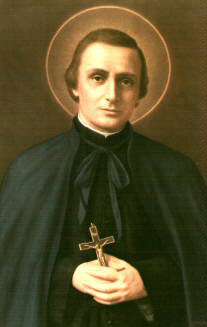 St. Peter Chanel: Saint of the Day for Sunday, April 28, 2024
 Prayer before a Crucifix: Prayer of the Day for Sunday, April 28, 2024


Copyright 2024 Catholic Online. All materials contained on this site, whether written, audible or visual are the exclusive property of Catholic Online and are protected under U.S. and International copyright laws, © Copyright 2024 Catholic Online. Any unauthorized use, without prior written consent of Catholic Online is strictly forbidden and prohibited.
Catholic Online is a Project of Your Catholic Voice Foundation, a Not-for-Profit Corporation. Your Catholic Voice Foundation has been granted a recognition of tax exemption under Section 501(c)(3) of the Internal Revenue Code. Federal Tax Identification Number: 81-0596847. Your gift is tax-deductible as allowed by law.