 Hi readers, it seems you use Catholic Online a lot; that's great! It's a little awkward to ask, but we need your help. If you have already donated, we sincerely thank you. We're not salespeople, but we depend on donations averaging $14.76 and fewer than 1% of readers give. If you donate just $5.00, the price of your coffee, Catholic Online School could keep thriving. Thank you. Help Now >
Joannes de Sacrobosco
FREE Catholic Classes
(John Holywood), a monk of English origin, lived in the first half of the thirteenth century as professor of astronomy at Paris ; died in that city, 1256.
He owed his reputation as an astronomer chiefly to his astronomical textbook "De Sphaera," which was used at many universities for several centuries. There is much difference of opinion as to the place and time of his birth. As the Latinized name de Sacrobosco (de Sacrobusto or Sacrobuschus) seems to be a translation of the English name Holywood or Holybush, many say that Holywood (now Halifax ), in Yorkshire, was his birthplace. Others give it as Holywood near Dublin ; others again claim that he came from Nithsdale in Scotland. John made his studies at Oxford, but soon came to France, where, as a contemporary of St. Thomas Aquinas, he proved himself an efficient teacher of mathematics and astronomy. As many were deterred from undertaking the study of astronomy by such ponderous and to a great extent obscure works as those of Ptolemy, Alfraganus, and Albategnius, Holywood wisely resolved to write a compendium of spherical astronomy, which professors of this branch of knowledge could use as a textbook in their course of instruction. How well-timed his book was is shown by the numerous editions (amounting to almost one hundred) published before the middle of the seventeenth century, that is to say, before the new Copernican theory was generally adopted. The first printed copy dates from 1472, when it appeared at Ferrara, Italy, under the title: "Johannis de Sacrobusto seu Bosco anglici Sphaera mundi." Brevity and precision were the chief characteristics of the compendium. The lecturer was thus compelled to expound and amplify a great deal. Commentaries by various scholars were also published-- e.g., by Ratdolt (1482), Cirvelli (1494), Cicchi, Capuani, Fabri (1495); Georgi, Boneti (1500), etc. Among the best known is the commentary of Father Christopher Clavius, S.J., which also saw many editions. In spite of the numerous revisions which Sacrobosco's book went through, indeed perhaps even owing to these corrections, it remains to this day a useful aid to the proper historical appreciation of the different questions which exercised men's minds from the thirteenth century onwards to the time of the reform of astronomy under Copernicus, Kepler, and Newton. Sacrobosco also wrote a treatise on the computation of feast days ( Computus ), a tract on arithmetic ( Algorithmus ), and a small work in the field of practical geometry ( De Compositione quadrantis simplicis et compositi et utilitatibus utriusque ). In the latter there is one of the oldest examples of the figures then found almost invariably on the reverse of the so-called astrolabe, a graduated quadrant with the help of which one could obtain the different hours of the day from the observation of the sun's height.
Hi readers, it seems you use Catholic Online a lot; that's great! It's a little awkward to ask, but we need your help. If you have already donated, we sincerely thank you. We're not salespeople, but we depend on donations averaging $14.76 and fewer than 1% of readers give. If you donate just $5.00, the price of your coffee, Catholic Online School could keep thriving. Thank you. Help Now >


Join the Movement
When you sign up below, you don't just join an email list - you're joining an entire movement for Free world class Catholic education.


-

-
Mysteries of the Rosary
-
St. Faustina Kowalska
-
Litany of the Blessed Virgin Mary
-
Saint of the Day for Wednesday, Oct 4th, 2023
-
Popular Saints
-
St. Francis of Assisi
-
Bible
-
Female / Women Saints
-
7 Morning Prayers you need to get your day started with God
-
Litany of the Blessed Virgin Mary


Sacrifices of Faith: The Pro-Life Legacies of St. Gianna and Jessica Hanna
-
How to love God by caring for our bodies
-
Pope Francis calls for negotiations to End Russia-Ukraine War
-
Pope Francis Contemplates Return to U.S. for United Nations Assembly Address
-
Pope Francis Calls on Faithful to Embrace Faith, Hope, and Charity in New Teaching Series
Daily Catholic
- Daily Readings for Sunday, April 28, 2024
- St. Peter Chanel: Saint of the Day for Sunday, April 28, 2024
- Prayer before a Crucifix: Prayer of the Day for Sunday, April 28, 2024
- Daily Readings for Saturday, April 27, 2024
- St. Zita: Saint of the Day for Saturday, April 27, 2024
- Prayer for the Dead # 2: Prayer of the Day for Saturday, April 27, 2024
 Daily Readings for Sunday, April 28, 2024
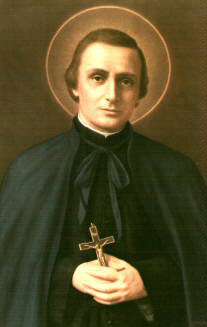 St. Peter Chanel: Saint of the Day for Sunday, April 28, 2024
 Prayer before a Crucifix: Prayer of the Day for Sunday, April 28, 2024
We ask you, humbly: don't scroll away.
Hi readers, it seems you use Catholic Online a lot; that's great! It's a little awkward to ask, but we need your help. If you have already donated, we sincerely thank you. We're not salespeople, but we depend on donations averaging $14.76 and fewer than 1% of readers give. If you donate just $5.00, the price of your coffee, Catholic Online School could keep thriving. Thank you.Help Now >

Copyright 2024 Catholic Online. All materials contained on this site, whether written, audible or visual are the exclusive property of Catholic Online and are protected under U.S. and International copyright laws, © Copyright 2024 Catholic Online. Any unauthorized use, without prior written consent of Catholic Online is strictly forbidden and prohibited.
Catholic Online is a Project of Your Catholic Voice Foundation, a Not-for-Profit Corporation. Your Catholic Voice Foundation has been granted a recognition of tax exemption under Section 501(c)(3) of the Internal Revenue Code. Federal Tax Identification Number: 81-0596847. Your gift is tax-deductible as allowed by law.