We ask you, humbly: don't scroll away.
Hi readers, it seems you use Catholic Online a lot; that's great! It's a little awkward to ask, but we need your help. If you have already donated, we sincerely thank you. We're not salespeople, but we depend on donations averaging $14.76 and fewer than 1% of readers give. If you donate just $5.00, the price of your coffee, Catholic Online School could keep thriving. Thank you.Help Now >
Francisco Herrera
FREE Catholic Classes
(1) Francisco Herrera (el Viejo, the Elder)
A Spanish painter, etcher, medallist, and architect; born in Seville, 1576; died in Madrid, 1656. Luiz Fernandez was his teacher, but Herrera soon broke away from the timid style and Italian traditions of Spanish painting of his day, and became the pioneer of that bold, vigourous, effective, and natural style whose preeminent exponent was Velasquez. Herrera was the first to use long brushes, which may, in part, account for his "modern" technique and dexterous brushwork. Many authorities ascribe to him the foundation of the Spanish School. His great talent brought him many pupils, whom his passionate temper and rough manners soon drove away. Velasquez, when thirteen years old, was placed under this great professor, and remained a year with him. Herrera, who was an accomplished worker in bronze, engraved medals skilfully. This gave rise to the charge of counterfeiting, and he fled for sanctuary to the Jesuit College, for which he painted "The Triumph of St. Hermengild ", a picture so impressive that when Philip IV saw it (1621) he immediately pardoned the painter. Herrera thereupon returned to Seville. His ungoverned temper soon drove his son to Rome and his daughter to a nunnery. Herrera's pictures are full of energy, the drawing is good and the colouring so cleverly managed that the figures stand out in splendid relief. Many of his small easel pictures, in oil, represent fairs, dances, interiors of inns, and deal with the intimate life of Spain. His large works are nearly all religious. In Seville he painted a "St. Peter" for the cathedral and a "Last Judgment" for the church of San Bernardo, the latter being considered his masterpiece. After executing many commissions in his native town he removed to Madrid (1650), where he won great renown. In the archiepiscopal palace are four large canvases, one of which, "Moses Smiting the Rock", is celebrated for its dramatic qualities and daring technique. In the cloister of the Merced Calzada is a noteworthy series of paintings whose subjects are drawn from the life of St. Ramon. He painted much in fresco, in which medium his best effort is believed to have been on the vault of San Bonaventura, but this, with all his other frescoes, has disappeared. None of his architectural productions are mentioned, and there remain but a few of his etchings, all of which were reproductions of his paintings. One of his pictures, "St. Basil dictating his doctrine ", is in the Louvre, and another, "St. Matthew", is in the Dresden Gallery. Herrera left two sons, "el Rubio" (the ruddy) who died before he fulfilled the great promise of his youth, and "el Mozo" (the younger).

(2) Francisco Herrera (el Mozo, the Younger)
A Spanish painter and architect; born in Seville, 1622; died in Madrid, 1655. He was the second son of Herrera, "el Viejo", and began his career under his father's instruction, but the elder's violent temper at last became so intolerable that the youth fled to Rome. For six years the younger Herrera assiduously devoted himself to the study of architecture, perspective, and the antique, his aim being fresco painting. But it was still life in which he excelled. He already painted bodegones , fish so cleverly done that the Romans called him: "il Spagnuolo degli pesci". In 1656 he returned to Seville, founded the Seville Academy, and in 1660 became its sub-director under Murillo. He is said to have been vain, suspicious, hot-tempered, and jealous ; at any rate he resented his subordinate post and went to Madrid about 1661 (Cean Bermúdez). Before leaving his native city he painted two large pictures for the cathedral and a "St. Francis" for the chapel of this saint. Sir E. Head declares the latter to be his masterpiece. In Madrid he painted a great "Triumph of St. Hermengild " for the church of the Carmelite friars, and so beautiful a group of frescoes in San Felipe el Real that Philip IV commanded him to paint the dome of the chapel of Our Lady of Atocha, and thereafter made him painter to the king and superintendent of royal buildings. Besides his marvellous work in still life he painted many portraits, and while these lacked the vigour, colour, and bold design which characterize his father's work, they exhibit a far greater knowledge and use of chiaroscuro. Charles II kept him at his Court and made him master of the royal works. For this king Herrera renovated the cathedral of El Pilar, in Saragossa. The Madrid gallery contains his "St. Hermengild".


Join the Movement
When you sign up below, you don't just join an email list - you're joining an entire movement for Free world class Catholic education.


-

-
Mysteries of the Rosary
-
St. Faustina Kowalska
-
Litany of the Blessed Virgin Mary
-
Saint of the Day for Wednesday, Oct 4th, 2023
-
Popular Saints
-
St. Francis of Assisi
-
Bible
-
Female / Women Saints
-
7 Morning Prayers you need to get your day started with God
-
Litany of the Blessed Virgin Mary


Sacrifices of Faith: The Pro-Life Legacies of St. Gianna and Jessica Hanna
-
How to love God by caring for our bodies
-
Pope Francis calls for negotiations to End Russia-Ukraine War
-
Pope Francis Contemplates Return to U.S. for United Nations Assembly Address
-
Pope Francis Calls on Faithful to Embrace Faith, Hope, and Charity in New Teaching Series

Daily Catholic
- Daily Readings for Sunday, April 28, 2024
- St. Peter Chanel: Saint of the Day for Sunday, April 28, 2024
- Prayer before a Crucifix: Prayer of the Day for Sunday, April 28, 2024
- Daily Readings for Saturday, April 27, 2024
- St. Zita: Saint of the Day for Saturday, April 27, 2024
- Prayer for the Dead # 2: Prayer of the Day for Saturday, April 27, 2024
 Daily Readings for Sunday, April 28, 2024
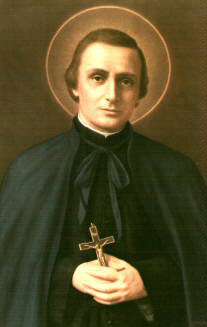 St. Peter Chanel: Saint of the Day for Sunday, April 28, 2024
 Prayer before a Crucifix: Prayer of the Day for Sunday, April 28, 2024
 Hi readers, it seems you use Catholic Online a lot; that's great! It's a little awkward to ask, but we need your help. If you have already donated, we sincerely thank you. We're not salespeople, but we depend on donations averaging $14.76 and fewer than 1% of readers give. If you donate just $5.00, the price of your coffee, Catholic Online School could keep thriving. Thank you. Help Now >

Copyright 2024 Catholic Online. All materials contained on this site, whether written, audible or visual are the exclusive property of Catholic Online and are protected under U.S. and International copyright laws, © Copyright 2024 Catholic Online. Any unauthorized use, without prior written consent of Catholic Online is strictly forbidden and prohibited.
Catholic Online is a Project of Your Catholic Voice Foundation, a Not-for-Profit Corporation. Your Catholic Voice Foundation has been granted a recognition of tax exemption under Section 501(c)(3) of the Internal Revenue Code. Federal Tax Identification Number: 81-0596847. Your gift is tax-deductible as allowed by law.