We ask you, humbly: don't scroll away.
Hi readers, it seems you use Catholic Online a lot; that's great! It's a little awkward to ask, but we need your help. If you have already donated, we sincerely thank you. We're not salespeople, but we depend on donations averaging $14.76 and fewer than 1% of readers give. If you donate just $5.00, the price of your coffee, Catholic Online School could keep thriving. Thank you.Help Now >
Enrique Henríquez
FREE Catholic Classes
Noted Jesuit theologian, b. at Oporto, 1536; d. at Tivoli, 28 January, 1608. At the age of sixteen, in 1552, he entered the Society of Jesus, and soon became celebrated for his philosophical and theological erudition. He taught both these branches at the Jesuit colleges of Cordova and Salamanca; in the latter place he numbered Francisco Suárez and Gregory of Valencia among his pupils. In 1593 he left the Society of Jesus and entered the Order of St. Dominic , but soon returned to his former companions. Father Alcazar (Hist. Prov. Tolet., I, 204) gives the following account of this incident. After Henríquez had printed in the preface of one of his theological works some passages not approved by the censors, Father Acquaviva ordered him to tear out the page containing these paragraphs. Henríquez felt so disturbed over this punishment that he obtained permission from the holy father to leave the society and enter the Dominican Order. It was Gregory of Valencia who advised him to return to his former associates. Father Henríquez is especially noted for two theological works: (1) The first part of his "Theologiæ Moralis Summa" was published at Salamanca in 1591, the second in 1593; the work appeared again at Venice, in 1597, and 1600; at Mentz, in 1613, under the title "Summa Theologiæ Moralis libri XV" etc. It was forbidden by decree of 7 Aug., 1603, donec corrigatur , because the author allowed confession (but not absolution ) by way of letter, and held opinions too unfavorable to the rights of the Church. In the "Summa", Henríquez treats only of the end of man, of the sacraments, and of ecclesiastical censures and irregularities; but he manages to find an opportunity of declaring himself against Molina's scientia media ; he defends the Dominican theory of physical predetermination, and of a predestination antecedent to the Divine foresight of our future merits. St. Alphonsus highly esteems the authority of Henríquez on moral questions, an opinion fully shared by Doujat in his "Prænot. canon.", V. xv. (2) Henríquez's second work is entitled "De pontificis romani clave, libri VI". It was published at Salamanca in 1593, but nearly all its copies were burnt by the Apostolic nuncio of Madrid on account of its allowing the king too much power over ecclesiastics. It is said that only three or four copies have been preserved among the rarities of the Escorial. The subjects treated by Henríquez in his second work are: the power and election of the Roman pontiff ; the authority of the councils; the question of law. The rarity of Father Henríquez's second work is the reason why some biographers consider its treatises as part of his "Theolgiæ Moralis Summa".



Join the Movement
When you sign up below, you don't just join an email list - you're joining an entire movement for Free world class Catholic education.


-

-
Mysteries of the Rosary
-
St. Faustina Kowalska
-
Litany of the Blessed Virgin Mary
-
Saint of the Day for Wednesday, Oct 4th, 2023
-
Popular Saints
-
St. Francis of Assisi
-
Bible
-
Female / Women Saints
-
7 Morning Prayers you need to get your day started with God
-
Litany of the Blessed Virgin Mary


Sacrifices of Faith: The Pro-Life Legacies of St. Gianna and Jessica Hanna
-
How to love God by caring for our bodies
-
Pope Francis calls for negotiations to End Russia-Ukraine War
-
Pope Francis Contemplates Return to U.S. for United Nations Assembly Address
-
Pope Francis Calls on Faithful to Embrace Faith, Hope, and Charity in New Teaching Series


Daily Catholic
- Daily Readings for Sunday, April 28, 2024
- St. Peter Chanel: Saint of the Day for Sunday, April 28, 2024
- Prayer before a Crucifix: Prayer of the Day for Sunday, April 28, 2024
- Daily Readings for Saturday, April 27, 2024
- St. Zita: Saint of the Day for Saturday, April 27, 2024
- Prayer for the Dead # 2: Prayer of the Day for Saturday, April 27, 2024
 Daily Readings for Sunday, April 28, 2024
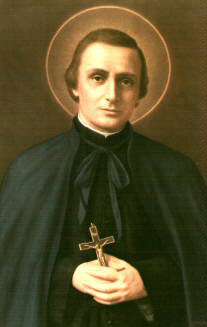 St. Peter Chanel: Saint of the Day for Sunday, April 28, 2024
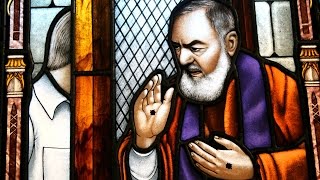
 Prayer before a Crucifix: Prayer of the Day for Sunday, April 28, 2024
We ask you, humbly: don't scroll away.
Hi readers, it seems you use Catholic Online a lot; that's great! It's a little awkward to ask, but we need your help. If you have already donated, we sincerely thank you. We're not salespeople, but we depend on donations averaging $14.76 and fewer than 1% of readers give. If you donate just $5.00, the price of your coffee, Catholic Online School could keep thriving. Thank you.Help Now >

Copyright 2024 Catholic Online. All materials contained on this site, whether written, audible or visual are the exclusive property of Catholic Online and are protected under U.S. and International copyright laws, © Copyright 2024 Catholic Online. Any unauthorized use, without prior written consent of Catholic Online is strictly forbidden and prohibited.
Catholic Online is a Project of Your Catholic Voice Foundation, a Not-for-Profit Corporation. Your Catholic Voice Foundation has been granted a recognition of tax exemption under Section 501(c)(3) of the Internal Revenue Code. Federal Tax Identification Number: 81-0596847. Your gift is tax-deductible as allowed by law.
