 Hi readers, it seems you use Catholic Online a lot; that's great! It's a little awkward to ask, but we need your help. If you have already donated, we sincerely thank you. We're not salespeople, but we depend on donations averaging $14.76 and fewer than 1% of readers give. If you donate just $5.00, the price of your coffee, Catholic Online School could keep thriving. Thank you. Help Now >
Edward Hawarden
FREE Catholic Classes
(HARDEN).
Theologian and controversialist, b. in Lancashire, England, 9 April, 1662; d. in London, 23 April, 1735. The loyalty to the Faith that came to be a heritage among the Hawardens is testified by their maintenance of domestic chapels in their residences in Appleton and Widnes throughout the period of persecution, as well as the frequent appearance of the name on the list of non-jurors and the recusant-rolls. Edward, after a brilliant course at the English College, Douai remained there as a classical tutor, and after his ordination (7 June, 1686), as professor of philosophy. In 1688 having taken the bachelor's degree at the University of Douai , he spent two months as tutor of divinity at Magdalen College, Oxford, which James II purposed making a seat of Catholic education, but the impending revolution forced him to return to Douai, where he soon proceeded D.D. and was installed in the chair of divinity. In 1702 he was persuaded by the all but unanimous desire of the secular and ecclesiastical authorities of Douai to take part in the concurrence for one of the royal chair of divinity in the university, but the influence of a hostile minority secured the installation of another candidate by mandatory letters from the court. Shortly afterwards complaints were lodged at Rome that the Douai professors, Dr. Hawarden in particular, were propagating the errors of Jansenism, but official investigation completely exonerated all.

In 1707 Hawarden left Douai to take charge of the mission of Gilligate, Durham, and later Aldcliffe Hall, near Lancaster. The quaint brief entrees in the Tyldesley Diary give an idea of his daily life until the seizure of Aldcliffe Hall in 1717, after which he removed to London, probably on his appointment as controversy-writer. Dr. Hawarden received the thanks of the University of Oxford for his able defence of the Blessed Trinity in the famous conference with Dr. Samuel Clarke (1719). Among his works are: "The True Church of Christ, shewed by Concurrent Testimonies of Scripture and Primitive Tradition" (London, 1714); "The Rule of Faith truly stated in a new and easy Method" (London, 1721); "Charity and Truth or Catholicks not uncharitable in saying that none are saved out of the Catholick Communion, because the Rule is not Universal" (Brussels, 1728); "An Answer to Dr. Clarke and Mr. Whiston concerning the Divinity of the Son, and of the Holy Spirit" (London, 1729); a collective edition of his works was published at Dublin in 1808.
We ask you, humbly: don't scroll away.
Hi readers, it seems you use Catholic Online a lot; that's great! It's a little awkward to ask, but we need your help. If you have already donated, we sincerely thank you. We're not salespeople, but we depend on donations averaging $14.76 and fewer than 1% of readers give. If you donate just $5.00, the price of your coffee, Catholic Online School could keep thriving. Thank you.Help Now >

Join the Movement
When you sign up below, you don't just join an email list - you're joining an entire movement for Free world class Catholic education.


-

-
Mysteries of the Rosary
-
St. Faustina Kowalska
-
Litany of the Blessed Virgin Mary
-
Saint of the Day for Wednesday, Oct 4th, 2023
-
Popular Saints
-
St. Francis of Assisi
-
Bible
-
Female / Women Saints
-
7 Morning Prayers you need to get your day started with God
-
Litany of the Blessed Virgin Mary

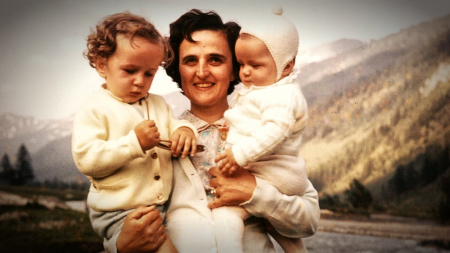
Sacrifices of Faith: The Pro-Life Legacies of St. Gianna and Jessica Hanna
-
How to love God by caring for our bodies
-
Pope Francis calls for negotiations to End Russia-Ukraine War
-
Pope Francis Contemplates Return to U.S. for United Nations Assembly Address
-
Pope Francis Calls on Faithful to Embrace Faith, Hope, and Charity in New Teaching Series


Daily Catholic
- Daily Readings for Sunday, April 28, 2024
- St. Peter Chanel: Saint of the Day for Sunday, April 28, 2024
- Prayer before a Crucifix: Prayer of the Day for Sunday, April 28, 2024
- Daily Readings for Saturday, April 27, 2024
- St. Zita: Saint of the Day for Saturday, April 27, 2024
- Prayer for the Dead # 2: Prayer of the Day for Saturday, April 27, 2024
 Daily Readings for Sunday, April 28, 2024
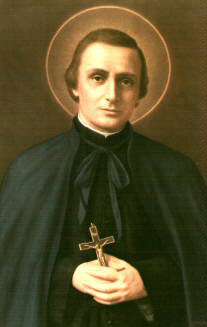 St. Peter Chanel: Saint of the Day for Sunday, April 28, 2024
 Prayer before a Crucifix: Prayer of the Day for Sunday, April 28, 2024



Copyright 2024 Catholic Online. All materials contained on this site, whether written, audible or visual are the exclusive property of Catholic Online and are protected under U.S. and International copyright laws, © Copyright 2024 Catholic Online. Any unauthorized use, without prior written consent of Catholic Online is strictly forbidden and prohibited.
Catholic Online is a Project of Your Catholic Voice Foundation, a Not-for-Profit Corporation. Your Catholic Voice Foundation has been granted a recognition of tax exemption under Section 501(c)(3) of the Internal Revenue Code. Federal Tax Identification Number: 81-0596847. Your gift is tax-deductible as allowed by law.