We ask you, humbly: don't scroll away.
Hi readers, it seems you use Catholic Online a lot; that's great! It's a little awkward to ask, but we need your help. If you have already donated, we sincerely thank you. We're not salespeople, but we depend on donations averaging $14.76 and fewer than 1% of readers give. If you donate just $5.00, the price of your coffee, Catholic Online School could keep thriving. Thank you.Help Now >
Thomas Harding
FREE Catholic Classes
Controversialist; b. at Combe Martin, Devon, 1516 d. at Louvain, Sept., 1572. The registers of Winchester school show that after attending Barnstaple school he obtained a scholarship there in 1528, being then twelve years old. If this information be correct, he was three years younger than is commonly stated. He went to New College, Oxford, in 1534, was admitted a Fellow in 1536, and took his Master's degree in 1542, in which year he was appointed Hebrew professor by Henry VIII. Having been ordained priest he became chaplain to Henry Grey, Marquess of Dorchester and afterwards Duke of Suffolk. He at first embraced the Reformed opinions, but on the accession of Mary he declared himself a Catholic, despite the upbraidings of his friend Lady Jane Frey, and the events of his later life proved his sincerity. In 1554 he took the degree of Doctor of Divinity and was appointed prebendary of Winchester, becoming treasurer of Salisbury in the following year. He also acted as chaplain and confessor to Bishop Gardiner. When Elizabeth became queen he was deprived of his preferments and imprisoned (Sander, "Report to Cardinal Moroni "). Subsequently he retired to Louvain to escape persecution. There he served St. Gertrude's church and devoted himself to study and to his long controversy with Jewel, the Bishop of Salisbury and champion of Protestantism.
In 1564 he published "An answere to Maister Juelles Challenge", Jewel having undertaken to conform to the Catholic Church if any Catholic writer could prove that any of the Fathers of six centuries taught any of twenty-seven articles he selected. Jewel replied first in a sermon (which Harding answered in a broadsheet "To Maister John Jeuell", printed at Antwerp in 1565) and then in a book. Against the latter Harding wrote "A Rejoindre to M. Jewel's Replie" (Antwerp, 1566) and "A Rejoindre to M. Jewel's Replie against the Sacrifice of the Mass" (Louvain, 1567). Meanwhile he had become engaged in a second controversy with the same author, and, in his confutation of a book entitled an "Apologie of the Church of England" (Antwerp, 1565), he attacked an anonymous work, the authorship of which Jewel admitted in his "Defence of the Apologie of the Churche of Englande". Harding retorted with "A Detection of Sundrie Foule Errours, Lies, Sclaunders, corruptions, and other false Dealinges, touching Doctrine and other matters uttered and practized by M. Jewel" (Louvain, 1568). In 1566 Pius V appointed Harding and Dr. Sander Apostolic delegates to England, with special powers of giving faculties to priests and of forbidding Catholics to frequent Protestant services. Harding was of great assistance to his exiled fellow-countrymen and to Dr. Allen in founding the English College at Douai. He was buried (16 Sept., 1572) in the Church of St. Gertrude, Louvain.
We ask you, humbly: don't scroll away.
Hi readers, it seems you use Catholic Online a lot; that's great! It's a little awkward to ask, but we need your help. If you have already donated, we sincerely thank you. We're not salespeople, but we depend on donations averaging $14.76 and fewer than 1% of readers give. If you donate just $5.00, the price of your coffee, Catholic Online School could keep thriving. Thank you.Help Now >

Join the Movement
When you sign up below, you don't just join an email list - you're joining an entire movement for Free world class Catholic education.


-

-
Mysteries of the Rosary
-
St. Faustina Kowalska
-
Litany of the Blessed Virgin Mary
-
Saint of the Day for Wednesday, Oct 4th, 2023
-
Popular Saints
-
St. Francis of Assisi
-
Bible
-
Female / Women Saints
-
7 Morning Prayers you need to get your day started with God
-
Litany of the Blessed Virgin Mary

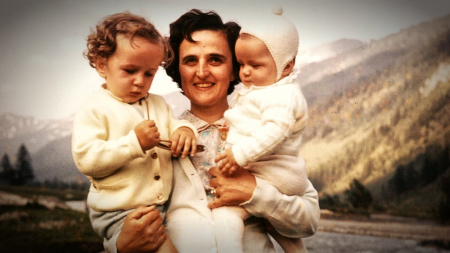
Sacrifices of Faith: The Pro-Life Legacies of St. Gianna and Jessica Hanna
-
How to love God by caring for our bodies
-
Pope Francis calls for negotiations to End Russia-Ukraine War
-
Pope Francis Contemplates Return to U.S. for United Nations Assembly Address
-
Pope Francis Calls on Faithful to Embrace Faith, Hope, and Charity in New Teaching Series


Daily Catholic
- Daily Readings for Sunday, April 28, 2024
- St. Peter Chanel: Saint of the Day for Sunday, April 28, 2024
- Prayer before a Crucifix: Prayer of the Day for Sunday, April 28, 2024
- Daily Readings for Saturday, April 27, 2024
- St. Zita: Saint of the Day for Saturday, April 27, 2024
- Prayer for the Dead # 2: Prayer of the Day for Saturday, April 27, 2024
 Daily Readings for Sunday, April 28, 2024
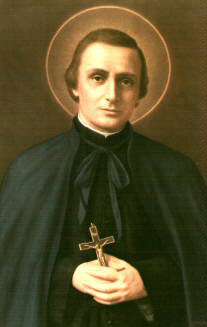 St. Peter Chanel: Saint of the Day for Sunday, April 28, 2024
 Prayer before a Crucifix: Prayer of the Day for Sunday, April 28, 2024


Copyright 2024 Catholic Online. All materials contained on this site, whether written, audible or visual are the exclusive property of Catholic Online and are protected under U.S. and International copyright laws, © Copyright 2024 Catholic Online. Any unauthorized use, without prior written consent of Catholic Online is strictly forbidden and prohibited.
Catholic Online is a Project of Your Catholic Voice Foundation, a Not-for-Profit Corporation. Your Catholic Voice Foundation has been granted a recognition of tax exemption under Section 501(c)(3) of the Internal Revenue Code. Federal Tax Identification Number: 81-0596847. Your gift is tax-deductible as allowed by law.
