 Hi readers, it seems you use Catholic Online a lot; that's great! It's a little awkward to ask, but we need your help. If you have already donated, we sincerely thank you. We're not salespeople, but we depend on donations averaging $14.76 and fewer than 1% of readers give. If you donate just $5.00, the price of your coffee, Catholic Online School could keep thriving. Thank you. Help Now >
Diocese of Gurk
FREE Catholic Classes
(GURCENSIS)
A prince-bishopric of Carinthia, suffragan to Salzburg, erected by Archbishop Gebhard of Salzburg, with the authorization of Pope Alexander II (21 March, 1070) and Emperor Henry IV (4 Feb., 1072). The first bishop installed was Günther von Krapffeld (1072-90). The right of appointment, consecration, and investiture of the Bishop of Gurk was reserved to the Archbishop of Salzburg. The episcopal residence was not at Gurk, but in the neighbouring castle at Strasburg. The boundaries of the diocese were only defined in 1131, by Archbishop Konrad I of Salzburg. Originally the territory embraced was small, but the jurisdiction of the Bishop of Gurk extended beyond the limits of his diocese, inasmuch as he was also vicar-general of that part of Carinthia under the Archbishop of Salzburg. Under Bishop Roman I (1132-67) the cathedral chapter obtained the right of electing the bishop, and it was only after a contest of a hundred years that the metropolitan regained the right of appointment. Dissensions did not cease, however, for at a later date the sovereign claimed the right of investiture. Finally, on 25 October, 1535, the Archbishop of Salzburg, Matthäus Lang, concluded with the House of Austria an agreement which is still in force, according to which the nomination of the Bishop of Gurk is to rest twice in succession with the sovereign and every third time with the Archbishop of Salzburg ; under all circumstances the archbishop was to retain the right of confirmation, consecration, and investiture. The diocese received an accession of territory under Emperor Joseph II in 1775, and again in 1786. The present extent of the diocese, embracing the whole of Carinthia, dates only from the reconstitution of the diocese in 1859. The episcopal residence was, in 1787, transferred to the capital of Carinthia, Klagenfurt. Prominent among the prince-bishops of modern times was Valentin Wiery (1858-80). Dr. Joseph Kahn has been prince-bishop since 1887.

According to the census of 1906, the Catholic population of the diocese is 369,000, of whom three-fourths are German and the rest Slovenes. The 24 deaneries embrace 345 parishes. The cathedral chapter at Klagenfurt consists of three mitred dignitaries; five honorary and five stipendiary canons. Among the institutions of religious orders the Benedictine Abbey of St. Paul (founded in 1091; suppressed in 1782; restored in 1807) holds first place. There are also Jesuits at Klagenfurt and St. Andrä; Dominicans at Friesach; Capuchins at Klagenfurt and Wolfsberg; Franciscans at Villach; Olivetans at Tanzenberg; Servites at Kötsehach; Brothers of Mercy at St. Veit on the Glan (in charge of an immense hospital founded in 1877); and a number of religious communities of women for the care of the sick and the instruction of youth. The clergy are trained in the episcopal seminary at Klagenfurt, which has been, since 1887, under the direction of the Jesuits. The professors are Benedictines from the Abbey of St. Paul and Jesuits. The education of aspirants to the priesthood is provided for at Klagenfurt, in a preparatory seminary established by Bishop Wiery in 1860 and enlarged by Bishop Kahn. At St. Paul's the Benedictines conduct a private gymnasium with the privileges of a government school. At Klagenfurt there is also a Catholic teachers' seminary under ecclesiastical supervision. Chief among the examples of ecclesiastical architecture , both in point of age and artistic interest, is the cathedral at Gurk, which dates back to the beginnings of the diocese, having been completed about 1220. Also worthy of note are the Gothic cloister of the church at Milstadt and, as monuments of Gothic architecture , the parish churches at St. Leonard in the Lavant-Thal, Heiligenblut, Villach, Völkermarkt, Grades (St. Wolfgang), and Waitschach. One of the largest and most beautiful churches of Carinthia is the recently renovated (1884-90) Dominican church at Friesach. The present cathedral at Klagenfurt was built in 1591 by the Protestants ; in 1604 it was acquired by the Jesuits, and consecrated in honour of the Apostles Sts. Peter and Paul. Prominent among the places of pilgrimage in the diocese is Maria Saal, visited annually by from 15,000 to 20,000 pilgrims. Among Catholic associations special mention should be made of those for the advancement of the Catholic Press and for the diffusion of good books: for the German population, the St. Joseph's Verein founded at Klagenfurt in 1893, and the St. Joseph's Book Confraternity ; for the Slovenes, the St. Hermagoras Verein, established in 1852 (1860), with its headquarters at Klagenfurt, and widely established among Slovenes in other dioceses.
We ask you, humbly: don't scroll away.
Hi readers, it seems you use Catholic Online a lot; that's great! It's a little awkward to ask, but we need your help. If you have already donated, we sincerely thank you. We're not salespeople, but we depend on donations averaging $14.76 and fewer than 1% of readers give. If you donate just $5.00, the price of your coffee, Catholic Online School could keep thriving. Thank you.Help Now >


Join the Movement
When you sign up below, you don't just join an email list - you're joining an entire movement for Free world class Catholic education.


-

-
Mysteries of the Rosary
-
St. Faustina Kowalska
-
Litany of the Blessed Virgin Mary
-
Saint of the Day for Wednesday, Oct 4th, 2023
-
Popular Saints
-
St. Francis of Assisi
-
Bible
-
Female / Women Saints
-
7 Morning Prayers you need to get your day started with God
-
Litany of the Blessed Virgin Mary

U.S. Catholic Parishes Experience Resurgence of Traditional Practices
-
Pope Francis Urges Faith and Prayers for Peace
-
Florida Welcomes Volunteer Chaplains to Public Schools
-
10 Fascinating Details About St. Joseph the Worker: Celebrating His Feast Day - May 1
-
St. Joseph the Worker: Model for Men, Young and Old

Daily Catholic
- Daily Readings for Thursday, May 02, 2024
- St. Athanasius: Saint of the Day for Thursday, May 02, 2024
- The Our Father: Prayer of the Day for Thursday, May 02, 2024
- Daily Readings for Wednesday, May 01, 2024
- St. Marculf: Saint of the Day for Wednesday, May 01, 2024
- To Saint Peregrine: Prayer of the Day for Wednesday, May 01, 2024
 Daily Readings for Thursday, May 02, 2024
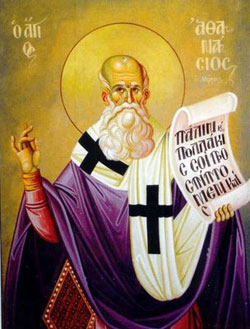 St. Athanasius: Saint of the Day for Thursday, May 02, 2024
 The Our Father: Prayer of the Day for Thursday, May 02, 2024

We ask you, humbly: don't scroll away.
Hi readers, it seems you use Catholic Online a lot; that's great! It's a little awkward to ask, but we need your help. If you have already donated, we sincerely thank you. We're not salespeople, but we depend on donations averaging $14.76 and fewer than 1% of readers give. If you donate just $5.00, the price of your coffee, Catholic Online School could keep thriving. Thank you.Help Now >

Copyright 2024 Catholic Online. All materials contained on this site, whether written, audible or visual are the exclusive property of Catholic Online and are protected under U.S. and International copyright laws, © Copyright 2024 Catholic Online. Any unauthorized use, without prior written consent of Catholic Online is strictly forbidden and prohibited.
Catholic Online is a Project of Your Catholic Voice Foundation, a Not-for-Profit Corporation. Your Catholic Voice Foundation has been granted a recognition of tax exemption under Section 501(c)(3) of the Internal Revenue Code. Federal Tax Identification Number: 81-0596847. Your gift is tax-deductible as allowed by law.