 Hi readers, it seems you use Catholic Online a lot; that's great! It's a little awkward to ask, but we need your help. If you have already donated, we sincerely thank you. We're not salespeople, but we depend on donations averaging $14.76 and fewer than 1% of readers give. If you donate just $5.00, the price of your coffee, Catholic Online School could keep thriving. Thank you. Help Now >
Pierre-Lambert Goossens
FREE Catholic Classes
Cardinal, Archbishop of Mechlin (Belgium), b. at Perck, near Vilvorde, 18 July, 1827; d. at Mechlin, 25 January, 1906.
After teaching at Bruel College at Mechlin, he became, in 1856, curate at the cathedral and secretary of the archbishop, and, in April, 1078, vicar-general of Cardinal Dechamps. Meanwhile he had been appointed (1860) an honorary canon of the metropolitan chapter. In 1880 he was made a Roman prelate, and 24 June, 1883, was consecrated at Mechlin coadjutor-bishop to Mgr. Gravez whom he succeeded as Bishop of Namur 16 July following eight months later (24 March, 1884) he became Archbishop of Mechlin, and on 24 May, 1889, he was created Cardinal-Priest of the Title of Santa-Croce in Gerusalemme. Succeeding to the See of Mechlin just when the Belgian Catholics were about to depose the Masonic government which had oppressed them since 1879, he did much to perpetuate the strong hold on political power which the Catholic party has since possessed. In order to promote thorough Christian sentiments among the workmen of the great industrial centres of his diocese, also in distant country places he provided for them greater church facilities, caused many new churches to be built, and created eighty-six parishes in twenty-two years he founded in his diocese 840 primary schools, with an attendance of 120,000 children. He also multiplied high schools for girls and for boys, opened normal and professional schools, and founded ten colleges for the teaching of humanities. Tireless in promoting the economical interests of the working classes, he organized and presided over two general congresses and five district congresses in which the social question was the chief topic of discussion. On public occasions his manner was noble and stately, yet in his dealings with priests and people he was always amiable and unaffected, and had the secret of enlisting sacrifice and devotion. To kindness he joined prudence and discretion and was thus able to avoid conflicts with the State authorities. A talented writer, his style bore the impression of the masterpieces of French pulpit eloquence, of which he was an assiduous reader.

In his "Charges and Pastoral Letters" (five volumes) and his "Occasional Addresses" accuracy of ideas, delicacy of feeling, literary tact, and purity of diction are always predominant characteristics. Though not himself a savant, he was alive to scientific needs, and greatly encouraged scientific progress in the University of Louvain, of which he was the chief patron. He reorganized the archives of his archdiocese and encouraged historical research among his clergy by requiring each parish priest to furnish his with an historical monograph on his parish.
His published works are: "Collectio Epistolarum pastoralium, decretorum, aliorumque documentorum" (5 vols., Mechlin, 1889-1906); "Discours sur la question sociale" (Mechlin, 1894); "Choix de conférences, discours et allocutions" (Mechlin, 1906).
We ask you, humbly: don't scroll away.
Hi readers, it seems you use Catholic Online a lot; that's great! It's a little awkward to ask, but we need your help. If you have already donated, we sincerely thank you. We're not salespeople, but we depend on donations averaging $14.76 and fewer than 1% of readers give. If you donate just $5.00, the price of your coffee, Catholic Online School could keep thriving. Thank you.Help Now >
Join the Movement
When you sign up below, you don't just join an email list - you're joining an entire movement for Free world class Catholic education.


-

-
Mysteries of the Rosary
-
St. Faustina Kowalska
-
Litany of the Blessed Virgin Mary
-
Saint of the Day for Wednesday, Oct 4th, 2023
-
Popular Saints
-
St. Francis of Assisi
-
Bible
-
Female / Women Saints
-
7 Morning Prayers you need to get your day started with God
-
Litany of the Blessed Virgin Mary

U.S. Catholic Parishes Experience Resurgence of Traditional Practices
-
Pope Francis Urges Faith and Prayers for Peace
-
Florida Welcomes Volunteer Chaplains to Public Schools
-
10 Fascinating Details About St. Joseph the Worker: Celebrating His Feast Day - May 1
-
St. Joseph the Worker: Model for Men, Young and Old

Daily Catholic
- Daily Readings for Thursday, May 02, 2024
- St. Athanasius: Saint of the Day for Thursday, May 02, 2024
- The Our Father: Prayer of the Day for Thursday, May 02, 2024
- Daily Readings for Wednesday, May 01, 2024
- St. Marculf: Saint of the Day for Wednesday, May 01, 2024
- To Saint Peregrine: Prayer of the Day for Wednesday, May 01, 2024
 Daily Readings for Thursday, May 02, 2024
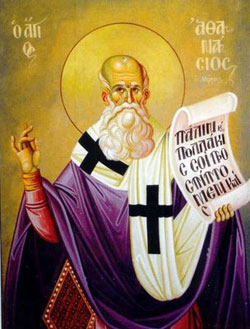 St. Athanasius: Saint of the Day for Thursday, May 02, 2024
 The Our Father: Prayer of the Day for Thursday, May 02, 2024
We ask you, humbly: don't scroll away.
Hi readers, it seems you use Catholic Online a lot; that's great! It's a little awkward to ask, but we need your help. If you have already donated, we sincerely thank you. We're not salespeople, but we depend on donations averaging $14.76 and fewer than 1% of readers give. If you donate just $5.00, the price of your coffee, Catholic Online School could keep thriving. Thank you.Help Now >

Copyright 2024 Catholic Online. All materials contained on this site, whether written, audible or visual are the exclusive property of Catholic Online and are protected under U.S. and International copyright laws, © Copyright 2024 Catholic Online. Any unauthorized use, without prior written consent of Catholic Online is strictly forbidden and prohibited.
Catholic Online is a Project of Your Catholic Voice Foundation, a Not-for-Profit Corporation. Your Catholic Voice Foundation has been granted a recognition of tax exemption under Section 501(c)(3) of the Internal Revenue Code. Federal Tax Identification Number: 81-0596847. Your gift is tax-deductible as allowed by law.