We ask you, humbly: don't scroll away.
Hi readers, it seems you use Catholic Online a lot; that's great! It's a little awkward to ask, but we need your help. If you have already donated, we sincerely thank you. We're not salespeople, but we depend on donations averaging $14.76 and fewer than 1% of readers give. If you donate just $5.00, the price of your coffee, Catholic Online School could keep thriving. Thank you.Help Now >
Funchal
FREE Catholic Classes
(FUNCHALENSIS.)
Diocese in the Madeira Islands. Both in neo-Latin and in Portuguese the name of the town signifies "fennel" (Latin foenicularium ). Madeira, the Purpuraria of the Romans, situated in the extreme west of the ancient world, about 440 miles from the coast of Morocco, was discovered in 1344 by the famous Bristol lovers ( Amantes de Bristol ), Anna Dorset and Robert O'Machin; later it was abandoned. In 1419 Joan Gonçales and Tristan Vaz took possession of the island. In 1445 were first planted the vines (brought from Crete) that have since rendered Madeira so famous. The Christian inhabitants were subject at first to the bishop of Tangier, until Leo X (16 June, 1514) made Funchal an episcopal see. In the interest of the vast territories in Africa and Asia then subject to Portugal, Clement VII (8 July, 1539) raised Funchal to archiepiscopal rank, and gave it for suffragans Angra, Cabo Verde, Goa, and Santo Thomé. In 1551, however; it was reduced to simple episcopal rank, and 1570 was made a suffragan of Lisbon, which it is to be present.
Funchal is delightfully situated on the south side of the Madeira Islands, and was therefore the first halting place for Portuguese and Spanish ships on their way to the New World. Owing to this natural advantage the island soon became a great centre of wealth and foreign trade, likewise an important centre for the spread of the gospel whose missionaries found the islands convenient as a resting-place going and coming. Funchal was once to the Portuguese what Gibraltar, St. Helena, and Malta now are to the English. Therefore they garrisoned the city, though naturally defended by its rugged cliffs, and built there four impregnable fortresses. Its churches and monasteries no longer exhibit their former architectural splendour, though, as late as the beginning of the nineteenth century, the lintels and jambs of the windows in many houses were of massive silver, and the church vessels of solid gold (chalices, pyres, monstrances ) were thickly studded with pearls, diamonds, and other precious stones. Funchal has long been a favourite resort of invalids, especially those suffering from diseases of the lungs. Its white villas and editices, embowered in rich tropical vegetation, charm the traveller as he approaches from the sea. The roads and streets are quite steep and the usual means of transportation is by ox-sled. The population of the city is (1909) about 20,000. According to the "Annuaire Pontifical" for 1906, the diocese contains about 150,000 Catholics with 50 parish churches, 80 public and two conventual chapels, all ministered to by 93 priests.
We ask you, humbly: don't scroll away.
Hi readers, it seems you use Catholic Online a lot; that's great! It's a little awkward to ask, but we need your help. If you have already donated, we sincerely thank you. We're not salespeople, but we depend on donations averaging $14.76 and fewer than 1% of readers give. If you donate just $5.00, the price of your coffee, Catholic Online School could keep thriving. Thank you.Help Now >
 Hi readers, it seems you use Catholic Online a lot; that's great! It's a little awkward to ask, but we need your help. If you have already donated, we sincerely thank you. We're not salespeople, but we depend on donations averaging $14.76 and fewer than 1% of readers give. If you donate just $5.00, the price of your coffee, Catholic Online School could keep thriving. Thank you. Help Now >
Join the Movement
When you sign up below, you don't just join an email list - you're joining an entire movement for Free world class Catholic education.


-

-
Mysteries of the Rosary
-
St. Faustina Kowalska
-
Litany of the Blessed Virgin Mary
-
Saint of the Day for Wednesday, Oct 4th, 2023
-
Popular Saints
-
St. Francis of Assisi
-
Bible
-
Female / Women Saints
-
7 Morning Prayers you need to get your day started with God
-
Litany of the Blessed Virgin Mary

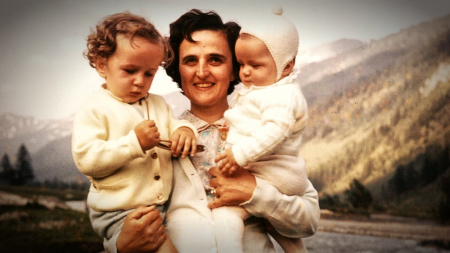
Sacrifices of Faith: The Pro-Life Legacies of St. Gianna and Jessica Hanna
-
How to love God by caring for our bodies
-
Pope Francis calls for negotiations to End Russia-Ukraine War
-
Pope Francis Contemplates Return to U.S. for United Nations Assembly Address
-
Pope Francis Calls on Faithful to Embrace Faith, Hope, and Charity in New Teaching Series

Daily Catholic
- Daily Readings for Sunday, April 28, 2024
- St. Peter Chanel: Saint of the Day for Sunday, April 28, 2024
- Prayer before a Crucifix: Prayer of the Day for Sunday, April 28, 2024
- Daily Readings for Saturday, April 27, 2024
- St. Zita: Saint of the Day for Saturday, April 27, 2024
- Prayer for the Dead # 2: Prayer of the Day for Saturday, April 27, 2024
 Daily Readings for Sunday, April 28, 2024
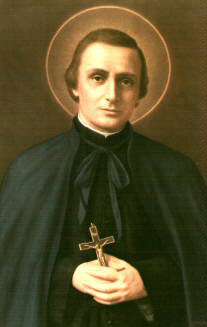 St. Peter Chanel: Saint of the Day for Sunday, April 28, 2024
 Prayer before a Crucifix: Prayer of the Day for Sunday, April 28, 2024


Copyright 2024 Catholic Online. All materials contained on this site, whether written, audible or visual are the exclusive property of Catholic Online and are protected under U.S. and International copyright laws, © Copyright 2024 Catholic Online. Any unauthorized use, without prior written consent of Catholic Online is strictly forbidden and prohibited.
Catholic Online is a Project of Your Catholic Voice Foundation, a Not-for-Profit Corporation. Your Catholic Voice Foundation has been granted a recognition of tax exemption under Section 501(c)(3) of the Internal Revenue Code. Federal Tax Identification Number: 81-0596847. Your gift is tax-deductible as allowed by law.