Fortunato of Brescia
FREE Catholic Classes
Morphologist and Minorite of the Reform of Lombardy ; b. at Brescia, 1701; d. at Madrid, 1754. He received the religious habit in 1718. A distinguished philosopher and theologian, Fortunato was also renowned for his studies in the natural sciences. He was secretary general of his order, and stood in high favour at the Bourbon court of Spain. A special importance attaches to his philosophical works, as he was among the first to bring together the teachings of Scholastic philosophy and the discoveries of the physical sciences. His scientific work is rendered important by his extensive use of the microscope, in which he followed the lead of Malpighi. Avoiding the then prevalent discussions on vitalism, he devoted himself to a positive study of the problems of natural science. Convinced that a knowledge of microscopic anatomy is the key to the secrets of nature, he deemed two things to be of prime importance: first, an experimental study of the histological constitution of the various organs, to learn their functions; and second, the separation of these organs into their elements, to determine their embryological origin. In spite of all opposition, this view, so clearly set forth in the works of Fortunato, has prevailed in pathological and physiological schools, and has indicated a method of examining what was formerly considered the most complex and delicate part of the human body, namely the central nervous system. The same view has also led to some of the most remarkable discoveries in biology. In this sense Fortunato is a pioneer. In fact it was century after that Bichat, following Bourdeu's lead, and, later on, Cuvier, advanced in the same direction. True to his purpose, Fortunato gave no heed to the anti-vitalistic controversies of his day, and spent no time investigating plastic force and the nisus formativus; he confined himself to the microscopic study of the parts of the organism, and in this way succeeded in classifying tissues and organs many years before Bichat (1800), who received all the credit for the classification. Fortunato was the first to distinguish between tissues and organs. He established the idea of tissues, or, as he wrote, "of those organic parts which possess a definite structure visible with the microscope and characterized by their component elements". With sufficient accuracy he described connective and bony tissue. The morphological complexus of the various tissues he calls the "system of tissues"; and the physiological complexus of the various organs he calls the "system of organs". These exact notions must have been the reward of wide and difficult investigation, as at the time there was no systematic technic in microscopy. From his many accurate descriptions, it is evident that his researches extended to many animals, and particularly to insects. In view of all this, it seems warranted to assert that Fortunato was the first morphologist, especially as not the slightest hint of this most important branch of comparative anatomy is found in Malpighi, Morgagni, Leeuwenhoek, or Haller, the path-finders in microscopic anatomy.
We ask you, humbly: don't scroll away.
Hi readers, it seems you use Catholic Online a lot; that's great! It's a little awkward to ask, but we need your help. If you have already donated, we sincerely thank you. We're not salespeople, but we depend on donations averaging $14.76 and fewer than 1% of readers give. If you donate just $5.00, the price of your coffee, Catholic Online School could keep thriving. Thank you.Help Now >


Join the Movement
When you sign up below, you don't just join an email list - you're joining an entire movement for Free world class Catholic education.


-

-
Mysteries of the Rosary
-
St. Faustina Kowalska
-
Litany of the Blessed Virgin Mary
-
Saint of the Day for Wednesday, Oct 4th, 2023
-
Popular Saints
-
St. Francis of Assisi
-
Bible
-
Female / Women Saints
-
7 Morning Prayers you need to get your day started with God
-
Litany of the Blessed Virgin Mary

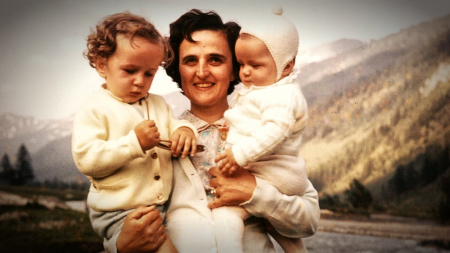
Sacrifices of Faith: The Pro-Life Legacies of St. Gianna and Jessica Hanna
-
How to love God by caring for our bodies
-
Pope Francis calls for negotiations to End Russia-Ukraine War
-
Pope Francis Contemplates Return to U.S. for United Nations Assembly Address
-
Pope Francis Calls on Faithful to Embrace Faith, Hope, and Charity in New Teaching Series

Daily Catholic
- Daily Readings for Monday, April 29, 2024
- St. Catherine of Siena: Saint of the Day for Monday, April 29, 2024
- Prayer for the Dead # 3: Prayer of the Day for Monday, April 29, 2024
- Daily Readings for Sunday, April 28, 2024
- St. Peter Chanel: Saint of the Day for Sunday, April 28, 2024
- Prayer before a Crucifix: Prayer of the Day for Sunday, April 28, 2024
 Daily Readings for Monday, April 29, 2024
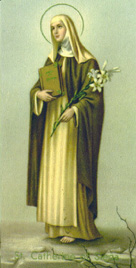 St. Catherine of Siena: Saint of the Day for Monday, April 29, 2024
 Prayer for the Dead # 3: Prayer of the Day for Monday, April 29, 2024


Copyright 2024 Catholic Online. All materials contained on this site, whether written, audible or visual are the exclusive property of Catholic Online and are protected under U.S. and International copyright laws, © Copyright 2024 Catholic Online. Any unauthorized use, without prior written consent of Catholic Online is strictly forbidden and prohibited.
Catholic Online is a Project of Your Catholic Voice Foundation, a Not-for-Profit Corporation. Your Catholic Voice Foundation has been granted a recognition of tax exemption under Section 501(c)(3) of the Internal Revenue Code. Federal Tax Identification Number: 81-0596847. Your gift is tax-deductible as allowed by law.