We ask you, humbly: don't scroll away.
Hi readers, it seems you use Catholic Online a lot; that's great! It's a little awkward to ask, but we need your help. If you have already donated, we sincerely thank you. We're not salespeople, but we depend on donations averaging $14.76 and fewer than 1% of readers give. If you donate just $5.00, the price of your coffee, Catholic Online School could keep thriving. Thank you.Help Now >
Count Vittorio Alfieri
FREE Catholic Classes
The greatest tragic poet of Italy ; b. at Asti (Piedmont), 17 January, 1749; d. at Florence, 8 October, 1803. He was the son of Count Antonio Alfieri and Monica Maillard de Tournon. His training (1758-66) at the Regia Academia of Turin, where, owing to his father's early death, he had been placed by his uncle, Count Benedetto Alfieri, bore no fruit. Recklessly plunging into the world at the age of sixteen, the uncontrolled master of a considerable fortune, after a short service in the Piedmontese army, he took to travelling all over Europe without any definite aim in view, urged on by an overwhelming spirit of unrest. Thus he spent his best years in disreputable intrigues, profitless roving, and the promiscuous reading of unworthy literature. French he knew well enough, but of his native tongue he had little more than a colloquial smattering. His real education was to begin soon after his twenty-ninth year, when his hitherto dormant genius suddenly kindled in him an indomitable literary ambition, which first caused him to delve into Italian, then into Latin, and, nineteen years later, into Greek with sturdy courage and unflagging perseverance. Italy lacked a tragic literature worthy of the name. Alfieri created it. Having settled at Florence in 1778, he contracted there an intimacy with Louisa von Stolberg-Gedern, Countess of Albany, the wife of Charles Edward Stuart, the Pretender. In 1792, when debauchery had brought the latter to his grave, the Countess began to share the poet's home. The criticisms of society were ignored and the lovers lived unwedded to the end. The poet's religious feelings, however, always appeared strong and sincere. He died after receiving the sacraments of the Church and was buried in Santa Croce, where a monument by Canova marks his grave.
 Hi readers, it seems you use Catholic Online a lot; that's great! It's a little awkward to ask, but we need your help. If you have already donated, we sincerely thank you. We're not salespeople, but we depend on donations averaging $14.76 and fewer than 1% of readers give. If you donate just $5.00, the price of your coffee, Catholic Online School could keep thriving. Thank you. Help Now >
Alfieri's literary production, begun in 1778, was laborious and voluminous. His fame rests mainly on twenty-two tragedies, viz.: "Filippo," "Polinice," — both based on an extremely weird plot and exhibiting at times the beginner's hand; "Antigone," "Virginia," "Agamennone," showing greater poetic finish and maturer artistic skill; "Oreste," "Rosmunda," "Ottavia," "Timoleone," "Merope," — in which the author is at his best; "Maria Stuarda," a little below the standard previously set; "La Congiura dei Pazzi," full of vigor and poetic impetus; "Don Garzia," "Saul," this being his masterpiece; "Agide," "Sofonisba," "Bruto Primo," "Mirra," rich in striking effects; "Bruto Secondo," "Abele," "Alceste Seconda," and "Antonio e Cleopatra," which closed his repertoire. Alfieri's tragedies have been said to be cast in a form often constrained and pedantic. Even if this be true, the fault almost disappears when their forcefulness, freshness, sincerity of feeling, and inspiration are fully appreciated. Nor is the poet's fame waning in the hearts of contemporary Italy. His unrelenting hatred of tyranny, ringing through every word and line, is now more than ever acknowledged to have been the strongest literary factor in Italy's fight for political unity and independence. There is a complete edition of Alfieri's works in twenty-two volumes, by Capurro (Pisa, 1805-15). It contains, besides the tragedies, the "Vita di Vittorio Alfieri, scritta da esso," the "Misogallo," and sundry minor writings.
We ask you, humbly: don't scroll away.
Hi readers, it seems you use Catholic Online a lot; that's great! It's a little awkward to ask, but we need your help. If you have already donated, we sincerely thank you. We're not salespeople, but we depend on donations averaging $14.76 and fewer than 1% of readers give. If you donate just $5.00, the price of your coffee, Catholic Online School could keep thriving. Thank you.Help Now >

Join the Movement
When you sign up below, you don't just join an email list - you're joining an entire movement for Free world class Catholic education.


-

-
Mysteries of the Rosary
-
St. Faustina Kowalska
-
Litany of the Blessed Virgin Mary
-
Saint of the Day for Wednesday, Oct 4th, 2023
-
Popular Saints
-
St. Francis of Assisi
-
Bible
-
Female / Women Saints
-
7 Morning Prayers you need to get your day started with God
-
Litany of the Blessed Virgin Mary

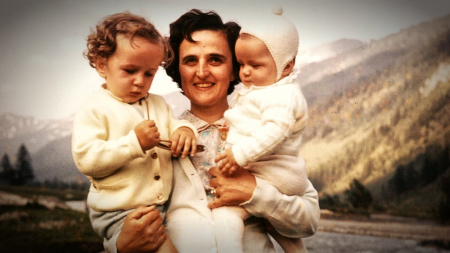
Sacrifices of Faith: The Pro-Life Legacies of St. Gianna and Jessica Hanna
-
How to love God by caring for our bodies
-
Pope Francis calls for negotiations to End Russia-Ukraine War
-
Pope Francis Contemplates Return to U.S. for United Nations Assembly Address
-
Pope Francis Calls on Faithful to Embrace Faith, Hope, and Charity in New Teaching Series


Daily Catholic
- Daily Readings for Sunday, April 28, 2024
- St. Peter Chanel: Saint of the Day for Sunday, April 28, 2024
- Prayer before a Crucifix: Prayer of the Day for Sunday, April 28, 2024
- Daily Readings for Saturday, April 27, 2024
- St. Zita: Saint of the Day for Saturday, April 27, 2024
- Prayer for the Dead # 2: Prayer of the Day for Saturday, April 27, 2024
 Daily Readings for Sunday, April 28, 2024
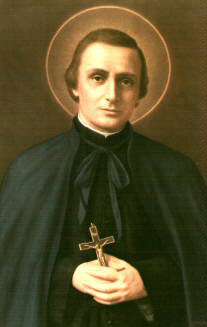 St. Peter Chanel: Saint of the Day for Sunday, April 28, 2024
 Prayer before a Crucifix: Prayer of the Day for Sunday, April 28, 2024



Copyright 2024 Catholic Online. All materials contained on this site, whether written, audible or visual are the exclusive property of Catholic Online and are protected under U.S. and International copyright laws, © Copyright 2024 Catholic Online. Any unauthorized use, without prior written consent of Catholic Online is strictly forbidden and prohibited.
Catholic Online is a Project of Your Catholic Voice Foundation, a Not-for-Profit Corporation. Your Catholic Voice Foundation has been granted a recognition of tax exemption under Section 501(c)(3) of the Internal Revenue Code. Federal Tax Identification Number: 81-0596847. Your gift is tax-deductible as allowed by law.