Pierre-Charles-François Dupin
FREE Catholic Classes
Known as BARON CHARLES DUPIN.
A French mathematician and economist, b. at Varzy, Nièvre, 6 October, 1784; d. at Paris, 18 January, 1873. At the age of twenty-three he entered the Ecole polytechnique, and after three years of successful studies under the famous Monge, he received the degree of naval engineer. He then served in that capacity in the navy and showed so much ability that he was later appointed inspector-general of the navy. In 1813 he published a pamphlet, "Développement de géométrie pour faire suite à la géométrie pratique de Monge" (Paris, 1813, containing many new and brilliant theories, the most important of which were one relating to the indicatrix of curved surfaces and another on orthogonal surfaces. He was elected to the Academy of Sciences in 1818. The next year Dupin received a professorship at the Conservatoire des arts et metiers; during this period he wrote various pamphlets on scientific topics, such as: "Applications de géométrie et de mécanique à la marine" (Paris, 1822); "Diverses lecons sur l'industrie, le commerce, la marine" (Paris, 1825), and also numerous memoirs for the Academy of Sciences, which were highly spoken of. Notwithstanding his brilliant prospects as a mathematician, he soon preferred to devote himself to political economy. His "Voyages en Grande Bretagne de 1816 a 1819 (6 vols., Paris, 1820-1824), which were the result of a personal inquiry into the commerce and industry of England placed him in the foremost rank of statisticians. In his "Carte de la France eclairee" (Paris, 1824), he was the first to use different colours to show the development of education in various parts of France. Charles X gave him the title of baron in 1824. Dupin gradually turned to politics and for forty years was a member of legislative assemblies. Under the Restoration, in spite of the honour bestowed upon him by the Bourbons, he sided with the Liberals and took his seat at the Left of the Chamber; under the Monarchy of July, he sat with the Centre, and finally with the Right, under the Republic of 1848. He rallied to the Second Empire and was appointed senator by Napoleon III. In his political career he showed himself a man of ability, of great industry and activity, and never failed to assert his Catholic convictions. Although a less brilliant man than his brother the Elder Dupin, he may have a more lasting reputation on account of his discoveries in geometry.

We ask you, humbly: don't scroll away.
Hi readers, it seems you use Catholic Online a lot; that's great! It's a little awkward to ask, but we need your help. If you have already donated, we sincerely thank you. We're not salespeople, but we depend on donations averaging $14.76 and fewer than 1% of readers give. If you donate just $5.00, the price of your coffee, Catholic Online School could keep thriving. Thank you.Help Now >
We ask you, humbly: don't scroll away.
Hi readers, it seems you use Catholic Online a lot; that's great! It's a little awkward to ask, but we need your help. If you have already donated, we sincerely thank you. We're not salespeople, but we depend on donations averaging $14.76 and fewer than 1% of readers give. If you donate just $5.00, the price of your coffee, Catholic Online School could keep thriving. Thank you.Help Now >
Join the Movement
When you sign up below, you don't just join an email list - you're joining an entire movement for Free world class Catholic education.


-

-
Mysteries of the Rosary
-
St. Faustina Kowalska
-
Litany of the Blessed Virgin Mary
-
Saint of the Day for Wednesday, Oct 4th, 2023
-
Popular Saints
-
St. Francis of Assisi
-
Bible
-
Female / Women Saints
-
7 Morning Prayers you need to get your day started with God
-
Litany of the Blessed Virgin Mary


Sacrifices of Faith: The Pro-Life Legacies of St. Gianna and Jessica Hanna
-
How to love God by caring for our bodies
-
Pope Francis calls for negotiations to End Russia-Ukraine War
-
Pope Francis Contemplates Return to U.S. for United Nations Assembly Address
-
Pope Francis Calls on Faithful to Embrace Faith, Hope, and Charity in New Teaching Series


Daily Catholic
- Daily Readings for Sunday, April 28, 2024
- St. Peter Chanel: Saint of the Day for Sunday, April 28, 2024
- Prayer before a Crucifix: Prayer of the Day for Sunday, April 28, 2024
- Daily Readings for Saturday, April 27, 2024
- St. Zita: Saint of the Day for Saturday, April 27, 2024
- Prayer for the Dead # 2: Prayer of the Day for Saturday, April 27, 2024
 Daily Readings for Sunday, April 28, 2024
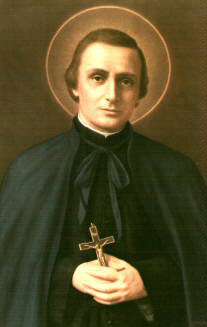 St. Peter Chanel: Saint of the Day for Sunday, April 28, 2024
 Prayer before a Crucifix: Prayer of the Day for Sunday, April 28, 2024



Copyright 2024 Catholic Online. All materials contained on this site, whether written, audible or visual are the exclusive property of Catholic Online and are protected under U.S. and International copyright laws, © Copyright 2024 Catholic Online. Any unauthorized use, without prior written consent of Catholic Online is strictly forbidden and prohibited.
Catholic Online is a Project of Your Catholic Voice Foundation, a Not-for-Profit Corporation. Your Catholic Voice Foundation has been granted a recognition of tax exemption under Section 501(c)(3) of the Internal Revenue Code. Federal Tax Identification Number: 81-0596847. Your gift is tax-deductible as allowed by law.