We ask you, humbly: don't scroll away.
Hi readers, it seems you use Catholic Online a lot; that's great! It's a little awkward to ask, but we need your help. If you have already donated, we sincerely thank you. We're not salespeople, but we depend on donations averaging $14.76 and fewer than 1% of readers give. If you donate just $5.00, the price of your coffee, Catholic Online School could keep thriving. Thank you.Help Now >
Albert of Brandenburg
FREE Catholic Classes
Cardinal and Elector of the Holy Roman Empire, born 28 June, 1490; died 24 September, 1545. As early as 1509 he was Prebendary in the Cathedral of Mainz ; Archbishop of Magdeburg and Administrator of Halberstadt from 1513; Archbishop of Mainz from 1514; Cardinal-Priest from 1518. The Indulgence issued by Leo X in 1514 for the building of the new St. Peter's in Rome, was entrusted to Albert (1517) for publication in Saxony and Brandenburg, This commission has been made by d'Aubigné and others the ground of many accusations against Albert and Leo X, as though they had used the Indulgence as a means of enriching themselves personally, "dividing beforehand the spoils of the credulous souls of Germany " (d'Aubigné, History of the Reformation). Albert employed Tetzel for the actual preaching of the Indulgence and furnished him a book of instructions: "Instructio summaria ad Subcommissarios Poenitentiarum et Confessores." Later, Martin Luther addressed a letter of protest to Albert concerning the conduct of Tetzel, found fault with the Bishop's book of instructions, and asked him to suppress it. Luther's charges are altogether groundless; the instructions of Albert to the preachers are both wise and edifying. Luther's letter was disregarded. Though many of the accusations against Albert's morals were, doubtless, false, Luther was probably justified in thinking that he would findin Albert a strong partisan. The young bishop was somewhat worldly-minded, extravagant, better trained in humanistic studies than in theology, too much given to the patronage of learned men and artists. His long intimacy with Ulrich von Hutten is especially reprehensible. Leo X was obliged to send an admonition to Mainz because so many books hostile to the Faith were being published under the Bishop's eye. In later life Albert changed his conduct. In his diocese celebrated defenders of Catholicism were engaged; at Speyer and Ratisbon he met Blessed Peter Faber, S.J., and kept him in his diocese (1542-43); after this he was always a friend to the new order. Albert strove earnestly to introduce a ore perfect system of religious instruction and brought forward measures for that purpose in the Diet of Nuremberg. He became by the sincerity of his zeal the great defender of the Faith in Germany. As a temporal prince, he ruled his electorate well; he introduced reforms in the administration of justice, into the police system, and into commerce. He was buried in the Cathedral of Mainz. An artistic memorial marks the resting-place of his remains.
We ask you, humbly: don't scroll away.
Hi readers, it seems you use Catholic Online a lot; that's great! It's a little awkward to ask, but we need your help. If you have already donated, we sincerely thank you. We're not salespeople, but we depend on donations averaging $14.76 and fewer than 1% of readers give. If you donate just $5.00, the price of your coffee, Catholic Online School could keep thriving. Thank you.Help Now >

 Hi readers, it seems you use Catholic Online a lot; that's great! It's a little awkward to ask, but we need your help. If you have already donated, we sincerely thank you. We're not salespeople, but we depend on donations averaging $14.76 and fewer than 1% of readers give. If you donate just $5.00, the price of your coffee, Catholic Online School could keep thriving. Thank you. Help Now >
Join the Movement
When you sign up below, you don't just join an email list - you're joining an entire movement for Free world class Catholic education.


-

-
Mysteries of the Rosary
-
St. Faustina Kowalska
-
Litany of the Blessed Virgin Mary
-
Saint of the Day for Wednesday, Oct 4th, 2023
-
Popular Saints
-
St. Francis of Assisi
-
Bible
-
Female / Women Saints
-
7 Morning Prayers you need to get your day started with God
-
Litany of the Blessed Virgin Mary


Sacrifices of Faith: The Pro-Life Legacies of St. Gianna and Jessica Hanna
-
How to love God by caring for our bodies
-
Pope Francis calls for negotiations to End Russia-Ukraine War
-
Pope Francis Contemplates Return to U.S. for United Nations Assembly Address
-
Pope Francis Calls on Faithful to Embrace Faith, Hope, and Charity in New Teaching Series


Daily Catholic
- Daily Readings for Sunday, April 28, 2024
- St. Peter Chanel: Saint of the Day for Sunday, April 28, 2024
- Prayer before a Crucifix: Prayer of the Day for Sunday, April 28, 2024
- Daily Readings for Saturday, April 27, 2024
- St. Zita: Saint of the Day for Saturday, April 27, 2024
- Prayer for the Dead # 2: Prayer of the Day for Saturday, April 27, 2024
 Daily Readings for Sunday, April 28, 2024
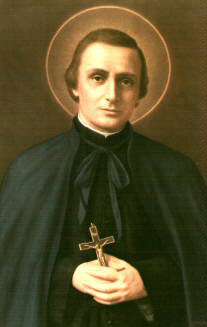 St. Peter Chanel: Saint of the Day for Sunday, April 28, 2024
 Prayer before a Crucifix: Prayer of the Day for Sunday, April 28, 2024

We ask you, humbly: don't scroll away.
Hi readers, it seems you use Catholic Online a lot; that's great! It's a little awkward to ask, but we need your help. If you have already donated, we sincerely thank you. We're not salespeople, but we depend on donations averaging $14.76 and fewer than 1% of readers give. If you donate just $5.00, the price of your coffee, Catholic Online School could keep thriving. Thank you.Help Now >

Copyright 2024 Catholic Online. All materials contained on this site, whether written, audible or visual are the exclusive property of Catholic Online and are protected under U.S. and International copyright laws, © Copyright 2024 Catholic Online. Any unauthorized use, without prior written consent of Catholic Online is strictly forbidden and prohibited.
Catholic Online is a Project of Your Catholic Voice Foundation, a Not-for-Profit Corporation. Your Catholic Voice Foundation has been granted a recognition of tax exemption under Section 501(c)(3) of the Internal Revenue Code. Federal Tax Identification Number: 81-0596847. Your gift is tax-deductible as allowed by law.