 Hi readers, it seems you use Catholic Online a lot; that's great! It's a little awkward to ask, but we need your help. If you have already donated, we sincerely thank you. We're not salespeople, but we depend on donations averaging $14.76 and fewer than 1% of readers give. If you donate just $5.00, the price of your coffee, Catholic Online School could keep thriving. Thank you. Help Now >
Domnus Apostolicus
FREE Catholic Classes
(DOMINUS APOSTOLICUS)
A title applied to the pope, which was in most frequent use between the sixth and the eleventh centuries. The pope is styled Apostolic because he occupies an Apostolic see, that is, one founded by an Apostle, as were those of Ephesus, Philippi, Corinth, etc. (cf. Tertullian, De præscript., xxxvi). Rome being the only Apostolic Church of the West, Sedes apostolica meant simply the Roman See, and Domnus Apostolicus the Bishop of Rome. In Gaul, however, as early as the fifth century the expression sedes apostolica was applied to any episcopal see, bishops being successors of the Apostles (cf. Sidonius Apollinaris, Epp., lib. VI, i, etc.). By the sixth century the term was in general use, and many letters from the Merovingian kings are addressed Domnis sanctis et apostolicâ sede dignissimis . Thus the bishops of Gaul were given the title of Domnus Apostolicus (cf. Venantius Fortunatus, "Vita S. Mart.", IV; "Formulæ Marculfi", II, xxxix, xliii, xlix). Many examples are also found in wills and deeds (e.g. P.L., LXXX, 1281, 1314, etc.), and one occurs in a letter of introduction given by Charlemagne to St. Boniface (Epp. Bonifac., xi). However, in the Acts of Charlemagne and of the councils held during his time, even outside the Frankish Empire, as in England, the term Domnus Apostolicus , in its exact usage, meant simply the pope. Perhaps the only example of it found in Greek authors is in the second letter of Theodore the Studite to Leo III, kyrio apostoliko . Long before this, however, the word Apostolicus alone had been employed to designate the pope. Probably the earliest example is in the list of popes compiled at the time of Pope Vigilius (died 555), which begins "Incipiunt nomina Apostolicorum" (P.L., LXXVIII, 1405). The expression recurs frequently in documents of the Carlovingian kings, as well as in Anglo-Saxon writings. Claude of Turin gives a curious explanation — Apostoli custos . At the Council of Reims held in 1049 the Bishop of Compostela was excommunicated "quia contra fas sibi vendicaret culmen apostolici nominis" (because he wrongly claimed for himself the prestige of an Apostolic name), thinking himself the successor of St. James the Greater , and it was thereupon laid down "quod solus Romanus Pontifex universalis Ecclesiæ Primas esset et Apostolicus" (that only the pontiff of the Roman See was primate of the universal Church and Apostolicus). To-day the title is found only in the Litany of the Saints. There are also the expressions apostolicatus (pontificate) and the ablative absolute apostolicante (during the pontificate of). It is to be noted that in ecclesiastical usage the abbreviated form domnus signifies a human ruler as against Dominus , the Divine Lord. Thus at meals monastic grace was asked from the superior in the phrase Jube Domne benedicere , i.e.; "Be pleased sir to give the blessing."


We ask you, humbly: don't scroll away.
Hi readers, it seems you use Catholic Online a lot; that's great! It's a little awkward to ask, but we need your help. If you have already donated, we sincerely thank you. We're not salespeople, but we depend on donations averaging $14.76 and fewer than 1% of readers give. If you donate just $5.00, the price of your coffee, Catholic Online School could keep thriving. Thank you.Help Now >
Join the Movement
When you sign up below, you don't just join an email list - you're joining an entire movement for Free world class Catholic education.


-

-
Mysteries of the Rosary
-
St. Faustina Kowalska
-
Litany of the Blessed Virgin Mary
-
Saint of the Day for Wednesday, Oct 4th, 2023
-
Popular Saints
-
St. Francis of Assisi
-
Bible
-
Female / Women Saints
-
7 Morning Prayers you need to get your day started with God
-
Litany of the Blessed Virgin Mary


Sacrifices of Faith: The Pro-Life Legacies of St. Gianna and Jessica Hanna
-
How to love God by caring for our bodies
-
Pope Francis calls for negotiations to End Russia-Ukraine War
-
Pope Francis Contemplates Return to U.S. for United Nations Assembly Address
-
Pope Francis Calls on Faithful to Embrace Faith, Hope, and Charity in New Teaching Series


Daily Catholic
- Daily Readings for Sunday, April 28, 2024
- St. Peter Chanel: Saint of the Day for Sunday, April 28, 2024
- Prayer before a Crucifix: Prayer of the Day for Sunday, April 28, 2024
- Daily Readings for Saturday, April 27, 2024
- St. Zita: Saint of the Day for Saturday, April 27, 2024
- Prayer for the Dead # 2: Prayer of the Day for Saturday, April 27, 2024
 Daily Readings for Sunday, April 28, 2024
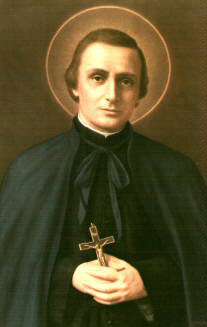 St. Peter Chanel: Saint of the Day for Sunday, April 28, 2024
 Prayer before a Crucifix: Prayer of the Day for Sunday, April 28, 2024


Copyright 2024 Catholic Online. All materials contained on this site, whether written, audible or visual are the exclusive property of Catholic Online and are protected under U.S. and International copyright laws, © Copyright 2024 Catholic Online. Any unauthorized use, without prior written consent of Catholic Online is strictly forbidden and prohibited.
Catholic Online is a Project of Your Catholic Voice Foundation, a Not-for-Profit Corporation. Your Catholic Voice Foundation has been granted a recognition of tax exemption under Section 501(c)(3) of the Internal Revenue Code. Federal Tax Identification Number: 81-0596847. Your gift is tax-deductible as allowed by law.