We ask you, humbly: don't scroll away.
Hi readers, it seems you use Catholic Online a lot; that's great! It's a little awkward to ask, but we need your help. If you have already donated, we sincerely thank you. We're not salespeople, but we depend on donations averaging $14.76 and fewer than 1% of readers give. If you donate just $5.00, the price of your coffee, Catholic Online School could keep thriving. Thank you.Help Now >
Francesco Denza
FREE Catholic Classes
Italian meteorologist and astronomer, b. at Naples, 7 June, 1834; d. at Rome, 14 December, 1894. He joined the Barnabites at the age of sixteen, and during his theological course at Rome studied at the same time meteorology and astronomy under Father Secchi. From 1856 until 1890 he was attached to the Barnabite college at Moncalieri where he became widely known for his work in meteorology, a science which he greatly advanced not merely by his personal observations and studies but also by the interest which he roused in it throughout Italy. In 1859 Denza founded the "Bullettino mensile di Meteorolgia", which was continued until 1894, and established a meteorological observatory at Moncalieri; it was largely through his influence that similar observatories, more than 200 in number, were gradually built in various parts of Italy. The success which attended his efforts gave him a national reputation, and in 1866 Senator Matteucci and Signor Berti, minister of public instruction, urged him to take charge of the department of meteorology at Florence. Denza did not accept the post, but in the following year, at Berti's invitation,he read a paper on meteors at the "Instituto Superiore" in Florence. In 1872 he began a series of researches on terrestrial magnetism with special reference to magnetic declination, which illness, however, prevented him from completing. In 1883 the Duke of Aosta invited him to take charge of the scientific education of his three sons. In the same year he was director of the literary and scientific section of the National Exposition at Turin and chairman of its jury of awards. He represented Leo XIII in 1884 at the Congress of Scientific Societies of France, presiding over the meteorological section. He visited England and Holland on this occasion, where he was received with much honour. He likewise represented the pope at the Paris astronomical congress of 1887, when the plan was formulated of making a photographic map of all the stars in the heavens down to the fourteenth magnitude; through his influence the Vatican observatory was one of the eighteen chosen to carry out this important project. Denza was appointed director of the Vatican Observatory in September, 1890, and thenceforth lived at the Vatican. Here he inaugurated the work of this observatory in stellar photography. At the time of his death, which was due to apoplexy, he was President of the Accademia dei Nuovi Lincei. In character Denza was a man of simple piety and humility.

Among his published works may be mentioned: "Meteore cosmiche" in "Scienza di populo" (Milan, 1869); "Stelle cadente del periodo di Agosto 1868" (ibid.); "Le aurore pol. d. 1869 ed i fonom. cosmiche che accompagnarono" (1869); "Distribuzione di pioggia in Italia" (1871-72); "Valeurs de l'électricité et l'ozone à Moncalieri à l'époque du choléra" in "Comptes Rendus" (1868) LXVI; "Le armonie dei cieli, Nozioni di astron." (1881); "Amplitudes d'oscillations diurn. magnet. à Moncalieri 1880-81"; "Osserv. di declin. magnet. ad Aosta, Moncalieri e Firenze in occas. d'eclisse sol 26/5 1873" in "Proc. Acc. dei Nuov. Lincei".


Join the Movement
When you sign up below, you don't just join an email list - you're joining an entire movement for Free world class Catholic education.


-

-
Mysteries of the Rosary
-
St. Faustina Kowalska
-
Litany of the Blessed Virgin Mary
-
Saint of the Day for Wednesday, Oct 4th, 2023
-
Popular Saints
-
St. Francis of Assisi
-
Bible
-
Female / Women Saints
-
7 Morning Prayers you need to get your day started with God
-
Litany of the Blessed Virgin Mary


Sacrifices of Faith: The Pro-Life Legacies of St. Gianna and Jessica Hanna
-
How to love God by caring for our bodies
-
Pope Francis calls for negotiations to End Russia-Ukraine War
-
Pope Francis Contemplates Return to U.S. for United Nations Assembly Address
-
Pope Francis Calls on Faithful to Embrace Faith, Hope, and Charity in New Teaching Series

Daily Catholic
- Daily Readings for Sunday, April 28, 2024
- St. Peter Chanel: Saint of the Day for Sunday, April 28, 2024
- Prayer before a Crucifix: Prayer of the Day for Sunday, April 28, 2024
- Daily Readings for Saturday, April 27, 2024
- St. Zita: Saint of the Day for Saturday, April 27, 2024
- Prayer for the Dead # 2: Prayer of the Day for Saturday, April 27, 2024
 Daily Readings for Sunday, April 28, 2024
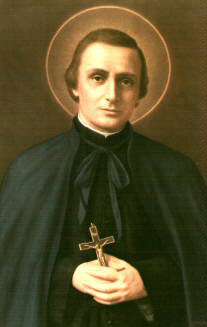 St. Peter Chanel: Saint of the Day for Sunday, April 28, 2024
 Prayer before a Crucifix: Prayer of the Day for Sunday, April 28, 2024
We ask you, humbly: don't scroll away.
Hi readers, it seems you use Catholic Online a lot; that's great! It's a little awkward to ask, but we need your help. If you have already donated, we sincerely thank you. We're not salespeople, but we depend on donations averaging $14.76 and fewer than 1% of readers give. If you donate just $5.00, the price of your coffee, Catholic Online School could keep thriving. Thank you.Help Now >

We ask you, humbly: don't scroll away.
Hi readers, it seems you use Catholic Online a lot; that's great! It's a little awkward to ask, but we need your help. If you have already donated, we sincerely thank you. We're not salespeople, but we depend on donations averaging $14.76 and fewer than 1% of readers give. If you donate just $5.00, the price of your coffee, Catholic Online School could keep thriving. Thank you.Help Now >

Copyright 2024 Catholic Online. All materials contained on this site, whether written, audible or visual are the exclusive property of Catholic Online and are protected under U.S. and International copyright laws, © Copyright 2024 Catholic Online. Any unauthorized use, without prior written consent of Catholic Online is strictly forbidden and prohibited.
Catholic Online is a Project of Your Catholic Voice Foundation, a Not-for-Profit Corporation. Your Catholic Voice Foundation has been granted a recognition of tax exemption under Section 501(c)(3) of the Internal Revenue Code. Federal Tax Identification Number: 81-0596847. Your gift is tax-deductible as allowed by law.
