We ask you, humbly: don't scroll away.
Hi readers, it seems you use Catholic Online a lot; that's great! It's a little awkward to ask, but we need your help. If you have already donated, we sincerely thank you. We're not salespeople, but we depend on donations averaging $14.76 and fewer than 1% of readers give. If you donate just $5.00, the price of your coffee, Catholic Online School could keep thriving. Thank you.Help Now >
Sts. Vitus, Modestus, and Crescentia
FREE Catholic Classes
According to the legend, martyrs under Diocletian ; feast, 15 June. The earliest testimony for their veneration is offered by the "Martyrologium Hieronymianum" (ed. De Rossi-Duchesne, 78: "In Sicilia, Viti, Modesti et Crescentiae"). The fact that the note is in the three most important manuscripts proves that it was also in the common exemplar of these, which appeared in the fifth century. The same Martyrologium has under the same day another Vitus at the head of a list of nine martyrs, with the statement of the place, "In Lucania", that is, in the Roman province of that name in Southern Italy between the Tuscan Sea and the Gulf of Taranto. It is easily possible that the same martyr Vitus in both cases, because only the name of a territory is given, not of a city, as the place where the martyr was venerated. This testimony to the public veneration of the three saints in the fifth century proves positively that they are historical martyrs. There are, nevertheless, no historical accounts of them, nor of the time or the details of their martyrdom. During the sixth and seventh centuries a purely legendary narrative of their martyrdom appeared which was based upon other legends, especially on the legend of Poitus, and ornamented with accounts of fantastic miracles. It still exists in various versions, but has no historical value.
We ask you, humbly: don't scroll away.
Hi readers, it seems you use Catholic Online a lot; that's great! It's a little awkward to ask, but we need your help. If you have already donated, we sincerely thank you. We're not salespeople, but we depend on donations averaging $14.76 and fewer than 1% of readers give. If you donate just $5.00, the price of your coffee, Catholic Online School could keep thriving. Thank you.Help Now >
According to this legend Vitus was a boy seven years of age (other versions make him twelve years old), the son of a pagan senator of Lucania. During the era of the Emperors Diocletian and Maximilian, his father sought in every way, including various forms of torture, to make him apostatize. But he remained steadfast, and God aided him in a wonderful manner. He fled with his tutor Modestus in a boat to Lucania. From Lucania he was taken to Rome to drive out a demon which had taken possession of a son of the Emperor Diocletian. This he did, and yet, because he remained steadfast in the Christian Faith, he was tortured together with his tutor Modestus and his nurse Crescentia. By a miracle an angel brought back the martyrs to Lucania, where they died from the tortures they had endured. Three days later Vitus appeared to a distinguished matron named Florentia, who then found the bodies and buried them in the spot where they were. It is evident that the author of the legend has connected in his invention three saints who apparently suffered death in Lucania, and were first venerated there. The veneration of the martyrs spread rapidly in Southern Italy and Sicily, as is shown by the note in the "Martyrologium Hieronymianum". Pope Gregory the Great mentions a monastery dedicated to Vitus in Sicily ("Epist.", I, xlviii, P.L., LXXXVII, 511). The veneration of Vitus, the chief saint of the group, also appeared very early at Rome. Pope Gelasius (492-496) mentions a shrine dedicated to him (Jaffé, "Reg. Rom. Pont.", 2nd ed., I, 6 79), and at Rome in the seventh century the chapel of a deaconry was dedicated to him ("Liber Pont.", ed. Duchesne, I, 470 sq.). In the eighth century it is said that relics of St. Vitus were brought to the monastery of St-Denis by Abbot Fulrad. They were later presented to Abbot Warin of Corvey in Germany, who solemnly transferred them to this abbey in 836. From Corvey the veneration of St. Vitus spread throughout Westphalia and in the districts of eastern and northern Germany. St. Vitus is appealed to, above all, against epilepsy, which is called St. Vitus's Dance, and he is one of the Fourteen Martyrs who give aid in times of trouble. He is represented near a kettle of boiling oil, because according to the legend he was thrown into such a kettle, but escaped miraculously. The feast of the three saints was adopted in the historical Martyrologies of the early Middle Ages and is also recorded in the present Roman Martyrology on 15 June.
We ask you, humbly: don't scroll away.
Hi readers, it seems you use Catholic Online a lot; that's great! It's a little awkward to ask, but we need your help. If you have already donated, we sincerely thank you. We're not salespeople, but we depend on donations averaging $14.76 and fewer than 1% of readers give. If you donate just $5.00, the price of your coffee, Catholic Online School could keep thriving. Thank you.Help Now >


Join the Movement
When you sign up below, you don't just join an email list - you're joining an entire movement for Free world class Catholic education.


-

-
Mysteries of the Rosary
-
St. Faustina Kowalska
-
Litany of the Blessed Virgin Mary
-
Saint of the Day for Wednesday, Oct 4th, 2023
-
Popular Saints
-
St. Francis of Assisi
-
Bible
-
Female / Women Saints
-
7 Morning Prayers you need to get your day started with God
-
Litany of the Blessed Virgin Mary


Sacrifices of Faith: The Pro-Life Legacies of St. Gianna and Jessica Hanna
-
How to love God by caring for our bodies
-
Pope Francis calls for negotiations to End Russia-Ukraine War
-
Pope Francis Contemplates Return to U.S. for United Nations Assembly Address
-
Pope Francis Calls on Faithful to Embrace Faith, Hope, and Charity in New Teaching Series


Daily Catholic
- Daily Readings for Sunday, April 28, 2024
- St. Peter Chanel: Saint of the Day for Sunday, April 28, 2024
- Prayer before a Crucifix: Prayer of the Day for Sunday, April 28, 2024
- Daily Readings for Saturday, April 27, 2024
- St. Zita: Saint of the Day for Saturday, April 27, 2024
- Prayer for the Dead # 2: Prayer of the Day for Saturday, April 27, 2024
 Daily Readings for Sunday, April 28, 2024
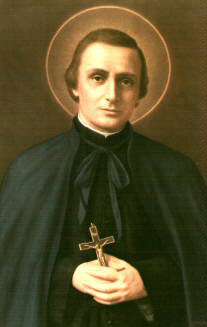 St. Peter Chanel: Saint of the Day for Sunday, April 28, 2024
 Prayer before a Crucifix: Prayer of the Day for Sunday, April 28, 2024



Copyright 2024 Catholic Online. All materials contained on this site, whether written, audible or visual are the exclusive property of Catholic Online and are protected under U.S. and International copyright laws, © Copyright 2024 Catholic Online. Any unauthorized use, without prior written consent of Catholic Online is strictly forbidden and prohibited.
Catholic Online is a Project of Your Catholic Voice Foundation, a Not-for-Profit Corporation. Your Catholic Voice Foundation has been granted a recognition of tax exemption under Section 501(c)(3) of the Internal Revenue Code. Federal Tax Identification Number: 81-0596847. Your gift is tax-deductible as allowed by law.
