 Hi readers, it seems you use Catholic Online a lot; that's great! It's a little awkward to ask, but we need your help. If you have already donated, we sincerely thank you. We're not salespeople, but we depend on donations averaging $14.76 and fewer than 1% of readers give. If you donate just $5.00, the price of your coffee, Catholic Online School could keep thriving. Thank you. Help Now >
Francesco Cossa
FREE Catholic Classes
Known sometimes as DEL COSSA, Italian painter of the school of Ferrara, b. about 1430; d. probably at Ferrara, 1485. Cossa is noted especially for his fresco work. The first record we have of him is in 1456 when he was an assistant to his father, Cristofano del Cossa, at that time employed in painting the carvings and statues on the high altar in the chapel of the bishop's palace at Ferrara. Cossa after this worked in conjunction with Cosimo Tura, decorating the summer retreat known as the Schifanoia, and of the frescoes which remain, three can be safely ascribed to him. They illustrate the manners and dress of the period and are rich in architectural details, somewhat less decorative and less fantastic than those of Tura, but stronger and grander than the latter's work. Considering himself, however, insufficiently remunerated by Duke Borso, Cossa left Ferrara for Bologna in 1470, where he obtained many commissions under the Bentivogli. Here he painted his two masterpieces, one, the Virgin and Child with two saints and a portrait of Alberto de'Catanei, produced in 1474; the other, the fresco of the Madonna del Baracano, representing the Virgin and Child with the portraits of Giovanni Bentivoglio and Maria Vinziguerra, painted in 1472. In these works Cossa reveals himself as a painter of great power and originality, stately in his conceptions, grand and massive in portraiture, broad in modelling, simple and severe in composition. In the National Gallery there is a fine picture by him representing St. Vincent Ferrer, an "Annunciation", in the Dresden collection, which has been attributed to Pollajuolo, and a fine profile portrait at Locko Park near Derby, said to represent Duke Ercole I of Ferrara. He executed some glass paintings in Bologna, the best of which is a beautiful circular window, in the church of San Giovanni in Monte, representing St. John in Patmos ; this bears his signature.

 Hi readers, it seems you use Catholic Online a lot; that's great! It's a little awkward to ask, but we need your help. If you have already donated, we sincerely thank you. We're not salespeople, but we depend on donations averaging $14.76 and fewer than 1% of readers give. If you donate just $5.00, the price of your coffee, Catholic Online School could keep thriving. Thank you. Help Now >
Join the Movement
When you sign up below, you don't just join an email list - you're joining an entire movement for Free world class Catholic education.


-

-
Mysteries of the Rosary
-
St. Faustina Kowalska
-
Litany of the Blessed Virgin Mary
-
Saint of the Day for Wednesday, Oct 4th, 2023
-
Popular Saints
-
St. Francis of Assisi
-
Bible
-
Female / Women Saints
-
7 Morning Prayers you need to get your day started with God
-
Litany of the Blessed Virgin Mary

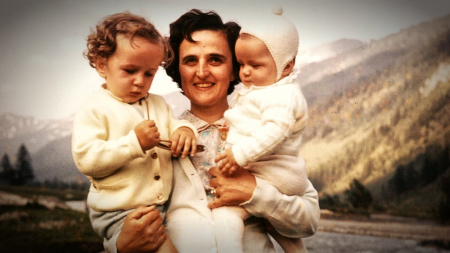
Sacrifices of Faith: The Pro-Life Legacies of St. Gianna and Jessica Hanna
-
How to love God by caring for our bodies
-
Pope Francis calls for negotiations to End Russia-Ukraine War
-
Pope Francis Contemplates Return to U.S. for United Nations Assembly Address
-
Pope Francis Calls on Faithful to Embrace Faith, Hope, and Charity in New Teaching Series
Daily Catholic
- Daily Readings for Saturday, April 27, 2024
- St. Zita: Saint of the Day for Saturday, April 27, 2024
- Prayer for the Dead # 2: Prayer of the Day for Saturday, April 27, 2024
- Daily Readings for Friday, April 26, 2024
- St. Cletus: Saint of the Day for Friday, April 26, 2024
- Prayer before the Closing of the Day: Prayer of the Day for Friday, April 26, 2024
 Daily Readings for Saturday, April 27, 2024
 St. Zita: Saint of the Day for Saturday, April 27, 2024
 Prayer for the Dead # 2: Prayer of the Day for Saturday, April 27, 2024
We ask you, humbly: don't scroll away.
Hi readers, it seems you use Catholic Online a lot; that's great! It's a little awkward to ask, but we need your help. If you have already donated, we sincerely thank you. We're not salespeople, but we depend on donations averaging $14.76 and fewer than 1% of readers give. If you donate just $5.00, the price of your coffee, Catholic Online School could keep thriving. Thank you.Help Now >

Copyright 2024 Catholic Online. All materials contained on this site, whether written, audible or visual are the exclusive property of Catholic Online and are protected under U.S. and International copyright laws, © Copyright 2024 Catholic Online. Any unauthorized use, without prior written consent of Catholic Online is strictly forbidden and prohibited.
Catholic Online is a Project of Your Catholic Voice Foundation, a Not-for-Profit Corporation. Your Catholic Voice Foundation has been granted a recognition of tax exemption under Section 501(c)(3) of the Internal Revenue Code. Federal Tax Identification Number: 81-0596847. Your gift is tax-deductible as allowed by law.