We ask you, humbly: don't scroll away.
Hi readers, it seems you use Catholic Online a lot; that's great! It's a little awkward to ask, but we need your help. If you have already donated, we sincerely thank you. We're not salespeople, but we depend on donations averaging $14.76 and fewer than 1% of readers give. If you donate just $5.00, the price of your coffee, Catholic Online School could keep thriving. Thank you.Help Now >
Claudianus Mamertus
FREE Catholic Classes
(The name Ecdicius is unauthorized).
A Gallo-Roman theologian and the brother of St. Mamertus, Bishop of Vienne, d. about 473.
Descended probably from one of the leading families of the country, Claudianus Mamertus relinquished his worldly goods and embraced the monastic life. He assisted his brother in the discharge of his functions, and Sidonius Apollinaris describes him as directing the psalm-singing of the chanters, who were formed into groups and chanted alternate verses, whilst the bishop was at the altar celebrating the sacred mysteries. "Psalmorum hic modulator et phonascus ante altaria fratre gratulante instructas docuit sonare classes" (Epist., IV, xi, 6; V, 13-15). This passage is of importance in the history of liturgical chant. In the same epigram, which constitutes the epitaph of Claudianus Mamertus, Sidonius also informs us that this distinguished scholar composed a lectionary, that is, a collection of readings from Sacred Scripture to be made on the occasion of certain celebrations during the year.
According to the same writer, Claudianus "pierced the sects with the power of eloquence", an allusion to a prose treatise entitled "On the State of the Soul " or "On the Substance of the Soul ". Written between 468 and 472, this work was destined to combat the ideas of Faustus, Bishop of Reii (Riez, in the department of Basses-Alpes), particularly his thesis on the corporeity of the soul. Plato, whom he perhaps read in Greek, Porphyry, and especially Plotinus and St. Augustine furnished Claudianus with arguments. But his method was decidedly peripatetic and foretokened Scholasticism. Even his language had the same characteristics as that of some of the medieval philosophers : hence Claudianus used many abstract adverbs in ter ( essentialiter, accidenter , etc.; forty according to La Broise). On the other hand he revived obsolete words and, in a letter to Sapaudus of Vienne, a rhetorician, sanctioned the imitation of Nævius, Plautus, Varro, and Gracchus. Undoubtedly his only acquaintance with these authors was through the quotations used by grammarians and the adoption of their style by Apuleius, whose works he eagerly studied. Of course this tendency to copy his predecessors led Claudianus to acquire an entirely artificial mode of expression which Sidonius, in wishing to compliment, called a modern antique (Epist., IV, iii, 3). Besides the treatise and the letter from Claudianus to Sidonius Apollinaris, found among the letters of the latter (IV, ii). Some poetry has also been ascribed to him, although erroneously. For instance, he has been credited with the "Pange, lingua", which is by Venantius Fortunatus (Carm., II, ii); "Contra vanos poetas ad collegam", a poem recommending the choice of Christian subjects and written by Paulinus of Nola (Carm., xxii); two short Latin poems in honour of Christ, one by Claudius Claudianus (Birt ed., p. 330; Koch ed., p. 248) and the other by Merobaudus (Vollmer ed., p. 19), and two other Greek poems on the same subject, believed to be the work of Claudius Claudianus.
We ask you, humbly: don't scroll away.
Hi readers, it seems you use Catholic Online a lot; that's great! It's a little awkward to ask, but we need your help. If you have already donated, we sincerely thank you. We're not salespeople, but we depend on donations averaging $14.76 and fewer than 1% of readers give. If you donate just $5.00, the price of your coffee, Catholic Online School could keep thriving. Thank you.Help Now >
Two facts assign Claudianus Mamertus a place in the history of thought: he took part in the reaction against Semipelagianism, which took place in Gaul towards the close of the fifth century and he was the precursor of Scholasticism, forestalling the system of Roscellinus and Abelard. The logical method pursued by Claudianus commanded the esteem and investigation of Berengarius of Tours, Nicholas of Clairvaux, secretary to St. Bernard, and Richard de Fournival.

 Hi readers, it seems you use Catholic Online a lot; that's great! It's a little awkward to ask, but we need your help. If you have already donated, we sincerely thank you. We're not salespeople, but we depend on donations averaging $14.76 and fewer than 1% of readers give. If you donate just $5.00, the price of your coffee, Catholic Online School could keep thriving. Thank you. Help Now >
Join the Movement
When you sign up below, you don't just join an email list - you're joining an entire movement for Free world class Catholic education.


-

-
Mysteries of the Rosary
-
St. Faustina Kowalska
-
Litany of the Blessed Virgin Mary
-
Saint of the Day for Wednesday, Oct 4th, 2023
-
Popular Saints
-
St. Francis of Assisi
-
Bible
-
Female / Women Saints
-
7 Morning Prayers you need to get your day started with God
-
Litany of the Blessed Virgin Mary


Sacrifices of Faith: The Pro-Life Legacies of St. Gianna and Jessica Hanna
-
How to love God by caring for our bodies
-
Pope Francis calls for negotiations to End Russia-Ukraine War
-
Pope Francis Contemplates Return to U.S. for United Nations Assembly Address
-
Pope Francis Calls on Faithful to Embrace Faith, Hope, and Charity in New Teaching Series


Daily Catholic
- Daily Readings for Sunday, April 28, 2024
- St. Peter Chanel: Saint of the Day for Sunday, April 28, 2024
- Prayer before a Crucifix: Prayer of the Day for Sunday, April 28, 2024
- Daily Readings for Saturday, April 27, 2024
- St. Zita: Saint of the Day for Saturday, April 27, 2024
- Prayer for the Dead # 2: Prayer of the Day for Saturday, April 27, 2024
 Daily Readings for Sunday, April 28, 2024
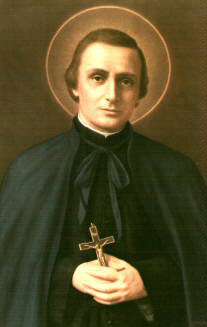 St. Peter Chanel: Saint of the Day for Sunday, April 28, 2024
 Prayer before a Crucifix: Prayer of the Day for Sunday, April 28, 2024



Copyright 2024 Catholic Online. All materials contained on this site, whether written, audible or visual are the exclusive property of Catholic Online and are protected under U.S. and International copyright laws, © Copyright 2024 Catholic Online. Any unauthorized use, without prior written consent of Catholic Online is strictly forbidden and prohibited.
Catholic Online is a Project of Your Catholic Voice Foundation, a Not-for-Profit Corporation. Your Catholic Voice Foundation has been granted a recognition of tax exemption under Section 501(c)(3) of the Internal Revenue Code. Federal Tax Identification Number: 81-0596847. Your gift is tax-deductible as allowed by law.