 Hi readers, it seems you use Catholic Online a lot; that's great! It's a little awkward to ask, but we need your help. If you have already donated, we sincerely thank you. We're not salespeople, but we depend on donations averaging $14.76 and fewer than 1% of readers give. If you donate just $5.00, the price of your coffee, Catholic Online School could keep thriving. Thank you. Help Now >
Michel-Eugène Chevreul
FREE Catholic Classes
Chemist, physicist, and philosopher, b. at Angers, France, 31 August, 1786; d. at Paris, 9 April, 1889. His father was a physician, who had himself been an investigator and had reached the age of ninety-one years. Educated in his native town at the Ecole Centrale, formerly the university, Chevreul went to Paris at the age of seventeen and obtained a place in the laboratory of Vauquelin, a chemical-manufacturer. Subsequently he became chief of this laboratory. At the age of twenty he began contributing to scientific literature, and at twenty-six had attained the rank of professor at the Lycée Charlemagne. Later he became director of the Gobelins, member of the Academy of Sciences, and was admitted to the Legion of Honour, in which he won every promotion until he ultimately received the Grand Cross. His centennial jubilee in 1886 was a very remarkable demonstration which the Government directed, and in which Chevreul participated with bodily and mental vigour. His funeral, which took place two years and seven months later, was made the occasion of paying great honour to his memory.
Although he is renowned for the extensive range of his work, Chevreul's fame rests chiefly upon two particular and important lines of investigation which he entered upon and followed up with great success: namely, in chemistry, "The Constitution of the Fats", and in physics, "The Harmony of Colours". The former is set forth in his "Recherches chimiques sur les corps gras d'orgine animale" (1823), in which he demonstrated that fats have the constitution of ethereal salts and are neutral glycerine ethers of fatty acids; that is, that they can be separated into their respective fatty acids and glycerine. He demonstrated the reactions occurring when this phenomenon, known as saponification, is brought about by strong bases or strong acids. He distinguished the constituent acids of the common fats and determined their constants. Practical corollaries of this discovery were the establishment of the great industry of stearin candle manufacture and the introduction of glycerine into commerce on a large scale. These researches also led to a broadening amongst chemists of all countries in the study of the theory of the constitution of organic bodies.

Chevreul's position as director of the Gobelins, to which he had been appointed by Louis XVIII, led to his important discoveries, both in the chemistry of dyeing, previously little understood, and in the physics of colour and colour effect. His papers on the latter subject began in 1828, in the "Mémoirs de l'Acadeémie", and his great work, "The Law of Simultaneous Contrast of Colours", was published in 1839. Similar studies had engrossed the attention of Abbé Haüy, the crystallographer, and of Scherffer, a Jesuit (1754); but Chevreul was able to deduce from a vast number of his own observations the laws governing changes in intensity of tone and shade or modification of colour, and particularly the influence of one colour on another in juxtaposition. A practical application of this knowledge, together with practical results from the study of dye-stuffs, and the blending of colours in dyeing, served to bring this art to a perfection which, increased again by the variety of dyes obtainable from benzol, has been of the utmost use industrially.
Chevreul also participated in many of the philosophical debates of his century. He strongly combated scepticism and materialism, and constantly asserted that the harmony of the universe and nature, and of man's life and place in them, demonstrated a wisdom which must be called Divine. To some who had written of him as an advocate of an irreligious science he answered by asserting in an open letter to a friend (published in "Le Bien Public" 17 September, 1886) that he wished to be known as a savant, and at the same time a faithful Catholic : "Those who know me", he wrote, "also know that born a Catholic, the son of Christian parents, I live and I mean to die a Catholic ". While Chevreul will not occupy a place in the history of chemistry as high as his fellow-countryman and contemporary, Dumas, he nevertheless suggests one of the best examples of the union of research with technical practice resulting in changes great enough to affect the history of nations. The following are his principal works: "Leçons de chimie appliquée à la teinture" (1828-1831); "De la loi du contraste simultané des couleurs" (1839); "Essai de mécanique chimique" (1854); "De la baguette divinatoire" (1854); "Considérations sur l'histoire de la partie de la médecine qui concerne la prescription des remèdes" (1865); "Histoire des connaissances chimiques" (1866).
We ask you, humbly: don't scroll away.
Hi readers, it seems you use Catholic Online a lot; that's great! It's a little awkward to ask, but we need your help. If you have already donated, we sincerely thank you. We're not salespeople, but we depend on donations averaging $14.76 and fewer than 1% of readers give. If you donate just $5.00, the price of your coffee, Catholic Online School could keep thriving. Thank you.Help Now >
Hi readers, it seems you use Catholic Online a lot; that's great! It's a little awkward to ask, but we need your help. If you have already donated, we sincerely thank you. We're not salespeople, but we depend on donations averaging $14.76 and fewer than 1% of readers give. If you donate just $5.00, the price of your coffee, Catholic Online School could keep thriving. Thank you. Help Now >

Join the Movement
When you sign up below, you don't just join an email list - you're joining an entire movement for Free world class Catholic education.


-

-
Mysteries of the Rosary
-
St. Faustina Kowalska
-
Litany of the Blessed Virgin Mary
-
Saint of the Day for Wednesday, Oct 4th, 2023
-
Popular Saints
-
St. Francis of Assisi
-
Bible
-
Female / Women Saints
-
7 Morning Prayers you need to get your day started with God
-
Litany of the Blessed Virgin Mary


Sacrifices of Faith: The Pro-Life Legacies of St. Gianna and Jessica Hanna
-
How to love God by caring for our bodies
-
Pope Francis calls for negotiations to End Russia-Ukraine War
-
Pope Francis Contemplates Return to U.S. for United Nations Assembly Address
-
Pope Francis Calls on Faithful to Embrace Faith, Hope, and Charity in New Teaching Series


Daily Catholic
- Daily Readings for Sunday, April 28, 2024
- St. Peter Chanel: Saint of the Day for Sunday, April 28, 2024
- Prayer before a Crucifix: Prayer of the Day for Sunday, April 28, 2024
- Daily Readings for Saturday, April 27, 2024
- St. Zita: Saint of the Day for Saturday, April 27, 2024
- Prayer for the Dead # 2: Prayer of the Day for Saturday, April 27, 2024
 Daily Readings for Sunday, April 28, 2024
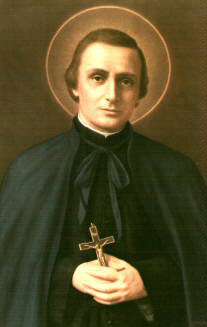 St. Peter Chanel: Saint of the Day for Sunday, April 28, 2024
 Prayer before a Crucifix: Prayer of the Day for Sunday, April 28, 2024
We ask you, humbly: don't scroll away.
Hi readers, it seems you use Catholic Online a lot; that's great! It's a little awkward to ask, but we need your help. If you have already donated, we sincerely thank you. We're not salespeople, but we depend on donations averaging $14.76 and fewer than 1% of readers give. If you donate just $5.00, the price of your coffee, Catholic Online School could keep thriving. Thank you.Help Now >



Copyright 2024 Catholic Online. All materials contained on this site, whether written, audible or visual are the exclusive property of Catholic Online and are protected under U.S. and International copyright laws, © Copyright 2024 Catholic Online. Any unauthorized use, without prior written consent of Catholic Online is strictly forbidden and prohibited.
Catholic Online is a Project of Your Catholic Voice Foundation, a Not-for-Profit Corporation. Your Catholic Voice Foundation has been granted a recognition of tax exemption under Section 501(c)(3) of the Internal Revenue Code. Federal Tax Identification Number: 81-0596847. Your gift is tax-deductible as allowed by law.