We ask you, humbly: don't scroll away.
Hi readers, it seems you use Catholic Online a lot; that's great! It's a little awkward to ask, but we need your help. If you have already donated, we sincerely thank you. We're not salespeople, but we depend on donations averaging $14.76 and fewer than 1% of readers give. If you donate just $5.00, the price of your coffee, Catholic Online School could keep thriving. Thank you.Help Now >
Advocates of Roman Congregations
FREE Catholic Classes
Advocates of Roman Congregations are persons, ecclesiastical or lay, versed in canon and civil law, who plead causes before the ecclesiastical tribunals in Rome. The learning required of these advocates is exceptional and profound. Besides a thorough acquaintance with jurisprudence, both canonical and civil, they must also be versed in moral and dogmatic Theology, and in sacred and profane history. Frequent references to the councils and canons of the Church and to the decrees of the Sovereign Pontiffs oblige them to acquire a deep and varied erudition which embraces various languages, ancient and modern. In several ways the advocate of the Roman Court differs from the ordinary legal pleader. In the first place, it is not his duty to establish the facts in a given case. That is the business of another official called the procurator. The advocate assumes the facts delivered to him by the procurator to be true, and on them he builds his legal argument. Dealing as he does directly with points of law and not with the question of establishing facts, he is freed from the temptation of suborning false witnesses or distorting testimony. Again, a Roman advocate pleads always before learned judges. He cannot, therefore, appeal to the passions or indulge in theatrical displays of eloquence, as if he had to deal with a jury. His language is expected to be sober and refined, clear and precise. Having stated plainly the facts in the case, he is required to state equally plainly the laws on which the decision depends. Very frequently the advocate's plea is made in writing. The recompense of a Roman advocate is a fixed sum, which is to be paid by the client whether the case be gained or lost. There is no temptation, therefore, to proceed to questionable means to obtain a favorable verdict. Moreover, the consistorial advocates are pledged to defend the poor free of charge in case of need. A Pious Society of Advocates exists at Rome whose officers divide the cases of the poor among the members. Consistorial advocates proper were originally only seven in number, forming the Consistorial College. Sixtus IV added five more (called juniors), and this number of twelve was definitely fixed by Benedict XIV in 1744. The other advocates are called titular or simple advocates.
 Hi readers, it seems you use Catholic Online a lot; that's great! It's a little awkward to ask, but we need your help. If you have already donated, we sincerely thank you. We're not salespeople, but we depend on donations averaging $14.76 and fewer than 1% of readers give. If you donate just $5.00, the price of your coffee, Catholic Online School could keep thriving. Thank you. Help Now >


Join the Movement
When you sign up below, you don't just join an email list - you're joining an entire movement for Free world class Catholic education.


-

-
Mysteries of the Rosary
-
St. Faustina Kowalska
-
Litany of the Blessed Virgin Mary
-
Saint of the Day for Wednesday, Oct 4th, 2023
-
Popular Saints
-
St. Francis of Assisi
-
Bible
-
Female / Women Saints
-
7 Morning Prayers you need to get your day started with God
-
Litany of the Blessed Virgin Mary


Sacrifices of Faith: The Pro-Life Legacies of St. Gianna and Jessica Hanna
-
How to love God by caring for our bodies
-
Pope Francis calls for negotiations to End Russia-Ukraine War
-
Pope Francis Contemplates Return to U.S. for United Nations Assembly Address
-
Pope Francis Calls on Faithful to Embrace Faith, Hope, and Charity in New Teaching Series


Daily Catholic
- Daily Readings for Sunday, April 28, 2024
- St. Peter Chanel: Saint of the Day for Sunday, April 28, 2024
- Prayer before a Crucifix: Prayer of the Day for Sunday, April 28, 2024
- Daily Readings for Saturday, April 27, 2024
- St. Zita: Saint of the Day for Saturday, April 27, 2024
- Prayer for the Dead # 2: Prayer of the Day for Saturday, April 27, 2024
 Daily Readings for Sunday, April 28, 2024
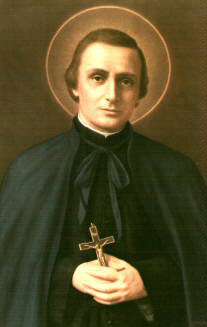 St. Peter Chanel: Saint of the Day for Sunday, April 28, 2024
 Prayer before a Crucifix: Prayer of the Day for Sunday, April 28, 2024
We ask you, humbly: don't scroll away.
Hi readers, it seems you use Catholic Online a lot; that's great! It's a little awkward to ask, but we need your help. If you have already donated, we sincerely thank you. We're not salespeople, but we depend on donations averaging $14.76 and fewer than 1% of readers give. If you donate just $5.00, the price of your coffee, Catholic Online School could keep thriving. Thank you.Help Now >



Copyright 2024 Catholic Online. All materials contained on this site, whether written, audible or visual are the exclusive property of Catholic Online and are protected under U.S. and International copyright laws, © Copyright 2024 Catholic Online. Any unauthorized use, without prior written consent of Catholic Online is strictly forbidden and prohibited.
Catholic Online is a Project of Your Catholic Voice Foundation, a Not-for-Profit Corporation. Your Catholic Voice Foundation has been granted a recognition of tax exemption under Section 501(c)(3) of the Internal Revenue Code. Federal Tax Identification Number: 81-0596847. Your gift is tax-deductible as allowed by law.